
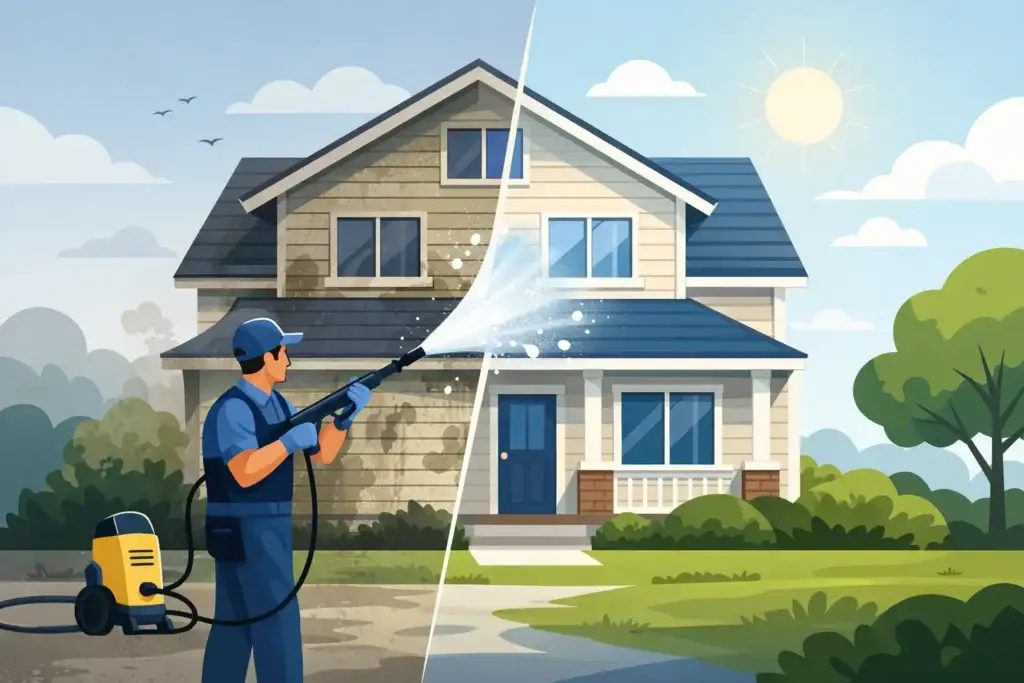
A house in coastal Connecticut can look clean in spring and already show green buildup by late summer. That is why homeowners ask us all the time: how often should you power wash a house? The short answer is every 1 to 2 years for most homes, but the right schedule depends on your siding, shade, moisture, nearby trees, and how quickly mildew and dirt come back.
If your home is surrounded by trees, close to the shoreline, or gets limited sun, you may need cleaning more often. If it sits in a dry, open area and still looks clean, you may be able to wait longer. The goal is not to wash on a strict calendar just because a date came up. The goal is to clean before buildup turns into staining, surface wear, or a bigger maintenance bill.
How often should you power wash a house in Connecticut?
For most Connecticut homes, a professional house wash once every 12 to 24 months is the sweet spot. That range keeps siding looking fresh, helps prevent organic growth from settling in too deeply, and protects curb appeal without overcleaning.
That said, some houses should be cleaned annually. If you notice green patches on vinyl, black streaking, spider webs collecting around trim, or pollen and grime sticking to the siding, waiting another year usually does not help. Moisture and organic buildup tend to spread, especially through humid New England summers and after wet fall weather.
Homes in Groton, Mystic, Stonington, New London, Ledyard, and Waterford often deal with conditions that speed up exterior buildup. Salt air, dampness, tree cover, and seasonal pollen can all make a house look dirty faster than homeowners expect. In those cases, a yearly cleaning is often the most cost-effective option because it keeps the problem light and easier to remove safely.
The biggest factors that affect washing frequency
The material on your home matters first. Not every exterior should be treated with the same pressure, and not every surface holds dirt the same way. Vinyl siding usually does well with regular house washing and often shows mildew clearly, especially on the shaded sides of the home. Painted wood can also collect grime and algae, but it needs a gentler approach to avoid damage. Stucco, older painted surfaces, and certain trims may require even more care.
Moisture is another major factor. If one side of your home rarely gets direct sunlight, that side will usually grow algae and mildew faster than the rest. You may even notice that the north-facing walls look dirty months before the front of the house does. That is normal, but it is also a sign that your cleaning schedule should be based on conditions, not just appearance from the street.
Landscaping can speed things up too. Trees drop sap, pollen, leaves, and debris. Shrubs planted too close to the siding hold moisture against the house. Gutters that overflow can leave dirty streaks. If your home has any of those issues, you may need more frequent exterior cleaning to stay ahead of the mess.
Power washing vs. soft washing
One important point gets overlooked in this conversation. When homeowners ask how often should you power wash a house, they are usually asking about exterior house cleaning in general. In practice, the right method is often soft washing, not high-pressure power washing.
High pressure can be effective on durable surfaces like concrete, some masonry, and certain heavily soiled hardscapes. But siding, painted surfaces, and roofing often require a lower-pressure cleaning process with professional solutions that break down mold, mildew, algae, and dirt without forcing water behind the exterior or stripping finishes.
That matters because frequency is only half the issue. Method matters just as much. Cleaning a house too aggressively even once can cause damage. Cleaning it on the right schedule with the right process helps preserve the surface and gives better, longer-lasting results.
Signs your house should be washed sooner
You do not always need to wait for a full year if the house is already showing clear signs of buildup. Green residue on siding is one of the most common red flags. Black spotting, dingy trim, dirty gutters lines, and cobweb-heavy overhangs also point to a house that is ready for cleaning.
Another sign is when your home starts to look older than it really is. Dirt and biological growth can flatten the color of siding and make white trim look gray. A professional wash can bring back brightness fast, which is one reason many homeowners schedule service before hosting events, listing a property, or starting exterior painting projects.
If you are planning to paint, stain, or do exterior repairs, cleaning first is usually the right move. It helps reveal the true condition of the surface and gives coatings a better chance to adhere properly.
Can you wash a house too often?
Yes, if it is done incorrectly. Washing too often with excessive pressure can wear down finishes, damage caulking, force water into cracks, and shorten the life of paint or siding. That is why a random DIY approach is rarely the best long-term plan.
But professionally cleaning a home every year or two with the correct method is not excessive for most properties. In many cases, it is preventive maintenance. It is similar to gutter cleaning or roof maintenance. You are not doing it just for looks. You are reducing the chance that buildup creates more expensive issues later.
A good rule is simple: clean when buildup begins to take hold, not after it has been ignored for years. Light maintenance is easier on the house and usually more affordable than trying to reverse heavy staining.
What schedule makes the most sense for your home?
If your home gets full sun, has minimal tree coverage, and still looks clean after a year, a 2-year cycle may be enough. If your property stays damp, sits near trees, or regularly develops algae on the siding, annual cleaning is usually the better schedule.
Some homeowners also benefit from pairing services instead of treating each one separately. For example, gutter cleaning, roof cleaning, window cleaning, and house washing often work best as part of a seasonal maintenance plan. When one area is neglected, it can affect the appearance of the rest of the property. Overflowing gutters stain siding. Dirty roofs create streaking. Pollen and grime on windows make a freshly washed house feel unfinished.
That is why the best schedule is not always about one service in isolation. It is about keeping the whole exterior in good condition with the least amount of hassle.
Why professional service usually pays off
There is a big difference between renting a machine and having your home cleaned the right way. A professional company should know when to use pressure, when not to, and how to treat buildup without harming siding, landscaping, or painted surfaces. That experience matters, especially on homes with mixed materials or visible staining.
For homeowners who want fast results without the guesswork, professional exterior cleaning saves time and lowers risk. It also gives you a clearer maintenance rhythm. Once a home has been properly cleaned, it becomes easier to judge how quickly buildup returns and when the next service should be scheduled.
CT Softwash LLC works with homeowners across southeastern Connecticut who want that process to be simple – clear quotes, safe methods, reliable scheduling, and results you can see right away. That is usually what people are really looking for when they ask how often they should clean the outside of the house. They want a straightforward answer and a service they can trust.
If you are unsure whether your home needs cleaning now or later, walk around the property and check the shaded sides, trim lines, gutters, and any area below trees. Those spots usually tell the story first. A house does not have to look terrible from the road to be ready for a wash, and catching buildup early is almost always the smarter move.