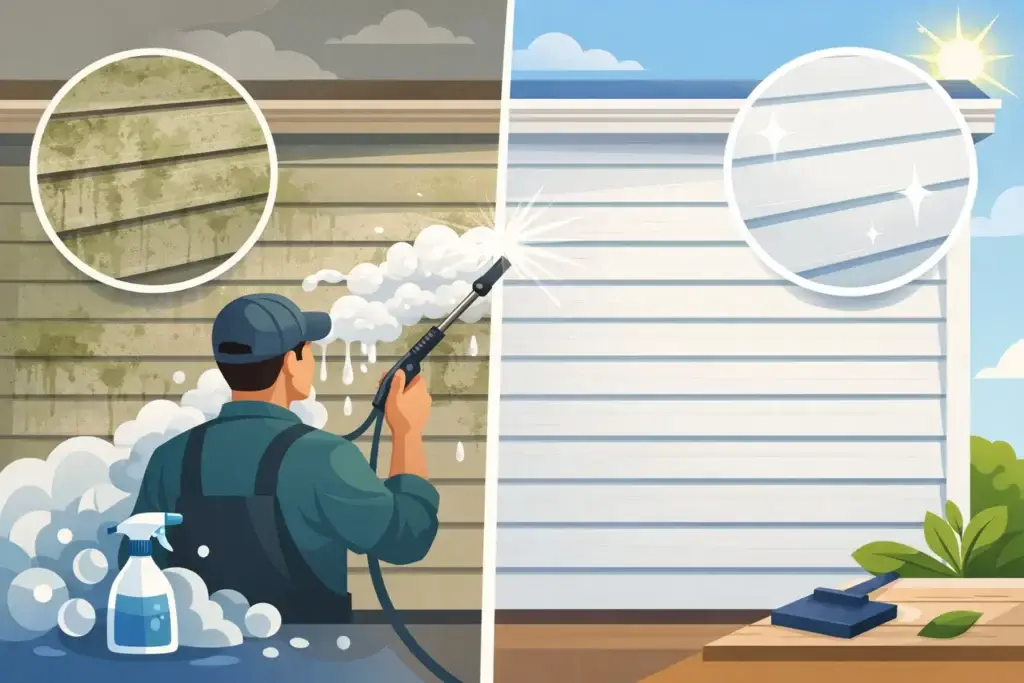
Vinyl siding can look tough, but it does not respond well to brute force. If you have green algae, mildew streaks, pollen, or dirt stuck to your home, the question is fair: is soft washing safe for vinyl siding? In most cases, yes – and it is usually much safer than high-pressure washing when the job is done correctly.
That last part matters. Vinyl siding is durable, but it is not indestructible. Too much pressure can crack panels, force water behind the siding, strip oxidation, and leave visible lines or marks. Soft washing is designed to avoid those problems by relying on low pressure and the right cleaning solution instead of blasting the surface.
Why soft washing works on vinyl siding
Vinyl siding collects more than surface dirt. In Connecticut, homes deal with humidity, shade, tree cover, salt air in some areas, and long stretches of damp weather. That combination creates ideal conditions for algae, mildew, and grime to build up on exterior surfaces.
Soft washing works because it treats the actual growth, not just the stain you can see. The cleaning solution breaks down organic buildup at the source, and low-pressure rinsing removes it without putting the siding under unnecessary stress. That is the main reason soft washing is often the preferred method for house washing on vinyl.
High pressure can make a house look cleaner for the moment, but if the organic growth is not fully treated, it often comes back faster. A proper soft wash does a better job of cleaning deeper while staying gentler on the material.
Is soft washing safe for vinyl siding in every situation?
Usually, yes. But not automatically.
The safety of soft washing depends on three things: the condition of the siding, the strength of the cleaning mix, and the technique used during the wash. If the siding is older, loose, cracked, or poorly installed, even a low-pressure wash needs extra care. If the cleaning solution is mixed too strong or left sitting too long, that can affect surrounding plants or nearby surfaces. If the rinse angle is wrong, water can still be pushed up behind panels.
So the better answer is this: soft washing is safe for vinyl siding when it is done by someone who understands siding, not just someone who owns a machine.
That distinction saves homeowners a lot of trouble.
What makes soft washing safer than pressure washing?
The biggest difference is force. Pressure washing uses a narrow, high-powered stream of water to strip away buildup. That can work on hard surfaces like some concrete areas, but siding is a different story. Vinyl expands and contracts with weather changes, and it is installed with small gaps and overlaps. Water driven at high pressure can get into those seams fast.
Soft washing uses much lower pressure, often closer to a controlled rinse than a blast. The cleaning power comes from the solution doing the work first. That reduces the chance of cracking, warping, or loosening panels.
There is another issue homeowners do not always see right away: oxidation. Older vinyl siding can develop a chalky outer layer from sun exposure. Aggressive pressure washing can strip that unevenly, leaving patchy areas that look worse after cleaning. Soft washing lowers that risk because it does not rely on abrasive force.
Common mistakes that make vinyl siding cleaning unsafe
Most siding damage does not happen because washing is always risky. It happens because the wrong method is used.
One common mistake is using too much pressure because the surface looks heavily stained. That often removes dirt quickly, but it can also scar the siding or drive water behind it. Another mistake is using a store-bought chemical without understanding dilution, dwell time, or how it reacts with nearby landscaping.
Ladder use is another problem. Many homeowners try to wash second-story siding with equipment that is difficult to control while balancing on a ladder. That creates both a fall risk and a cleaning risk. If the spray wand kicks or shifts, the stream can hit trim, windows, vents, or lap seams the wrong way.
Poor rinsing is also a factor. If a cleaning solution is left on too long, or not rinsed thoroughly, residue can remain on the siding. The right process matters just as much as the right product.
Signs your vinyl siding needs soft washing
Not every dirty-looking house needs an aggressive cleaning. In fact, most do not.
If your siding has green or black streaks, mildew spots, dull film, spider webs, pollen buildup, or uneven discoloration from organic growth, soft washing is usually the right fit. It is especially effective on homes with shaded sides that stay damp longer, which is common in wooded neighborhoods and coastal areas.
If you are seeing chalky residue come off when you touch the siding, that may be oxidation rather than dirt alone. That does not mean the siding cannot be cleaned, but it does mean the approach should be adjusted carefully.
And if you notice loose panels, open seams, or damage around windows and doors, the siding should be inspected before any washing begins.
How professionals soft wash vinyl siding safely
Safe soft washing is not just spraying soap and rinsing it off. A professional process starts with evaluation.
First, the siding is checked for damage, problem areas, and heavy growth. Then landscaping and delicate surfaces are protected and pre-wet as needed. The cleaning solution is applied at the proper strength for vinyl siding and the level of buildup present. It needs enough dwell time to break down algae and grime, but not so much that it dries on the surface.
After that, the siding is rinsed with low pressure and controlled technique, usually working in a way that avoids forcing water behind laps or under edges. Windows, trim, soffits, and nearby surfaces are handled with the same caution.
This is where professional equipment and experience make a difference. The goal is not just a cleaner house. The goal is a cleaner house without damage, streaking, or rushed shortcuts.
When DIY can work and when it usually should not
A careful homeowner can sometimes clean a small, accessible section of vinyl siding successfully. If the area is low to the ground, lightly soiled, and easy to reach without a ladder, a mild cleaning approach may be manageable.
But most full-house washes are not ideal DIY jobs. Two-story walls, heavy mildew, plant protection, chemical handling, and correct rinsing all add complexity quickly. What starts as a weekend project can turn into damaged siding, dead shrubs, water intrusion, or an uneven result.
For many homeowners, the real value of hiring a professional is not just convenience. It is knowing the siding will be cleaned with the right pressure, the right mix, and the right level of care.
Is soft washing safe for vinyl siding around windows, plants, and trim?
It can be, if the work is done properly.
A good soft wash process accounts for everything around the siding, not just the siding itself. That includes window seals, painted trim, door frames, electrical fixtures, and landscaping. Pre-rinsing plants, controlling runoff, and using the correct solution strength all help reduce risk.
This is another reason experience matters. Anyone can make a surface wet. Safe exterior cleaning means understanding what should be treated, what should be protected, and how the whole property works together.
That is especially important on homes with flower beds, older caulking, decorative trim, or mixed exterior materials.
How often should vinyl siding be soft washed?
Most homes benefit from professional washing about once every year or two, depending on exposure and environment. A shaded home surrounded by trees may need cleaning more often than a home in full sun with less moisture retention.
If you wait until the siding looks heavily stained, the buildup is usually more established and harder to remove cleanly. Regular maintenance is easier on the surface and keeps curb appeal from sliding downhill between cleanings.
For homeowners planning to paint trim, list a property for sale, or simply stay ahead of maintenance, washing before buildup gets severe is the smarter move.
The bottom line for homeowners
So, is soft washing safe for vinyl siding? Yes – when it is done with low pressure, proper cleaning solutions, and attention to the condition of the home. It is one of the safest and most effective ways to remove algae, mildew, dirt, and organic staining without the risks that come with high-pressure washing.
If your siding is looking tired, streaked, or stained, the best next step is not guessing. It is getting the surface looked at by a professional who knows how to clean vinyl the right way. A properly washed home looks better fast, but more importantly, it stays protected while it gets there.
Clean siding should never come at the cost of damaged siding. When the method is right, you can have both.