
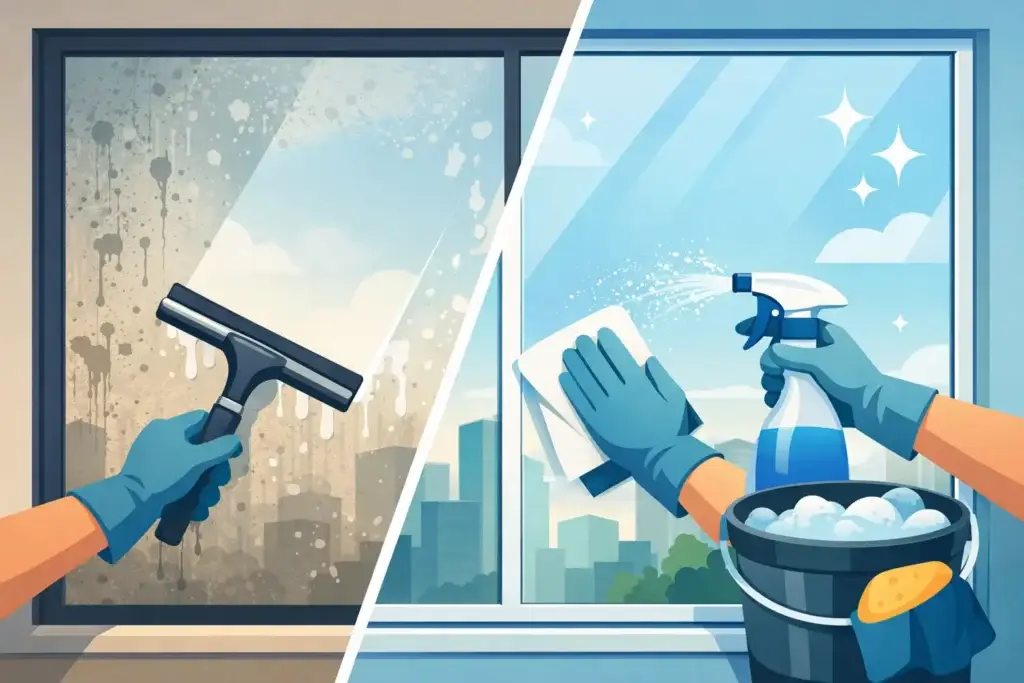
If your outside glass still looks hazy after a quick spray from the hose, you are not doing anything unusual. The best way to clean exterior windows is not just about getting dirt off the glass. It is about removing pollen, salt, dust, spider webs, and oxidation without leaving streaks, damaging screens, or turning a simple chore into a risky ladder job.
For most homes, the right approach is simple: clean on a mild, cloudy day, use plenty of water first, scrub with the right solution, and finish with a squeegee instead of letting the glass air dry. That method works better than paper towels, works faster than spot-cleaning, and gives you a much clearer result.
What actually makes exterior windows look bad
Exterior windows collect more than plain dirt. In Connecticut and along the shoreline, glass often picks up pollen in the spring, humidity-related grime in the summer, and salt residue from coastal air or winter road treatment. Add in bug marks, hard water spots, and tree sap, and the window starts to look dull even after a basic rinse.
That is why spraying cleaner on dry glass and wiping it around usually disappoints. You are moving grime, not fully removing it. Frames, tracks, and screens also hold debris that can end up right back on the glass if they are skipped.
The best way to clean exterior windows without streaks
The most reliable process starts before any soap touches the glass. First, remove loose dirt with a hose or a rinse bucket. This step matters because dry dust and grit can act like sandpaper when scrubbed across the surface.
Next, use a soft scrubber or microfiber window mop with a bucket of water mixed with a small amount of dish soap. You do not need a heavy chemical blend for routine cleaning. In fact, too much soap can leave residue and make streaking worse. Work from top to bottom so dirty water does not run over areas you already cleaned.
After scrubbing, pull a squeegee across the glass in smooth passes, wiping the blade between strokes with a clean cloth. This is the part most homeowners skip, and it is usually the difference between a professional-looking finish and a window covered in drying marks.
Finish by wiping the edges and sill with a lint-free cloth. If screens were removed, clean them separately with a gentle rinse and let them dry before reinstalling.
Best way to clean exterior windows on a two-story home
This is where the answer changes. The best way to clean exterior windows on a one-story ranch is not always the best way to clean them on a taller home with landscaping, uneven ground, or older ladders in the garage.
For second-story windows, safety becomes the first concern. Reaching over shrubs, standing on wet ground, or trying to stretch one more foot from a ladder is where simple maintenance turns into a real risk. Extension poles can help in some cases, especially for accessible windows with open ground below, but they are not a perfect fit for every property.
There is also a quality trade-off. Pole systems can clean glass effectively, but they take a little practice to use well. If the angle is awkward or the frame is holding grime, you may still end up with missed corners or runoff marks. On larger homes, professional service is often the better value because it saves time, protects the property, and avoids injury.
Tools that help and tools that cause problems
A few basic tools make this job much easier. A hose, bucket, microfiber scrubber, soft brush, squeegee, extension pole, and lint-free towels cover most routine window cleaning needs. For stubborn buildup, a non-abrasive pad may help, but only when used carefully and on the right surface.
The tools that usually create problems are harsh ones. Pressure washers are a common example. They can force water behind trim, damage seals, and crack older glass if used carelessly. Razor blades are another one. They may seem like a quick fix for stuck-on debris, but they can scratch glass or damage specialty coatings.
Strong cleaners can also backfire. Exterior windows do not usually need aggressive chemicals, and using the wrong product around painted trim, vinyl, or surrounding plants can create a bigger issue than the dirt you started with.
When hard water stains change the job
Not every dirty window needs the same treatment. If your glass looks cloudy even after a proper wash, you may be dealing with mineral deposits instead of surface grime. Sprinkler overspray, hose runoff, and repeated drying can leave behind hard water staining that does not come off with soap alone.
This is where homeowners often get frustrated. They clean the window twice and assume the glass is permanently damaged. Sometimes it is etched, but often it just needs the right restoration method. Mild stain removers made for glass can help, but the wrong product or too much pressure can make things worse.
If the staining is widespread, especially on high or older windows, it is smart to stop experimenting and have the glass assessed before permanent scratching happens.
Why weather matters more than most people think
A bright sunny day feels like the right time to wash windows, but it usually is not. Heat causes the water and soap to dry too fast, which leaves streaks and residue behind. Wind also creates problems by blowing dust onto wet glass.
The best conditions are mild temperatures, light cloud cover, and low wind. That gives you enough time to scrub and squeegee before the solution dries. If you are cleaning only part of the house, work on the shaded side first and follow the shade as the day moves.
Common mistakes homeowners make
Most poor results come from a few repeat mistakes. One is skipping the initial rinse. Another is using too much soap, which sounds helpful but often creates extra film. A third is trying to dry the glass with standard towels or paper towels, which leave lint and smear marks.
There is also the temptation to rush. Exterior windows need a little sequence: rinse, scrub, squeegee, detail edges. If you skip one step, the final result usually shows it.
The biggest mistake, though, is treating every exterior surface the same. Glass, frames, screens, painted trim, and nearby siding all react differently to water pressure and cleaning products. That is especially true on homes that already have oxidation, aging seals, or delicate finishes.
When professional window cleaning is the better option
There is a point where hiring help is not about convenience alone. It is about safety, results, and protecting the home. If your windows are high, heavily stained, blocked by landscaping, or part of a larger exterior cleaning project, professional service usually makes more sense.
A trained crew can clean more efficiently, spot issues early, and avoid the damage that comes from trial and error. That matters if you also have gutters overflowing, siding collecting algae, or trim that needs a gentler wash method. Many homeowners find that bundling exterior services gets the whole property looking better at once instead of fixing one visible problem at a time.
At CT Softwash LLC, that is often where customers see the biggest difference. Clean windows look better, but clean windows next to bright siding, clear gutters, and a washed entry make the whole property feel maintained.
How often should you clean exterior windows?
For most homes, one to two times per year is enough to keep exterior windows in good shape. Properties near the water, under heavy tree cover, or close to busy roads may need more frequent service. Commercial buildings and storefronts often need a more regular schedule because fingerprints, traffic film, and presentation matter every day.
If you are unsure, let the condition of the glass guide you. When windows start looking dull from the curb, when runoff leaves visible spotting, or when buildup around frames becomes noticeable, it is time.
Clean exterior windows do more than improve the view from inside. They make the whole property look cared for, and they remove buildup before it turns into a bigger maintenance issue. If you want the best result, use the right method early, before dirt and minerals have months to settle in.