
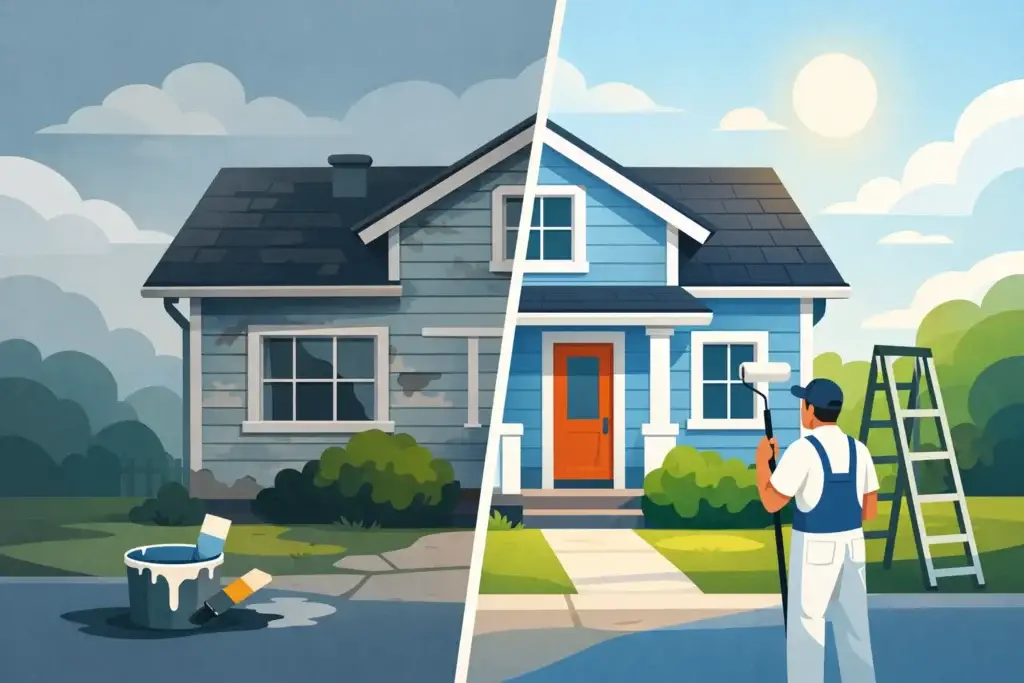
Fresh exterior paint does more than make a home look cared for. It acts as a barrier against moisture, sun, temperature swings, and the kind of wear Connecticut homes see year after year. If you’re asking when should you repaint house exterior, the honest answer is not just every so many years. The right time depends on your siding material, your last paint job, local weather, and the warning signs your home is already giving you.
Some homes clearly need repainting. Others need cleaning, minor repairs, or prep work before anyone should open a paint can. That difference matters, because painting too early wastes money, and painting too late can lead to trim damage, rot, and bigger repair costs.
When should you repaint house exterior based on age?
A lot of homeowners want a simple timeline, and there are useful general ranges. Wood siding usually needs repainting more often than fiber cement, brick, or vinyl. On average, wood siding may need paint every 5 to 7 years, while stucco can often go 5 to 10 years. Fiber cement can last 10 to 15 years with a quality paint job. Painted brick may go longer, but only if the surface was prepared correctly and moisture is under control.
Trim often tells the story before the main siding does. Even if broad wall sections still look decent, peeling trim, faded shutters, or cracking around windows can mean the coating is failing in the areas that take the most direct weather exposure.
These timelines are a starting point, not a promise. A house that gets full sun all afternoon, heavy rain exposure, or repeated moisture around landscaping may need attention sooner. A protected side of the house may still look fine while the south or west side is already wearing out.
The clearest signs it is time to repaint
You do not always need a calendar to tell you what your house already shows every day. Fading is one of the first visible signs. If the color looks washed out or uneven, the paint film may be breaking down from UV exposure.
Chalking is another common sign. If you run your hand across the siding and get a dusty residue, the paint surface is deteriorating. Minor chalking can happen with age, but heavy chalking means the coating is losing performance.
Peeling, blistering, and cracking are more urgent. At that point, paint is no longer protecting the surface the way it should. Moisture can get underneath, and once that happens, the problem usually spreads. Gaps around trim, exposed bare wood, or soft spots are signs you should move quickly.
Mildew and algae staining can also confuse homeowners. Dark streaks or green buildup do not always mean the home needs repainting. Sometimes the real need is professional house washing or soft washing to remove organic growth safely. If the paint underneath is still sound, cleaning may restore the appearance without the cost of a full repaint.
When should you repaint house exterior after cleaning?
This is where many paint projects go wrong. A house should not be painted over dirt, mildew, chalk, or loose material. Exterior surfaces need to be cleaned first, and in many cases that means a low-pressure soft wash instead of aggressive pressure washing. The goal is to remove contamination without damaging siding, trim, or older painted surfaces.
After cleaning, the house needs time to dry fully. That drying window depends on the material, weather, and how much moisture the surface absorbed. Painting too soon can trap moisture and shorten the life of the new finish.
Cleaning also helps you see the truth. Once grime is removed, some homes look dramatically better and do not need repainting right away. Others reveal peeling areas, failed caulk, or wood damage that was hidden under buildup. That is why a proper wash is often the first smart step before deciding on paint.
Weather matters more than most homeowners think
Paint does not just need the right day. It needs the right stretch of days. Temperature, humidity, surface moisture, and overnight lows all affect how paint cures.
For most exterior paints, mild and dry conditions work best. If it is too cold, the paint may not cure properly. If it is too hot, especially in direct sun, it can dry too fast on the surface and fail to bond the way it should. High humidity and surprise rain can create their own problems.
In Connecticut and nearby coastal areas, timing matters because spring and fall often offer the best balance. Summer can also work well, but heat, direct sun, and pop-up storms need to be managed carefully. Late fall projects can be risky if temperatures drop too much at night, even when daytime weather seems fine.
This is one reason professional scheduling matters. A good repaint is not just about color selection. It is about choosing the window where prep, repairs, drying, priming, and coating can all happen under conditions that help the paint last.
Material changes the repaint schedule
Not every exterior ages the same way. Wood expands and contracts more, holds moisture differently, and generally needs closer monitoring. If you have older clapboard or wood trim, staying ahead of failure is especially important.
Fiber cement tends to hold paint well, but caulk joints and trim still need inspection. Stucco can hide hairline cracks that let in moisture, so surface condition matters as much as paint age. If your home has aluminum or previously painted vinyl, adhesion becomes a key issue. Those surfaces can be painted, but only with the right prep and products.
Homes with mixed materials need a more careful eye. It is common for trim, doors, porch railings, and siding to age at different rates. You may not need a complete repaint of everything at once. Sometimes a focused refresh on the most exposed elements buys you time and protects the home without overdoing the project.
Repainting too late costs more
A lot of homeowners wait until the problem is obvious from the street. By then, what should have been a paint project can turn into a repair project.
Once paint fails completely, water gets easier access to wood and trim joints. Caulk separates. End grain absorbs moisture. Freeze-thaw cycles make the damage worse. That is when small cracks can turn into rot, board replacement, and more labor before painting can even begin.
There is a practical middle ground here. You do not want to repaint a house just because it hit a certain birthday. But you also do not want to let visible failure keep spreading. The best time is when the current paint is starting to lose performance, not after it has already stopped protecting the surface.
A simple way to tell if your house needs paint or just maintenance
Stand back from the house first, then get closer. If the color is dull but the paint film is still intact, cleaning may be enough for now. If the surface looks dirty, streaked, or green in shaded areas, washing should come before any paint decision.
Up close, look at horizontal trim, window sills, fascia, corners, and sun-exposed walls. These areas usually fail first. If you see cracking, peeling, exposed substrate, or failed caulk, repainting moves higher on the priority list.
Also look at consistency. If one side of the house looks noticeably worse than the others, that is common. Sun, wind, and moisture exposure are rarely even. You may be able to address problem areas before the entire exterior reaches the same condition.
Professional prep is what makes repainting worth it
A repaint only lasts as long as the prep underneath it. That means cleaning the surface correctly, scraping loose paint, sanding rough edges, replacing damaged material, priming where needed, and sealing joints properly.
This is why homeowners often get frustrated with paint jobs that fail early. The finish coat gets the attention, but prep determines durability. A fast, cheap paint job can look good for a short time and then start failing where moisture or adhesion problems were never solved.
For many homeowners, the smartest route is to start with an exterior cleaning and condition check. That gives you a clear picture of what your house actually needs. In some cases, a thorough wash extends the life of your current finish. In others, it confirms that repainting is the right next step and helps that new paint bond the way it should.
If you are unsure, trust the visible signs more than the calendar alone. A clean, well-prepped exterior holds paint better, looks better, and protects your home longer. The right time to repaint is when your house is starting to lose that protection, not when the damage is already expensive.