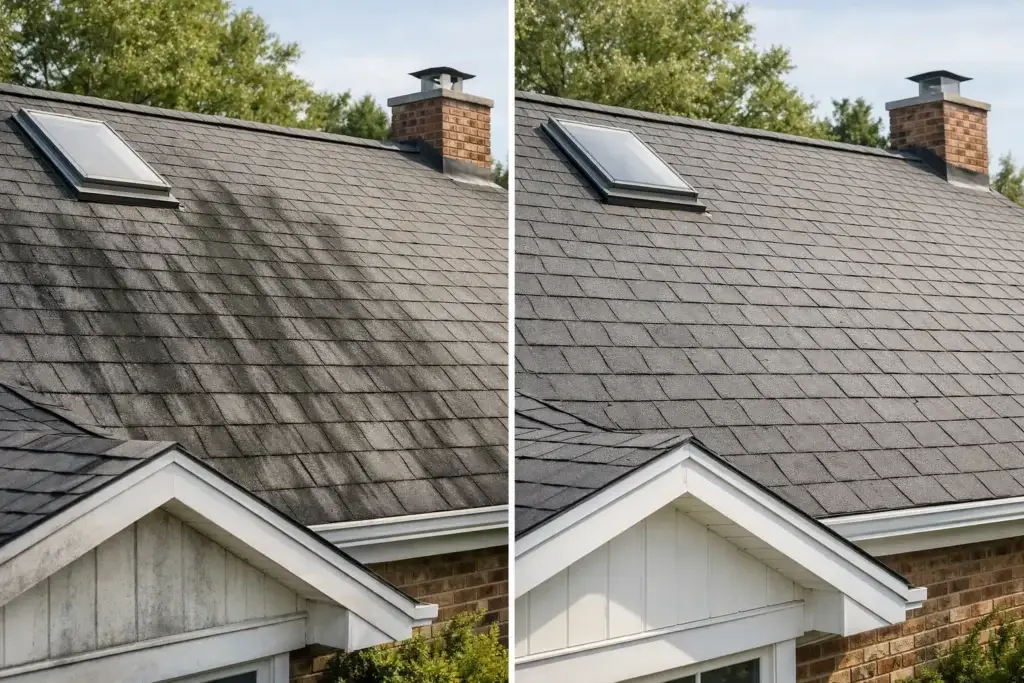
You look up one day and notice dark lines running down the shingles. They do not look like dirt, and they usually are not just a cosmetic issue. If you are wondering what causes black streaks on roof surfaces, the short answer is algae – specifically a type of airborne algae that thrives in warm, damp conditions and feeds on the filler in many asphalt shingles.
That answer is simple, but the real story matters because the wrong cleaning method can do more damage than the streaks themselves. For homeowners, especially in areas with humidity, tree cover, and changing weather, understanding what you are seeing can save you money and help you avoid an expensive roof replacement before it is actually needed.
What causes black streaks on roof shingles?
In most cases, the black staining you see is caused by Gloeocapsa magma, a blue-green algae that appears black from the ground. It spreads through airborne spores, lands on your roof, and starts growing where moisture lingers. North-facing roof sections usually show it first because they stay shaded longer and dry more slowly.
Asphalt shingles are especially vulnerable. Many shingles contain limestone filler, and that gives the algae a food source. Once it starts growing, rainwater carries the staining downward, which is why the marks often appear as long black streaks rather than round patches.
This is also why newer roofs are not immune. A roof can be structurally sound and still develop ugly staining. The streaks are often a maintenance problem before they become a bigger roofing problem.
Why black roof streaks are so common
Roof algae is not a sign that you did something wrong. It is common because the conditions that help it grow are common too.
Moisture is the biggest factor. If your roof stays damp from shade, humidity, poor airflow, or nearby trees, algae has more time to settle in. In Connecticut and coastal areas, where weather shifts fast and roofs often deal with morning dew, rain, and seasonal humidity, streaking tends to show up more often than homeowners expect.
Roof design also plays a role. Valleys, low-sun areas, and sections under overhanging branches usually stay wet longer. If gutters are clogged or overflowing, that extra moisture can make staining worse around the edges.
Then there is age. Older roofs may show more streaking simply because the algae has had more time to spread. But age alone is not the cause. Even a fairly recent roof can develop black stains if conditions are right.
Is it algae, mold, moss, or just dirt?
This is where homeowners often get mixed information. Not every dark spot on a roof is the same thing.
Algae usually looks like dark vertical streaks. Moss tends to be thicker, green, and more raised. Lichen often looks crusty or patchy and can bond tightly to the surface. Dirt is usually more even and less streaked.
The difference matters because treatment is not one-size-fits-all. A roof with light algae staining may clean up well with a soft wash. Moss or lichen may require more careful removal and closer inspection because those growths can trap moisture and affect shingle edges more aggressively.
If you are not sure what you are looking at, guessing can get expensive. Homeowners sometimes try to blast away a stain that is actually embedded biological growth, and that approach can strip granules right off the shingles.
Do black streaks damage your roof?
Sometimes yes, but not always in the way people assume.
At first, black streaks are mainly an appearance problem. They make a home look older, neglected, and less cared for from the street. That alone matters if you take pride in curb appeal or plan to sell.
Over time, though, organic growth can hold moisture against the roof surface. That does not mean every streaked roof is failing, but long-term buildup can contribute to wear. It can also hide other issues, including damaged shingles, flashing concerns, or debris accumulation.
The bigger risk for many homeowners is not the algae itself. It is delayed maintenance and improper cleaning. A roof that could have been safely cleaned often ends up being shortened by aggressive pressure washing or harsh DIY methods.
Why pressure washing is usually the wrong fix
A lot of people assume roof stains should be cleaned the same way as a concrete patio or driveway. That is where problems start.
Asphalt shingles are not meant to take high pressure. Pressure washing can dislodge the protective granules that help your roof shed water and resist UV damage. Once those granules are stripped away, the shingles wear out faster and the roof may look worse, not better.
A proper roof cleaning method is usually soft washing. That means applying a cleaning solution designed to kill the algae at the root, then allowing it to do the work without using damaging pressure. The goal is not just to rinse the roof. The goal is to treat the source of the staining safely.
This is one reason homeowners often call a professional instead of trying to clean the roof themselves. The roof is one of the most expensive surfaces on the property, and it is easy to make a bad situation worse with the wrong equipment.
The safest way to remove black streaks
The safest approach depends on the roof condition, the severity of the staining, and the type of growth present. In most cases, professional soft washing is the right answer for asphalt shingles.
A trained technician can inspect the roof first, identify whether the issue is algae or something more involved, and use a cleaning process that removes staining without tearing up the surface. That matters if your goal is to improve appearance while protecting the life of the roof.
There is also a timing factor. Cleaning earlier is usually easier than waiting until the staining is heavy and widespread. Once the roof is deeply stained, the job may take more treatment and more care. Early maintenance tends to be more affordable and less stressful.
For homeowners who want a straightforward solution, this is where a professional service earns its value. You get the roof cleaned correctly, you reduce the chance of damage, and you avoid climbing up there with chemicals and equipment that are easy to misuse.
Can you prevent black streaks from coming back?
You can reduce the chances, but no roof is permanently immune.
Because the algae spreads through the air, it can return over time. Prevention is really about making the roof less inviting and staying ahead of buildup before it becomes obvious from the street.
Trimming back overhanging branches can help increase sunlight and airflow. Keeping gutters clean also matters because it reduces moisture around the roof edge. In some cases, zinc or copper strips may be used near the ridge line to help slow future algae growth as rainwater washes trace amounts over the shingles.
Still, prevention has limits. If your property gets a lot of shade or moisture, some recurring maintenance may simply be part of protecting curb appeal. That does not mean something is wrong with your roof. It just means the environment is working against it.
When to call a professional
If the streaks are spreading, the roof is steep, or you are not completely sure what the staining is, it is time to bring in a professional. The same goes if you have tried a store-bought cleaner and did not get good results.
A reputable exterior cleaning company should be able to explain what is causing the staining, what cleaning method they use, and whether your roof looks like a good candidate for soft washing. You want clear answers, not vague promises.
For homeowners in southeastern Connecticut and nearby areas, this is a common service call for a reason. Roof streaking shows up on all kinds of homes, from shaded neighborhoods to coastal properties. Companies like CT Softwash handle this issue with low-pressure roof cleaning designed to restore appearance without causing unnecessary wear.
If your roof has black streaks, the good news is that the problem is usually treatable. The key is acting before frustration leads to the wrong fix. A clean roof does more than look better – it helps you protect the value of the home and avoid damage caused by shortcuts.