
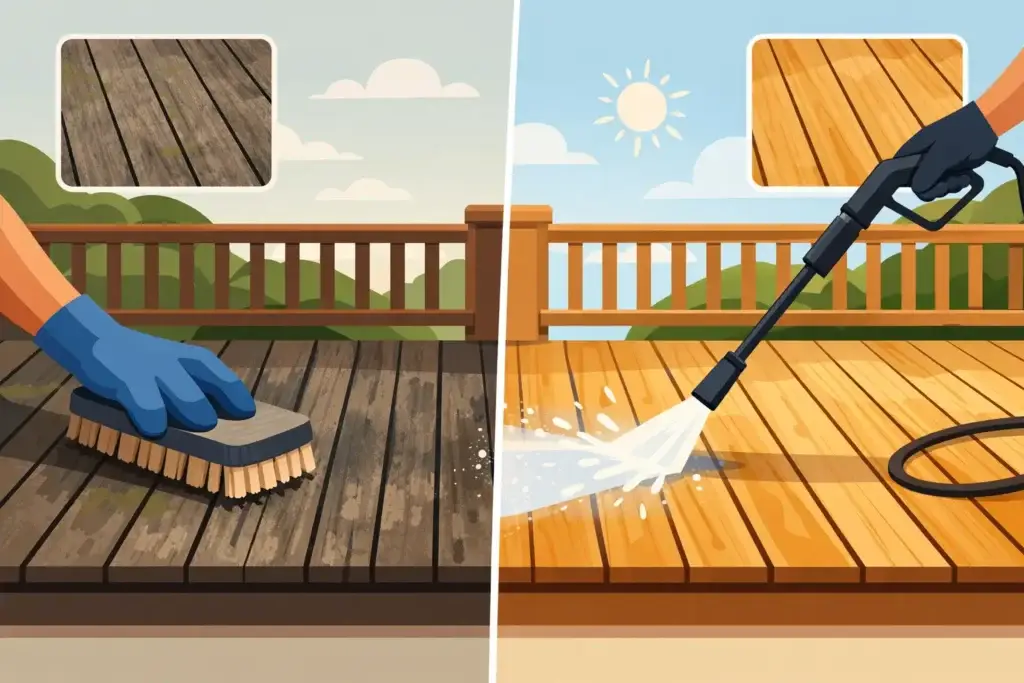
A deck usually tells on itself before the rest of the house does. When the boards turn gray, feel rough underfoot, or develop dark mildew streaks, curb appeal drops fast. If you’re wondering how to clean a weathered deck without chewing up the wood or making the problem worse, the method matters as much as the cleaner.
Many homeowners assume more pressure means a better result. On an older deck, that is often what causes the damage. Weathered wood is already dried out, more porous, and more likely to splinter, so aggressive washing can leave it fuzzy, scarred, and harder to stain or seal later.
How to clean a weathered deck without damaging it
The safest approach starts with identifying what “weathered” really means on your deck. Some decks are mostly dealing with surface dirt, pollen, and algae. Others have deep mildew staining, failed stain, sun damage, and soft spots from moisture exposure. Cleaning works well when the structure is sound. If boards are rotted, cracked through, or pulling loose, those repairs should come first.
Begin by clearing the entire surface. Move furniture, planters, rugs, and grills out of the way so you can see every board. Sweep off loose debris, especially in the gaps between boards where moisture gets trapped. That small step helps the cleaning solution reach the wood evenly instead of sitting on top of packed dirt and leaves.
Next, protect the surrounding area. Wet nearby plants before you apply any deck cleaner, and rinse them again afterward. Cover delicate items if needed. Most wood cleaning products are safe when used correctly, but overspray and runoff can still cause problems if you rush the prep.
Choose the right cleaner for the condition of the wood
This is where many DIY jobs go sideways. Not every deck needs the same product. If the wood is grayed from UV exposure and has organic growth, an oxygenated wood cleaner is often a solid place to start. It lifts grime and mildew without being as harsh as stronger stripping chemicals.
If the deck has old semi-transparent stain that is peeling unevenly, a standard cleaner may not be enough. In that case, you may need a stripper before cleaning. If the boards have black tannin stains from leaves or metal fasteners, a brightener may also be necessary after washing to even out the color.
It depends on your end goal. If you just want the deck to look better for the season, cleaning alone may do the job. If you’re preparing to stain or seal, the surface needs to be much more consistent and free of residue.
Apply cleaner with time to work
Mix and apply the cleaner according to the label. More product is not better, and stronger dilution can create its own issues. Work in manageable sections so the cleaner stays active and does not dry on the wood.
Use a pump sprayer or a soft brush, depending on the product and the size of the deck. Let the cleaner dwell for the recommended time, then lightly agitate problem areas with a deck brush. Pay close attention to high-traffic zones, shady corners, stair treads, and areas near railings where mildew tends to hold.
What you do not want is to let the cleaner bake into the boards in direct sun. If the weather is hot, work earlier in the day or keep the surface damp while the product is doing its job.
Should you pressure wash a weathered deck?
Yes, but carefully. That is the honest answer. Pressure washing can be part of how to clean a weathered deck, but it should be treated as a rinse step, not a demolition tool.
On older wood, too much pressure can etch the surface, raise the grain, and leave visible wand marks. It can also force water deeper into compromised boards. A lower-pressure rinse with the right tip and proper distance is usually far safer than blasting at close range.
If you use a pressure washer, keep the pressure moderate and the spray moving. Follow the direction of the grain, not across it. Stay consistent with your distance so you do not create light and dark streaks across the boards. Railings and stairs often need even more caution because edges and corners wear down faster.
For heavily weathered decks, soft washing methods or low-pressure cleaning are often the better choice. The goal is to remove buildup while preserving the wood, not just making it look cleaner for a week. This is one reason many homeowners in coastal and humid parts of Connecticut choose professional deck cleaning. Mildew, algae, and salt-air exposure can make older wood more delicate than it looks.
Watch for signs you’re using too much pressure
The warning signs show up fast. If the wood starts to look shredded, fuzzy, or noticeably lighter in narrow streaks, back off immediately. If splinters rise after rinsing, the surface has likely been overworked.
That does not always ruin the deck, but it can create extra sanding and shorten the life of the finish you apply next. A clean deck should feel solid and look refreshed, not torn up.
What to do after cleaning
Once the deck is clean, let it dry fully before deciding on the next step. Dry time depends on temperature, humidity, sun exposure, and how saturated the wood became during cleaning. In many cases, 24 to 48 hours is the minimum. Older or shaded decks may need longer.
After it dries, inspect the surface closely. This is the best time to spot nails that have lifted, screws that need tightening, loose rails, cracked boards, and rough areas that may need sanding. Cleaning reveals the true condition of the deck, which is useful even if the results show it needs more than a wash.
If the wood still looks blotchy or very dull, a wood brightener can help restore a more natural appearance. This is especially helpful before staining. Brightening neutralizes many cleaners and can improve how evenly the next coating absorbs.
If you’re planning to leave the deck bare, understand the trade-off. It may look cleaner now, but unprotected wood weathers again quickly. A quality stain or sealer helps slow down moisture absorption, UV damage, and future grime buildup.
Common mistakes when cleaning a weathered deck
The biggest mistake is starting with maximum pressure. It feels efficient, but it often creates more repair work and a rougher final result. The second mistake is using household bleach as the main solution. Bleach may lighten stains temporarily, but it can be hard on wood fibers and surrounding plants when misused.
Another common issue is skipping the dwell time on cleaners. People spray, scrub for thirty seconds, and rinse. Most deck cleaners need a few minutes to break down mildew, algae, and embedded dirt. If you rush that part, you usually compensate with more pressure, which is exactly what older wood does not need.
There is also the timing problem. Cleaning in intense midday sun can cause solutions to dry too fast and leave uneven results. Cleaning right before several damp days can delay drying and increase the chance of lingering moisture problems.
When it makes sense to hire a professional
Some decks are good DIY candidates. Others are not. If your deck is large, elevated, badly stained, or made from aging wood that already shows wear, professional cleaning is often the safer and more cost-effective route.
A trained exterior cleaning company can match the cleaning method to the wood’s condition, use commercial-grade equipment without overdoing the pressure, and help you avoid avoidable damage. That matters if you want the deck to look better now and still be in good shape for sealing, staining, or regular use afterward.
For homeowners who want fast results without the trial and error, professional service is also a convenience decision. You get a cleaner deck, less risk to the wood, and a clearer picture of whether the surface needs repairs or just maintenance. Companies like CT Softwash LLC also bring the benefit of licensed and insured service, which gives homeowners peace of mind when the work involves delicate surfaces and high-value outdoor spaces.
A cleaner deck is only part of the job
A weathered deck rarely needs brute force. It needs the right cleaner, the right pressure, and a little patience. Done properly, cleaning can bring back the look of the wood, improve safety by removing slippery growth, and buy you more life from the deck without unnecessary damage.
If you’re looking at gray boards and mildew stains right now, start with the condition of the wood, not the machine in your garage. That one decision usually makes the difference between a deck that looks refreshed and one that needs repair next.