
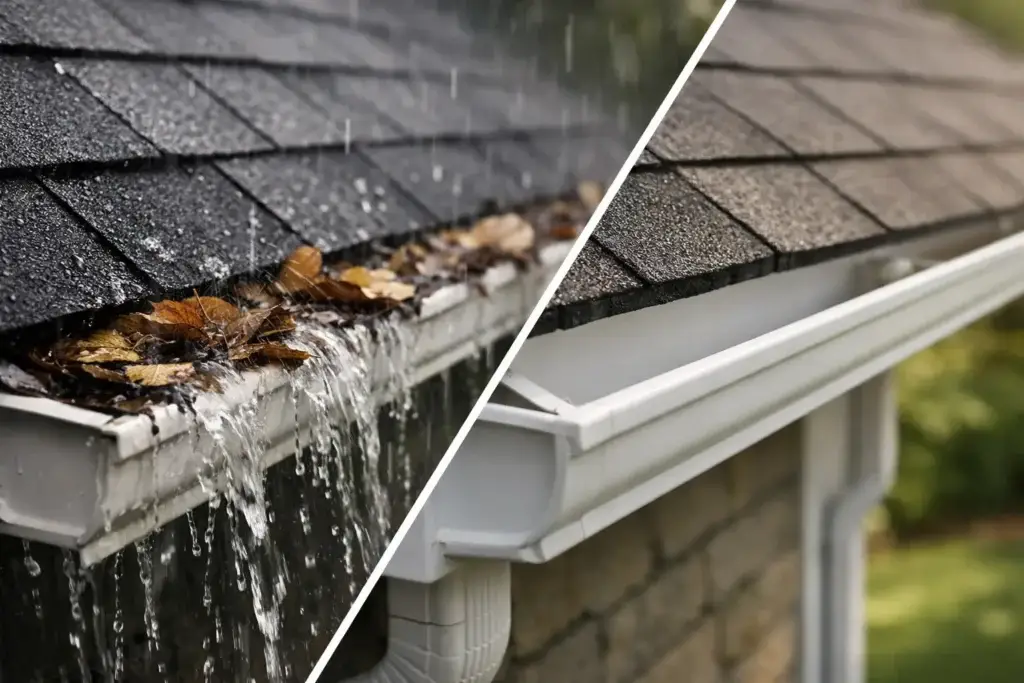
You usually notice gutter problems during the worst possible moment – right in the middle of a hard rain, when water starts pouring over the sides like a waterfall. If you’re asking, why are my gutters overflowing, the short answer is that water is not moving through the system the way it should. The bigger issue is what that overflow can do to your siding, foundation, landscaping, and roofline if it keeps happening.
Overflowing gutters are not just an appearance problem. They can soak fascia boards, stain siding, erode mulch beds, and leave water pooling near the house. In Connecticut, where heavy rain, wet leaves, snowmelt, and freeze-thaw cycles all put stress on exterior surfaces, a small gutter issue can turn into a bigger repair faster than most homeowners expect.
Why are my gutters overflowing in the first place?
The most common reason is a clog. Leaves, pine needles, roof grit, twigs, and shingle debris collect inside the gutter channel and stop water from flowing toward the downspout. Once that flow slows down enough, the next storm sends water over the front edge.
But clogs are only part of the story. Gutters can overflow even when they are not packed solid. If the downspout is blocked, water backs up and spills out. If the gutter pitch is off, water sits in the channel instead of draining. If the gutter is loose or pulling away from the house, runoff can miss the gutter entirely or rush over one low section.
Sometimes the issue starts on the roof. Valleys can dump a large volume of water into one short section of gutter. On homes with steep rooflines or long slopes, even a gutter that looks decent may not be able to keep up if it is undersized or poorly positioned.
The most common causes of gutter overflow
Debris buildup is the one most homeowners expect, and it is still the leading cause. A layer of soggy leaves can act like a dam. Even when the gutter looks only half full, the debris can trap enough water to block movement and create overflow.
Downspout clogs are just as common and sometimes harder to spot. Water may appear to be draining slowly, but the real blockage is several feet down in the elbow or vertical run. When that happens, the gutter fills from the outlet backward.
Improper slope is another frequent problem. Gutters should have a slight pitch so water naturally moves toward the downspouts. If a section is level or sloped the wrong way, water pools there. Over time, standing water attracts more debris, adds weight, and makes the problem worse.
Loose fasteners and sagging sections also matter. Gutters that pull away from the fascia lose their alignment. Instead of catching runoff cleanly, they let water shoot behind the gutter or spill over the edge. That can lead to hidden wood rot before you notice any obvious damage.
In some cases, the gutter system is simply too small for the home. This is more likely on roofs with large surface areas, steep pitches, or heavy runoff points. A standard system may work during light rain but fail during the kind of downpour that is common in spring and summer storms.
Signs the problem is more than just a simple clog
If water only overflows in one corner, you may be dealing with a localized blockage or a pitch issue. If multiple sections spill over at once, the system may be overdue for a full cleaning or have a design problem.
Watch for water marks on siding, peeling paint near the roofline, or dark streaks on fascia boards. Those signs suggest the problem has been happening for a while. Pooled water near the foundation is another red flag, especially if you notice soil washout or mulch displaced after rain.
You should also pay attention to what happens after the storm. Gutters that stay full long after rainfall ends are usually draining poorly. That lingering water adds weight, attracts mosquitoes, and shortens the life of the system.
Why overflowing gutters can damage more than the gutters
The biggest mistake homeowners make is assuming overflow is harmless because the water is outside anyway. The problem is where that water ends up. When it pours over the front or back of the gutter, it hits places that were never meant to handle concentrated runoff.
Along the roofline, it can rot fascia, soffit, and trim. Against the siding, it can leave algae streaks and push moisture into seams and joints. Around the home’s perimeter, it can erode soil and increase the chance of basement moisture issues.
In winter, overflow becomes even riskier. Poor drainage can contribute to ice buildup along the eaves. That extra weight and freeze-thaw pressure can stress both the gutters and the roof edge. What starts as a cleaning issue in the fall can become a repair issue by the time temperatures drop.
When cleaning fixes it – and when it doesn’t
If the gutters are full of leaves, cleaning usually solves the immediate problem. Removing debris from the channels and flushing the downspouts restores flow and lets you see whether anything else is wrong.
That said, cleaning is not always the complete answer. If the gutter is bent, sagging, detached, or pitched incorrectly, the overflow may come back with the next heavy rain. The same goes for systems with too few downspouts or undersized gutters. A clean system that is poorly designed can still fail under normal weather conditions.
This is why professional gutter cleaning is not just about scooping out debris. A good service also checks how the system is performing. That includes looking at alignment, fasteners, outlet flow, visible damage, and any signs that water has been escaping behind the gutters.
How to tell whether your gutters need repair or replacement
Repairs make sense when the system is structurally sound and the issues are limited. A loose hanger, minor separation at a seam, one clogged downspout, or a short sagging section can often be corrected without replacing everything.
Replacement becomes the better option when problems are widespread. If you have recurring overflow despite regular cleaning, multiple leaking seams, rust, cracks, sections pulling away from the house, or gutters that are the wrong size for the roof, patching may only delay the inevitable.
Age matters too, but condition matters more. Some older gutters keep working fine with routine maintenance. Others start failing early because of poor installation or heavy neglect. The right call depends on how often the issue returns and whether the system can realistically protect the home during a serious storm.
How often should gutters be cleaned?
It depends on the property. Homes with a lot of overhanging trees usually need more frequent service than homes in more open areas. Pine needles, seed pods, and oak leaves can build up quickly, especially in valleys and near downspout outlets.
For many homes, cleaning once or twice a year is enough. For others, especially properties surrounded by trees, more frequent maintenance is the safer move. The best schedule is based on what actually lands on your roof and how your gutters perform during heavy rain.
If you have had overflow before, waiting until you see another waterfall is not a good plan. Preventive cleaning is far less expensive and far less stressful than dealing with water damage afterward.
What homeowners can safely check themselves
From the ground, you can look for visible plant growth, sagging lines, staining on the siding, and water pouring over specific spots during rain. You can also check whether downspout discharge is moving water away from the house properly.
What you should not do is assume every gutter problem is a simple weekend ladder job. Wet ladders, slick roofs, and second-story sections create real safety risks. If the system is high, steep, or visibly damaged, professional service is the smarter choice.
For homeowners who want a straightforward answer and a clear fix, this is where a local exterior maintenance company can save time. A proper cleaning and inspection can identify whether the issue is debris, drainage, hardware failure, or system sizing – and that matters if you want the problem solved the first time.
Why fast action matters
Gutter overflow rarely improves on its own. Debris compacts, standing water gets heavier, and minor alignment issues usually get worse with time. What could have been handled with routine cleaning can turn into fascia repairs, siding stains, or drainage issues around the foundation.
If your gutters are overflowing, the right move is to address it before the next storm tests the system again. Clean gutters, proper flow, and secure hardware are basic parts of protecting your home, not optional extras.
A home looks better when the exterior is clean and maintained, but the bigger win is peace of mind. When your gutters handle water the way they should, the rest of your property has a much better chance of staying dry, protected, and ready for whatever Connecticut weather brings next.