
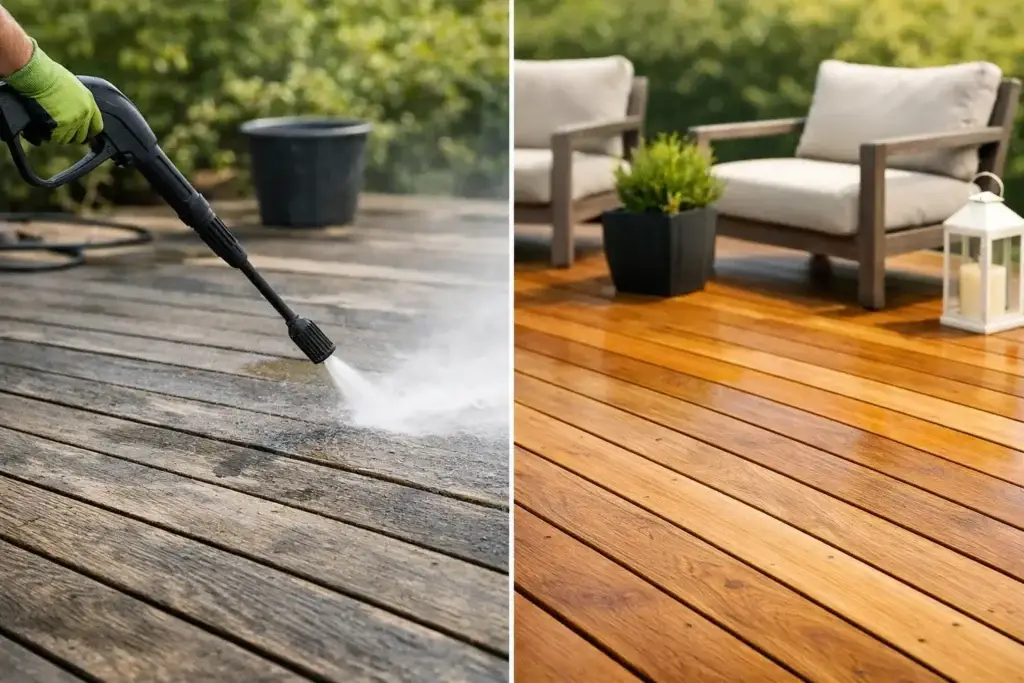
That washed-out gray look usually means your deck is not just dirty – it is weathered, oxidized, and holding onto layers of grime. If you are wondering how to brighten a gray deck, the answer depends on what kind of gray you are seeing. Some decks need a basic cleaning. Others need a dedicated wood brightener. And some are far enough gone that cleaning alone will not bring back the warm wood tone you remember.
The good news is that most gray decks can look dramatically better without replacement. The key is using the right process and avoiding the two mistakes that cause the most damage: too much pressure and the wrong chemicals.
Why decks turn gray in the first place
Wood turns gray because sunlight breaks down the surface fibers over time. That oxidation changes the color and leaves the top layer looking dull, dry, and faded. In Connecticut, that process moves even faster when the deck is also exposed to moisture, mildew, algae, pollen, and leaf stains.
Gray does not always mean the deck is ruined. Often, it means the top layer has weathered and collected buildup. When that layer is cleaned and brightened correctly, the deck can look much cleaner and more even. But if the wood is splintering, deeply cracked, or soft in spots, appearance is only part of the problem.
How to brighten a gray deck without damaging the wood
The safest way to restore color is to clean first, then brighten. That order matters. Cleaning removes surface dirt, organic growth, and old residue. Brightening adjusts the wood after cleaning, helping lift the gray cast and restore a fresher appearance.
A lot of homeowners assume pressure washing alone will do the job. It might remove some discoloration, but high pressure often furs up the wood, leaves wand marks, and drives water deeper into the surface. That can make the deck look rougher even if it looks cleaner for a day or two.
For most wood decks, a low-pressure wash combined with the proper cleaning solution is the safer move. After that, a wood brightener can help neutralize the cleaner and improve the color. This is especially helpful on decks that look patchy, dull, or darker in traffic areas.
Start by identifying the deck material
Before you do anything, confirm whether the deck is natural wood or composite. A gray composite deck and a gray wood deck are not treated the same way.
Wood can usually be cleaned and brightened with products made for cedar, pine, pressure-treated lumber, or hardwood decking. Composite decking often needs a milder approach and should never be treated like bare wood. If you are unsure, check the age of the deck, look for a wood grain pattern that repeats, and inspect cut edges or undersides if visible.
Look for stains, mildew, and old coatings
If water beads on the surface, there may still be old sealer present. If one area is darker than another, you may be dealing with algae, mildew, or tannin stains rather than simple weathering. If the deck has peeling stain, that old coating may need to be stripped before brightening will make any real difference.
This is where the job becomes less about one product and more about choosing the right sequence. Cleaner alone will not fix failed stain. Brightener alone will not remove mildew. Pressure alone will not remove oxidation safely.
The basic process for a brighter deck
If the deck is structurally sound and mainly suffering from weathering and buildup, the process is straightforward.
First, clear the deck completely. Move furniture, planters, rugs, and grills out of the way. Sweep loose debris and rinse the surface so you are not grinding dirt into the wood as you clean.
Next, apply a deck cleaner designed for exterior wood. Let it dwell long enough to break down grime and organic growth, but do not let it dry on the surface. Agitate stubborn areas with a soft or medium-bristle brush if needed. Then rinse thoroughly using low pressure.
After the deck is clean, apply a wood brightener. This is the step many people skip, and it shows. Brightener helps correct the wood’s pH after cleaning and can noticeably improve color, especially on decks that look flat, gray, or uneven. Once it has done its job, rinse again and allow the deck to dry fully.
At that stage, you can judge the real condition of the wood. Sometimes the deck is now bright enough on its own. Other times, cleaning reveals that the deck would benefit from sanding, staining, or sealing.
When brightening works well and when it does not
If your deck is gray from sun exposure, dirt, mildew, and general neglect, brightening can make a big difference. It can also help if the wood looks darkened after cleaning and you want a more natural, refreshed appearance.
But there are limits. Deep UV damage, severe splintering, and years of failed coatings may require more than cleaning and brightening. In those cases, the deck may need sanding or refinishing to look truly restored.
That is why results vary from one deck to the next. A lightly weathered deck may brighten up quickly. A 15-year-old deck with heavy oxidation and embedded stain residue may improve, but not return to a like-new look. Honest expectations matter.
Common mistakes that make a gray deck worse
The biggest mistake is overusing pressure. Too much force can scar the wood, raise the grain, and leave visible lines that are hard to fix without sanding. The deck may look cleaner at first, but roughened wood tends to collect dirt and moisture faster afterward.
The second mistake is using household bleach as the main solution. Bleach can kill some organic growth, but it does not do a great job removing oxidation, and repeated use can dry out wood fibers. On many decks, it creates a temporary improvement without actually restoring the surface.
Another common problem is skipping the brightener. A deck cleaner can leave wood looking dark or dull if you stop there. Brightening is what often brings back that cleaner, lighter tone people expect.
Finally, many homeowners clean the deck but ignore the timing of sealing or staining. If you plan to protect the wood afterward, it needs to be fully dry before any finish is applied. Rushing that step can trap moisture and shorten the life of the coating.
Should you brighten a gray deck yourself or hire a pro?
That depends on the deck size, condition, and your comfort level. A small deck with mild weathering may be manageable as a DIY project if you use the right products and take your time. But larger decks, elevated decks, and heavily grayed surfaces are easy to get wrong.
Professional cleaning usually makes the most sense when the deck has stubborn staining, delicate wood, nearby siding or landscaping that needs protection, or an old coating that complicates the process. The value is not just convenience. It is knowing the surface is being cleaned with the right chemistry and controlled pressure so you get better results without unnecessary damage.
For homeowners who want fast, visible improvement without guesswork, professional deck cleaning is often the safer investment. A licensed and insured exterior cleaning company can also tell you whether the deck simply needs brightening or whether the wood is ready for a larger restoration plan.
How to keep your deck from turning gray again
Once the deck looks better, regular maintenance matters. Dirt, pollen, moisture, and shaded conditions all speed up the return of discoloration. A light cleaning schedule helps prevent the heavy buildup that makes restoration harder later.
If the deck is bare wood, sealing or staining after proper drying can slow future weathering. That will not stop UV exposure completely, but it can help preserve color longer and make routine cleaning easier. If the deck is in full sun, expect maintenance to come sooner than it would on a covered porch.
It also helps to trim back overhanging branches, move planters occasionally, and avoid trapping moisture under rugs or furniture pads. Small habits like that make a noticeable difference over time.
A better-looking deck starts with the right method
If you want to know how to brighten a gray deck, think less about blasting it clean and more about restoring the surface carefully. The best results usually come from the right cleaner, low-pressure rinsing, and a proper wood brightener used in the correct order.
A deck should look cleaner, brighter, and more inviting after service – not gouged, fuzzy, or stripped by aggressive washing. If you are not sure what your deck needs, getting a professional opinion can save time, protect the wood, and get you to the result you actually want: a deck that looks cared for again and feels ready to use.