That green film on the siding, the black roof streaks, the gutters spilling over in a storm – none of it shows up overnight. It builds slowly, then all at once your home looks tired and starts holding moisture where it should not. This exterior cleaning guide for homeowners is built to help you stay ahead of that cycle, protect your property, and avoid turning simple upkeep into a costly repair.
For most homes, exterior cleaning is not just about curb appeal. It is preventive maintenance. Dirt, algae, mildew, moss, pollen, and clogged drainage systems can shorten the life of roofing, stain siding, make walkways slippery, and trap water against surfaces that need to dry out. In Connecticut especially, where humidity, tree cover, salt air, and seasonal weather all play a role, the right cleaning schedule matters.
A practical exterior cleaning guide for homeowners
The smartest way to approach exterior cleaning is to stop thinking of the whole property as one job. Your siding, roof, gutters, windows, deck, and concrete all collect grime differently and need different cleaning methods. Treating every surface the same is where many homeowners run into trouble.
Pressure is a good example. High pressure works well on some hard surfaces, but it can damage shingles, force water behind siding, splinter wood, and strip protective finishes if used carelessly. That is why professional companies often use a mix of power washing and soft washing depending on the material. The goal is not just to make the house look clean today. It is to clean it safely so the surface still performs the way it should tomorrow.
Siding needs cleaning, but not all siding needs pressure
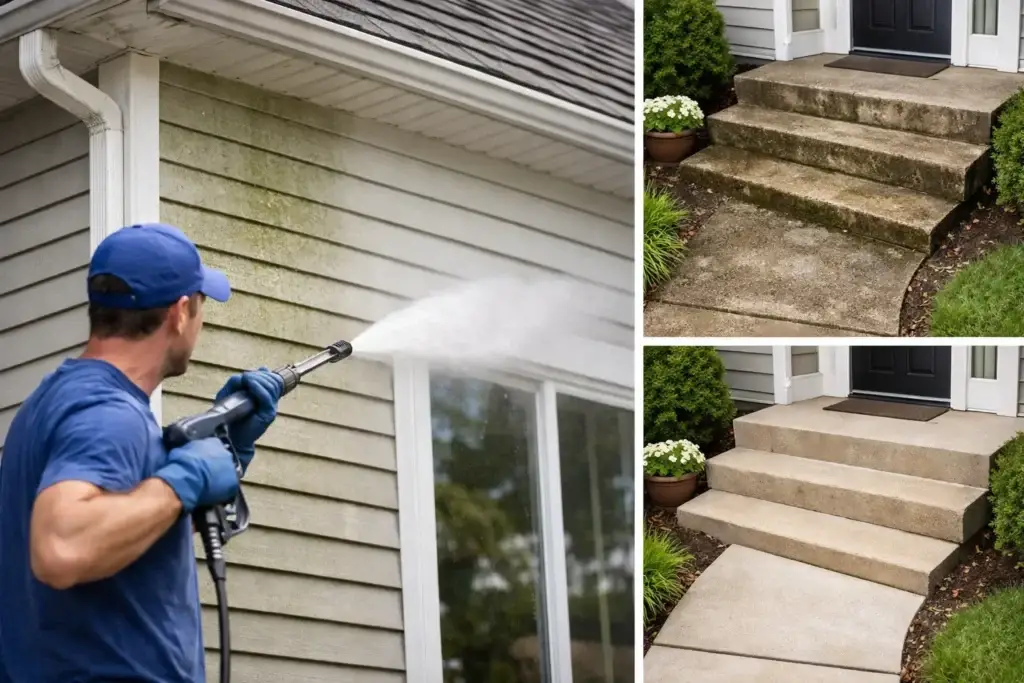
Vinyl siding, painted surfaces, stucco, and certain trim areas usually respond best to a lower-pressure soft wash approach. This method uses the right cleaning solution to break down algae, mildew, and organic buildup, then rinses the surface without the damage risk of blasting it.
If your siding has green patches, spider webs, pollen stains, or dull gray film, a wash is probably overdue. South-facing and shaded sides of the home often age differently, so do not assume one clean wall means the entire exterior is in good shape. A homeowner can handle light rinsing in some cases, but once you are dealing with visible biological growth or a multi-story home, professional cleaning is usually the safer and more effective choice.
Roof streaks are not just cosmetic
Those dark lines on asphalt shingles are often caused by algae, not dirt. Moss can also take hold in damp, shaded areas. Both can affect how the roof sheds water and how it looks from the street. More importantly, roofs are one of the easiest places to make an expensive mistake.
Walking a roof with the wrong equipment or spraying it with high pressure can loosen granules, damage shingles, and create leak risks. Roof cleaning is one area where DIY usually sounds easier than it is. A proper soft wash removes the growth without abusing the roofing material. If your roof is streaked, slippery, steep, or hard to access, that is a strong sign to leave it to licensed and insured professionals.
What to clean each season
A home does not need every surface cleaned constantly, but it does benefit from a simple maintenance rhythm. Spring is the most common time to wash away winter residue, check gutters, and freshen up the property before outdoor season starts. Summer is ideal for decks, patios, fencing, and spot-cleaning areas that get heavy use. Fall is critical for gutter cleaning because leaves and debris can back up drainage right before freeze-thaw weather arrives.
Winter is usually not the time for major exterior washing in colder climates, but it is a good time to inspect problem areas from the ground. Look for overflow stains under gutters, dark roof patches, slippery walkways, or siding that seems to stay damp longer than it should. Those clues tell you what to schedule when temperatures cooperate.
Gutters are a bigger deal than they look
A lot of homeowners put off gutter cleaning because it does not seem urgent until water is pouring over the edge. By then, you may already be dealing with fascia damage, foundation splashback, landscape erosion, or moisture issues around the home.
Gutters should move water away quickly and evenly. If they sag, overflow, or spill from corners, they need attention. Homes with heavy tree cover may need cleaning more than once a year. If your house is one story and access is simple, some homeowners handle this themselves. But on taller homes or roofs with difficult angles, the ladder risk alone is reason enough to bring in a pro.
Concrete and pavers can become slippery fast
Driveways, walkways, pool surrounds, and patios take abuse year-round. Oil spots, algae, rust stains, dirt, and general weathering can make these areas look older than they are. More importantly, shaded concrete can become slick and unsafe.
This is where pressure washing often makes sense, but technique still matters. Too much pressure can leave lines, etch the surface, or disturb joint sand in pavers. A professional clean typically produces a more even result and helps preserve the finish instead of roughing it up.
When DIY makes sense and when it does not
There is nothing wrong with homeowners handling light exterior maintenance. Rinsing outdoor furniture, sweeping a deck, washing first-floor windows, or hosing off a small patio are all reasonable weekend jobs. The line gets crossed when the work involves height, specialized chemicals, delicate surfaces, or equipment that can cause damage in a few seconds.
A rented pressure washer is a good example. It can seem like a money-saver, but it also puts the operator in charge of surface selection, nozzle choice, spray distance, and water intrusion risk. Many homeowners do not realize they are damaging paint, gouging wood, or driving moisture into places it should never reach until the problem shows up later.
A good rule is simple. If the surface is elevated, visibly stained by algae or mold, or expensive to replace, caution should win. Professional exterior cleaning is often less about convenience than about avoiding avoidable damage.
An exterior cleaning guide for homeowners who want lasting results
If your goal is lasting results, cleaning method matters as much as timing. Quick cosmetic washing can make a surface look better for a short time, but if the underlying organic growth is not treated properly, staining returns faster. That is why soft washing is often the better answer for siding and roofing. It cleans deeper at the source instead of just blasting the surface layer away.
It also helps to think beyond one service at a time. A house wash, roof cleaning, gutter cleaning, and concrete cleaning done on a smart schedule can keep the whole property looking maintained instead of chasing one visible problem after another. For busy homeowners, that kind of planning is often the difference between regular upkeep and reactive repairs.
What to look for in a professional cleaning company
Not every exterior cleaning company works the same way. Ask how they clean different surfaces and whether they use soft washing where appropriate. Make sure they are licensed and insured. Look for clear scheduling, straightforward quoting, and a satisfaction guarantee that means something.
The best contractors are not just selling clean surfaces. They are helping you protect paint, roofing, wood, and drainage systems with the right process. That matters more than the lowest price. Cheap work gets expensive when it leaves damage behind.
For homeowners in coastal and southeastern Connecticut, where moisture and organic buildup are common, working with a company that understands local conditions can save time and frustration. CT Softwash LLC is one example of a provider that focuses on safe, surface-appropriate cleaning rather than a one-size-fits-all approach.
If your home is showing the usual signs – green siding, black roof streaks, clogged gutters, dirty concrete, or a deck that has lost its color – the best next step is not to wait for it to get worse. A clean exterior does more than improve the way your home looks. It helps your property age better, stay safer, and hold its value with less stress along the way.