
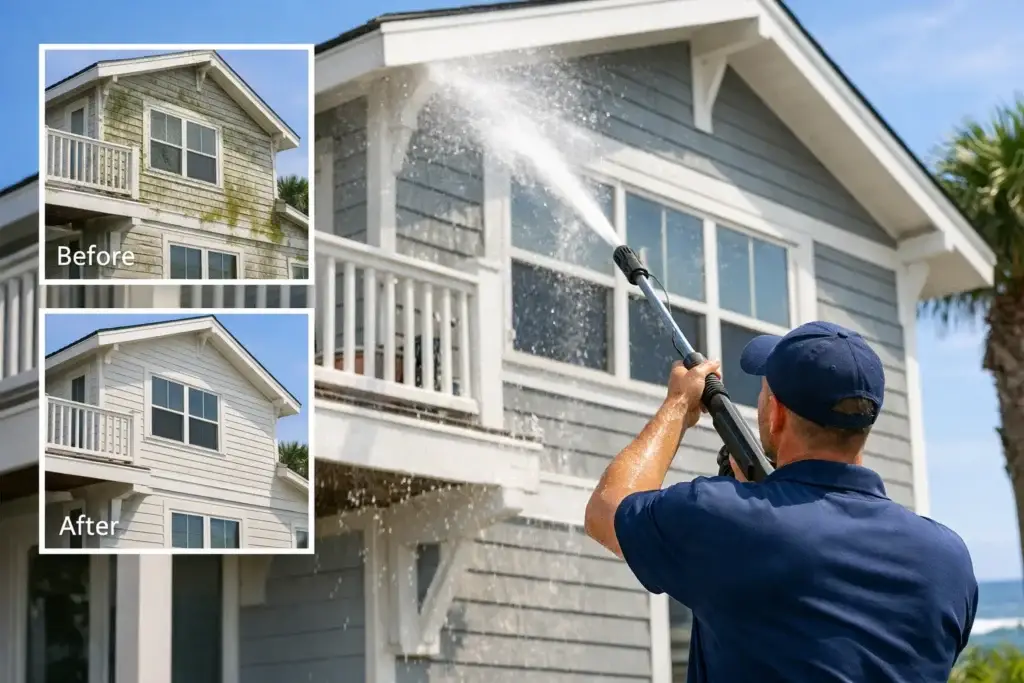
If you live near the shoreline, you already know the pattern. Your home can look clean one week, then hazy, streaked, or chalky the next. Salt in the air settles on siding, trim, windows, and railings faster than many homeowners expect, which is why smart salt air house washing tips matter so much for protecting curb appeal and avoiding early wear.
Along the coast, the issue is not just dirt. Salt holds moisture against exterior surfaces, and that moisture gives mildew, algae, and grime an easier place to stick. Over time, paint can dull, metal can corrode, windows can spot, and siding can start to look older than it is. The good news is that regular washing helps. The key is using the right method for the material instead of blasting everything with high pressure and hoping for the best.
Why salt air is harder on your exterior
Salt buildup is sneaky because it does not always look dramatic at first. Sometimes it shows up as a light film on glass or a faded look on siding. Other times it combines with pollen, dust, and moisture and turns into visible streaks or organic growth.
Homes in shoreline areas like Mystic, Stonington, and Westerly often deal with this more aggressively because exposure is more constant. Wind carries salt farther inland than most people realize, so even properties that are not right on the water can still see the effects. If your house gets regular coastal wind, exterior washing should be treated as routine maintenance, not a once-in-a-while cleanup.
Salt air house washing tips for siding, trim, and more
1. Wash more often than inland homes
One of the most practical salt air house washing tips is simple – increase your cleaning frequency. A home exposed to coastal air usually needs more frequent rinsing and washing than a similar home farther inland. Waiting until buildup is obvious often means the surface has been holding contaminants for weeks or months.
For many homes, a light rinse schedule combined with periodic professional house washing works better than one heavy annual cleaning. The exact timing depends on your location, tree cover, wind exposure, and the material on your home. A shaded house with lots of moisture may need attention sooner than a sunny one.
2. Start with the gentlest effective method
This is where many homeowners get into trouble. High pressure can remove grime fast, but it can also force water behind siding, scar painted wood, damage trim, and leave vinyl with visible marks. On salt-affected homes, that damage can make future buildup worse because roughened surfaces hold debris more easily.
For most siding, soft washing is the safer choice. It uses low pressure with the proper cleaning solution to break down salt film, mildew, algae, and dirt without punishing the material. Pressure has its place on certain hard surfaces, but house siding, soffits, trim, and painted exteriors usually benefit from a lower-pressure approach.
3. Do not ignore windows and frames
Salt does not stop at the siding. It settles on glass, screens, and window frames, where it can leave spotting, haze, and residue that make the whole home look neglected. If left alone too long, salty moisture around frames and seals can also contribute to wear.
A full exterior wash should include attention to the windows, especially on the wind-facing sides of the house. Rinsing matters, but so does using the right technique to avoid streaking and residue. This is one reason homeowners often prefer professional service – the house looks truly clean when the glass and trim are handled properly along with the siding.
4. Clean gutters, fascia, and soffits as part of the same plan
Salt air buildup rarely stays isolated to one surface. Gutters, fascia boards, and soffits collect the same film, and those areas often hold moisture longer. That combination can lead to discoloration, mildew growth, and premature wear around the roofline.
If your gutter exteriors are streaked or your soffits look dingy, house washing alone may not fix the full problem unless those sections are cleaned too. Bundling these services makes sense because the upper parts of the home are often where salt residue and moisture linger. Clean roof edges and drainage lines also help the rest of the exterior stay cleaner between washes.
What not to do when washing a coastal home
Skip the “more pressure is better” mindset
A pressure washer in untrained hands can do expensive damage quickly. Vinyl can crack or shift loose. Oxidized siding can show zebra-striping. Painted surfaces can peel. Wood can fur up and absorb even more moisture later. The surface may look cleaner for a moment, but the long-term cost is not worth it.
Avoid harsh DIY chemical mixing
Bleach-heavy mixes, degreasers, and random store-bought cleaners can create problems if they are too strong, used in direct sun, or not rinsed correctly. Some products can stain plants, dull painted surfaces, or react poorly with certain materials. Coastal homes already deal with enough wear. Cleaning solutions should solve the problem without adding another one.
Do not wait for visible damage
By the time salt exposure shows up as peeling paint, heavy staining, or corrosion, the issue has usually been building for a while. Washing is preventive maintenance. It is much easier and more affordable to remove surface buildup early than to repaint, replace trim, or deal with avoidable exterior deterioration later.
The best time to wash a house near the coast
Spring and fall are usually the smartest times for a full exterior wash, though that can vary based on your property. Spring cleaning removes winter residue, moisture-related grime, and early organic growth. Fall washing clears away summer buildup before colder weather sets in.
That said, some homes need mid-season maintenance too, especially after windy stretches, storm exposure, or humid periods that encourage mildew. If one side of your home always looks worse than the others, that is a clue your exposure pattern is driving the schedule.
When professional house washing makes more sense
Some homeowners are comfortable handling light rinsing or spot cleaning. But full house washing near the coast is usually more technical than it looks. You need the right pressure, the right solution mix, and the right process for each surface. What works on concrete does not belong on painted trim. What is safe for one type of siding may not be ideal for another.
Professional washing also matters when your home has multiple stories, delicate finishes, roofline buildup, or stubborn staining. A trained crew can clean more thoroughly while reducing the risk of water intrusion or surface damage. That is especially important for homes where appearance and long-term exterior protection both matter.
For homeowners in coastal Connecticut and nearby Rhode Island, this is not just about appearance. Salt exposure adds wear faster than people think, and the wrong cleaning method can create repair issues that cost far more than routine maintenance. A licensed and insured exterior cleaning company gives you a safer path, clearer results, and less guesswork.
A simple maintenance rhythm that works
The most effective approach is not complicated. Rinse obvious salt film when needed, keep gutters and drainage areas clean, schedule house washing before buildup gets heavy, and use soft washing for vulnerable materials. Add window cleaning when visibility and curb appeal start to slip, and keep an eye on the sides of the home that face prevailing wind.
That rhythm works because it matches the real problem. Coastal buildup is ongoing, so maintenance has to be ongoing too. Waiting for the house to look bad usually means you waited too long.
If you want your exterior to last longer, look better, and need fewer repairs, salt air should be treated like any other maintenance factor. Stay ahead of it, use the right cleaning method, and get help when the job calls for professional equipment and experience. A clean coastal home does not happen by accident. It happens by keeping the buildup from getting comfortable in the first place.