
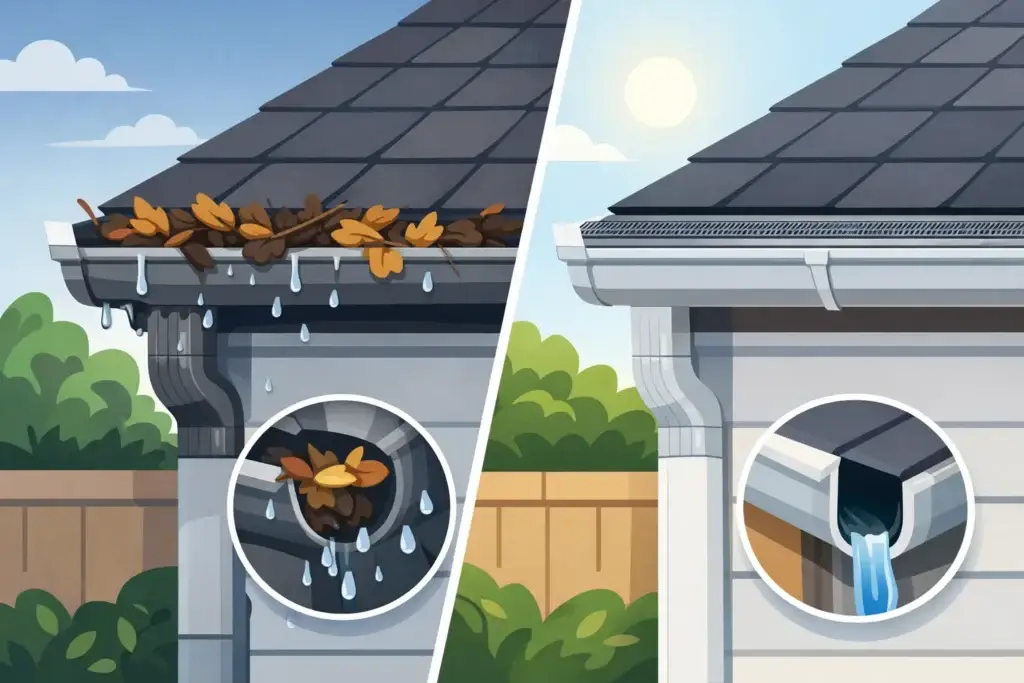
A gutter can look clear from the ground while a packed layer of wet leaves, roof grit, pine needles, and shingle granules is quietly blocking the outlet. Then a hard Connecticut rain arrives, water spills over the gutter edge, and the problem becomes impossible to ignore. The best ways to prevent gutter clogs are not complicated, but they do require regular attention, smart drainage design, and a safe plan for the work.
Clog prevention protects more than the gutters themselves. Properly moving water away from the house helps protect fascia boards, siding, landscaping, walkways, foundations, and basements. It also keeps standing water from adding unnecessary weight to the gutter system.
1. Clean Gutters Before Buildup Becomes a Blockage
The most dependable prevention method is routine gutter cleaning. Leaves do not need to fill an entire gutter to cause trouble. A small dam near a downspout can trap more debris, hold moisture, and turn into a dense blockage after the next storm.
For many homes, cleaning in late spring and again after fall leaf drop is a practical baseline. Properties beneath mature oaks, maples, pines, or other heavy-shedding trees may need three or four cleanings each year. Pine needles and seed pods can create problems well beyond the traditional fall cleanup season.
Do not overlook the downspouts. A gutter may appear clean but still overflow because the downspout is blocked at the elbow or underground connection. During cleaning, remove loose debris, flush the channels with water, and confirm that water exits freely at the bottom.
2. Keep Nearby Trees Properly Trimmed
Overhanging branches are one of the main reasons gutters refill quickly. They drop leaves directly into the trough, scrape against the roof in wind, and give squirrels and other animals easy access to the roofline. Branches that hold snow or ice over the roof can create another seasonal concern.
Trim limbs back from the roof where practical, especially branches that hang directly over gutters. The right distance depends on the tree, its health, and local conditions, so avoid aggressive pruning that could harm the tree or create a falling hazard. A qualified tree professional is the safer choice for large limbs, branches near power lines, or work that requires climbing.
Tree trimming will not eliminate every leaf, but it can greatly reduce how fast debris accumulates. It also makes your regular gutter maintenance more effective.
3. Make Sure Downspouts Carry Water Far Enough Away
A clear gutter is only useful if the downspout delivers water to a safe location. Downspouts that empty beside the foundation can saturate soil, encourage erosion, and increase the chance of water finding its way into a basement or crawl space.
Use extensions or properly designed drainage piping to direct water away from the home. The discharge point should slope away from the foundation and should not send water onto a neighbor’s property, across a walkway where it can freeze, or into an area that already stays wet.
Check the outlet after a heavy rain. If water is pooling, backing up, or cutting channels through mulch, the drainage path needs attention. Sometimes a longer extension is enough. In other cases, grading, buried drain lines, or a different discharge location may be needed.
4. Consider Gutter Guards, but Choose Them Carefully
Gutter guards can reduce the amount of large debris that enters the system. They are especially helpful for homes surrounded by broadleaf trees, provided the gutters and downspouts are already clean and in good condition before installation.
They are not a zero-maintenance solution. Fine mesh guards can still collect roof grit, pollen, small seeds, and pine needles on top. Reverse-curve styles may perform differently depending on roof pitch and rainfall intensity. Some guard systems can also make future cleaning or repairs more difficult if they are poorly fitted.
The best approach is to match the guard type to the property. If your roof receives heavy pine needle buildup, look for a system designed to handle fine debris. If large leaves are the main issue, a simpler guard may be sufficient. Either way, plan to inspect the gutters periodically rather than assuming they will never need service again.
5. Check Gutter Pitch and Secure Loose Sections
Water cannot reach the downspout if the gutter is sagging, pulling away from the fascia, or pitched in the wrong direction. Even a clean gutter can hold puddles when its slope is off. Standing water collects debris faster, adds weight, and can lead to rust or premature wear.
From the ground, look for visible dips, sections that overflow in the middle, or water staining beneath the gutter line. During rainfall, watch where water spills over. Overflow at a single spot may indicate a clog, but repeated overflow across a longer section often points to a pitch or fastening problem.
This is a good repair to address early. Tightening or replacing hangers, resealing joints, and correcting the slope can help the whole system drain as intended. If fascia boards are soft or damaged, they should be repaired before reattaching gutters.
6. Keep the Roof Surface Clean
What lands on the roof eventually moves toward the gutters. Moss, algae, loose shingle granules, branches, and accumulated leaf matter can wash down in heavy rain and create recurring clogs. Roof valleys deserve particular attention because they funnel a large amount of debris into a small area.
Avoid using harsh pressure on roofing. High pressure can loosen shingles, force water beneath roofing materials, and create damage that costs far more than a cleaning. Professional soft washing uses an appropriate method to treat organic growth without the force that can harm a roof.
A cleaner roof does not just improve curb appeal. It reduces the material available to wash into the gutter system and helps you spot issues such as damaged shingles, flashing concerns, or tree debris before they worsen.
7. Inspect Gutters After Major Storms
Windstorms, heavy rain, and winter weather can change the condition of a gutter system overnight. A single branch, nest, or clump of leaves can obstruct a downspout. Ice can loosen brackets and open seams. After a significant storm, take a quick walk around the property once conditions are safe.
Watch for overflowing water, detached downspouts, bent extensions, dark streaks on siding, or mulch displaced by runoff. You do not need to climb a ladder to identify every issue. Often, a ground-level inspection tells you whether professional service is needed.
For coastal and inland properties in southeastern Connecticut, wind-driven debris can be especially persistent. Regular post-storm checks are a simple way to catch a small problem before water begins affecting the home.
8. Know When Professional Gutter Cleaning Is the Safer Choice
Gutter work involves ladders, slippery surfaces, awkward reaching, and debris that may contain mold, insects, or animal nesting material. For a one-story home with stable ground and the right equipment, some homeowners may be comfortable performing basic maintenance. That is not the right fit for every property.
Professional gutter cleaning is often the better option for two-story homes, steep roofs, heavy buildup, difficult access, or gutters showing signs of damage. A trained crew can clear the system, flush downspouts, identify drainage concerns, and remove debris without asking you to spend a weekend on a ladder.
CT Softwash LLC provides professional gutter cleaning for homeowners and property owners who want a clean, functioning system without the risk and hassle of handling it alone. Licensed and insured service, clear scheduling, and a focus on property protection matter when water management is on the line.
A Simple Maintenance Schedule That Works
The best schedule depends on the trees around your home, but consistency matters more than waiting for visible overflow. Start with a spring cleaning to remove winter debris and check for storm damage. Schedule another service after most fall leaves have dropped. Add a midsummer or early-winter visit if your property has dense tree cover, pine needles, or frequent storm debris.
Between appointments, keep an eye on how the gutters perform during rain. Water should enter the gutter, travel to the downspout, and discharge away from the foundation without spilling, pooling, or staining the exterior. When it does not, prompt service is usually less expensive and far easier than repairing water damage later.
A clean gutter system is one of those quiet home-maintenance wins: you may not notice it working, but your foundation, siding, and landscaping benefit every time the rain starts.