
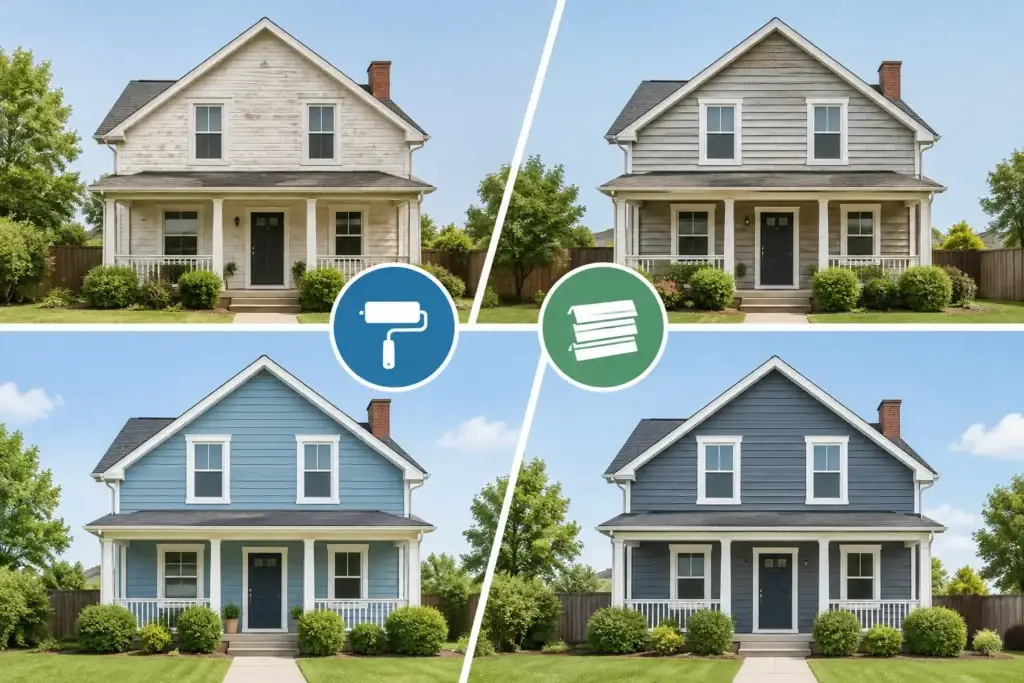
A faded exterior does not automatically mean your siding has reached the end of its life. In many cases, house painting versus siding replacement comes down to one question: Is the problem on the surface, or is it underneath the surface? Making the right call can protect your home, improve curb appeal, and prevent paying for work you do not yet need.
Connecticut homes take a beating from wet springs, humid summers, coastal air, falling leaves, ice, and freeze-thaw cycles. That exposure can leave siding chalky, stained, peeling, warped, or cracked. Some of those issues respond well to professional cleaning and paint. Others point to moisture damage that should be addressed before it spreads.
House Painting Versus Siding Replacement: Start With Condition
Painting is a restoration service. It refreshes color, seals properly prepared surfaces, and gives a well-maintained exterior a clean, updated look. It is often a smart choice when the siding is still sound but looks worn from age, sun exposure, mildew staining, or outdated color.
Siding replacement is a repair and renovation project. It removes failed material and gives the contractor access to potential problems behind the exterior, such as damaged sheathing, rot, pest activity, or moisture intrusion. It costs more than painting, but it may be the more responsible investment when the siding can no longer protect the structure.
The key is not judging the house from the street alone. A home can look rough because it needs washing and paint, while another can look mostly fine but have water entering through failed joints, soft trim, or hidden cracks.
Signs Painting May Be the Right Investment
Painting is usually worth considering when your siding is solid, securely attached, and free of widespread rot or distortion. Small cosmetic flaws are normal on an aging exterior, especially on painted wood, fiber cement, and engineered wood products.
Look for fading, chalking, minor peeling, light surface cracking, and color that no longer fits the home. Mildew and algae can also make siding appear much worse than it is. A proper soft wash can remove organic buildup without the aggressive pressure that may damage delicate siding or force water behind it. Once the surface is clean and dry, it becomes much easier to see what truly needs paint and what simply needed professional care.
Painting can also be a practical choice if you plan to sell within a few years and the exterior is structurally sound. A clean, consistent finish makes a strong first impression without taking on the larger expense and disruption of a full siding project.
When Siding Replacement Is the Better Call
Paint cannot repair material that is rotting, crumbling, buckling, or pulling away from the house. If you press gently on wood siding or trim and find soft spots, replacement should be part of the conversation. Painting over rot only hides the problem temporarily, and trapped moisture can continue damaging the wall system.
Replacement also makes more sense when there are repeated leaks, severe warping, widespread cracks, missing sections, or panels that no longer lock together correctly. Vinyl siding that has become brittle or heavily distorted from heat will not regain its shape with paint. Cedar shingles with extensive splitting or decay may require more than spot repairs. For older homes, recurring paint failure in the same locations can be a warning that moisture is coming from behind the siding, around windows, or from roof and gutter issues.
Pay close attention to these red flags:
- Soft, spongy, or crumbling wood around siding, trim, windows, and doors
- Warped, loose, cracked, or missing panels across multiple areas
- Bubbling paint or recurring peeling shortly after repainting
- Water stains indoors, musty odors, or visible mold near exterior walls
- Insect damage, holes, or signs that pests are getting behind the siding
A few isolated damaged boards do not always require full replacement. Targeted repairs followed by painting may be enough. The scope depends on how widespread the damage is and whether the issue has compromised the materials behind the siding.
Compare the Cost Beyond the Initial Price
Painting almost always has a lower upfront cost than replacing siding. That makes it appealing, particularly when the home needs an immediate visual improvement. But the least expensive project today is not always the best value over the next decade.
A quality exterior paint job includes more than applying a new color. The siding needs to be cleaned, allowed to dry, scraped where necessary, repaired, primed, caulked, and painted using the appropriate products. Skipping preparation is one of the fastest ways to get early peeling and uneven coverage. Professional cleaning is especially valuable in Connecticut, where mold, mildew, pollen, and winter grime can interfere with adhesion.
Replacement has a higher price because it includes demolition, disposal, new materials, installation labor, trim work, and sometimes repair of hidden damage. In exchange, newer siding can offer a longer service life, reduced maintenance needs, and an opportunity to improve weather protection. Some homeowners also choose replacement when they want insulation upgrades or a completely different exterior style.
Think about timing. If your siding is nearing failure and you paint it now, you may pay again for replacement within a short period. If the siding has many good years left, replacement can be unnecessary spending. An honest condition assessment helps avoid both mistakes.
Material Matters More Than Many Homeowners Realize
Not every siding material should be treated the same way. Wood siding is commonly painted and can look excellent for years with regular maintenance. It also requires careful monitoring because paint is part of its moisture defense system.
Fiber cement is highly paintable and often a good candidate for repainting when the boards remain intact. Proper surface preparation and manufacturer-compatible coatings matter. Engineered wood can also be painted, but damaged edges, swelling, or delamination need repair first.
Vinyl siding is different. It can be painted in certain circumstances, but it requires the right paint, careful color selection, and a sound surface. Darker colors can absorb more heat and may cause warping, especially on older vinyl. If vinyl is badly cracked, brittle, or loose, replacement is usually the safer long-term option.
Aluminum siding can often be painted successfully after thorough cleaning and preparation. However, dents, corrosion, and failing seams should be evaluated before investing in paint.
Do Not Let Dirt Decide for You
Organic growth and oxidation can make an exterior look damaged when the material is still in good shape. Green algae, black mildew, pollen film, spider webs, and roadside grime can flatten color and highlight every imperfection. On vinyl, chalky oxidation can make siding appear faded or blotchy from a distance.
That is why cleaning should happen before a final painting or replacement decision whenever possible. Soft washing uses low pressure and professional cleaning solutions designed for exterior surfaces. It removes buildup more safely than blasting siding with high pressure, which can scar surfaces, strip paint, or drive water where it does not belong.
After a professional wash, homeowners often get a clearer picture. Sometimes the change is dramatic enough that painting can be postponed. Other times, the clean surface reveals failed caulk, cracks, deteriorated trim, or paint loss that was hidden under grime. Either outcome is useful because it is based on the home’s actual condition.
Consider Maintenance, Not Just Appearance
A freshly painted home needs periodic inspection and touch-ups, particularly around trim, fascia, window frames, and areas exposed to direct weather. Keeping gutters clean, trimming vegetation away from the exterior, and addressing roof runoff problems can help paint last longer.
New siding may reduce painting needs, depending on the material, but it is not maintenance-free. It still needs regular washing to remove mildew, algae, salt residue, and dirt. Caulk, flashing, and gutters still need attention. The best exterior investment is the one you can maintain consistently.
For many homeowners in Groton, Mystic, Waterford, and nearby shoreline communities, moisture management is the deciding factor. Salt air, shade, tree cover, and seasonal storms can shorten the life of both paint and siding if buildup and drainage issues are ignored.
Make the Decision With a Clear Exterior Assessment
Before committing to a large project, inspect the siding in daylight after it has been cleaned. Check lower walls, corners, around windows, beneath gutters, and any side of the house that receives limited sun. These areas often show moisture-related trouble first.
If the siding is solid and the issues are cosmetic, professional preparation and painting can deliver a major curb appeal improvement for a more manageable investment. If you find extensive damage, recurring moisture problems, or failed material, replacement may protect the home better and save money over time.
CT Softwash LLC can help homeowners start with a safer, professional exterior cleaning that reveals what their siding really needs. A clean surface gives you better information, better paint results, and more confidence in the next step. Whether you paint this season or plan for replacement later, take care of the moisture, buildup, and small repairs before they become expensive surprises.