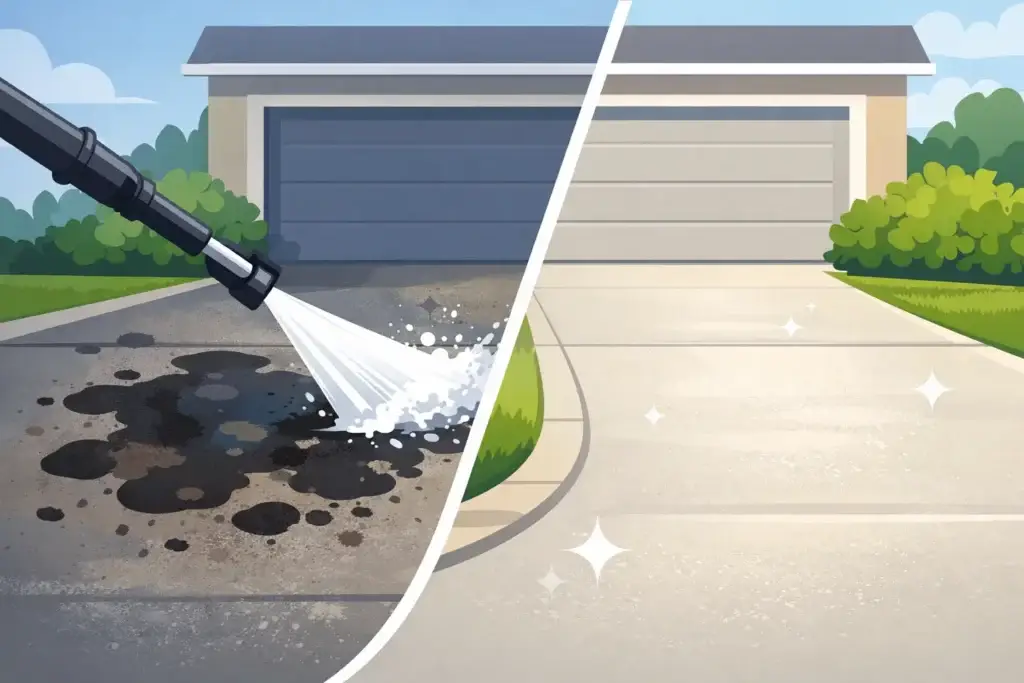
That dark oil spot in the middle of the driveway usually gets more attention than the whole rest of the concrete. Homeowners often assume pressure washing driveway oil stains is a quick fix, but oil is one of the most stubborn driveway stains because it sinks below the surface. If you want a real improvement, not just a wet-looking cover-up, the method matters.
Fresh drips and old engine leaks behave differently. Concrete is porous, so oil does not just sit on top waiting to be rinsed away. It spreads into tiny openings, bonds with dirt, and leaves behind that familiar black or brown shadow. A pressure washer can help, but pressure alone is rarely the whole answer.
Why pressure washing driveway oil stains is tricky
Oil stains are different from mildew, pollen, or general surface grime. Those materials usually sit on the surface and respond well to standard cleaning. Oil penetrates. That means even a strong machine may remove the surface layer while leaving discoloration underneath.
This is where a lot of DIY efforts go sideways. People rent a powerful washer, use the narrowest tip, and blast one spot over and over. The stain lightens a little, but the concrete ends up etched, striped, or visibly cleaner in one patch than everywhere around it. The result can look worse than the original stain.
The age of the stain matters too. If the oil spill happened yesterday, cleanup is much easier. If it has been baking in the sun for six months through Connecticut weather, removal becomes more of a treatment process than a rinse job. In those cases, realistic expectations are important. The goal is usually major improvement, not always perfect restoration.
What actually works on oil stains
The best approach combines product, dwell time, agitation, and controlled pressure washing. Skipping any one of those steps makes the job harder.
A proper degreaser is usually the first part of the process. It breaks down the oil so it can be lifted from the concrete instead of just pushed around. The cleaning product needs enough time to sit and work, which is one reason quick spray-and-rinse attempts often fail. In many cases, scrubbing the area before pressure washing helps pull embedded residue closer to the surface.
Then the pressure washer comes in to rinse away loosened material. Hot water can outperform cold water on greasy stains, but most homeowners do not have commercial hot water equipment sitting in the garage. That is one reason professional results are often noticeably better. Industrial machines, matched with the right cleaners, can remove far more contamination without relying on damaging pressure.
Surface cleaners can also help on driveways because they clean evenly and reduce wand marks. For spot treatment, though, a technician may need more targeted work around the stain itself. It depends on the size, depth, and condition of the concrete.
When pressure helps – and when it causes damage
More pressure is not always better. Concrete can handle more than siding or roofing, but that does not mean it is damage-proof. Too much pressure focused in one area can leave visible lines, pitting, or a rough texture that stands out after the stain is gone.
This is especially true on older driveways, decorative concrete, or surfaces that already have minor wear. Once the top layer is scarred, you cannot wash that damage away. That is why experienced exterior cleaners focus on the right combination of cleaning solution and technique instead of treating every stain like a demolition project.
There is also the issue of consistency. If one section of the driveway gets aggressive cleaning and the rest does not, you may end up with a bright patch around the former stain. Technically, the oil mark is improved, but the driveway now looks uneven. A professional cleaning often addresses the surrounding area too, so the finished surface looks intentional and clean rather than spot-repaired.
A smart process for pressure washing driveway oil stains
If you are tackling the job yourself, start by absorbing any fresh oil with an absorbent material and sweeping it up completely. Do not add water first. Water can spread the contamination and push it deeper.
Next, apply a concrete-safe degreaser made for petroleum-based stains. Let it dwell based on the product instructions, then scrub with a stiff brush. This step matters more than many people think. Agitation helps break the bond between the oil and the porous surface.
After that, pressure wash the area with a fan tip, not a pinpoint spray. Keep the wand moving and avoid holding it too close to the concrete. If the stain is old, you may need to repeat the treatment. One pass is often not enough.
If the stain improves but does not fully disappear, that is normal. Some oil marks leave a shadow even after proper cleaning because the contamination has penetrated deeply or changed the color of the concrete over time. Repeated careful treatment may continue to improve it, but there is a point where aggressive washing creates more risk than reward.
Common mistakes homeowners make
The biggest mistake is using straight pressure with no pretreatment. That usually wastes time and can lock frustration in fast. Another common issue is choosing harsh chemicals without checking whether they are safe for the driveway, nearby grass, or surrounding surfaces.
Dish soap, bleach, and random garage products are often used as substitutes, but they rarely deliver professional-level results on oil. Bleach is especially misunderstood. It can help with organic staining, but oil is a different problem. On top of that, improper chemical use can discolor surfaces or create runoff concerns.
Another mistake is expecting a spotless result from a single cleaning on a years-old stain. Oil removal is one of those jobs where honest expectations matter. A good cleaning can dramatically improve the driveway’s appearance, but the exact result depends on stain age, concrete porosity, weather exposure, and whether previous attempts have already damaged the area.
Why professional driveway cleaning is often the better call
For many homeowners, the real issue is not whether they can rent a pressure washer. It is whether they want to spend the time, risk surface damage, and still end up with a mixed result. Professional driveway cleaning is often faster, safer, and more cost-effective than multiple DIY attempts.
A trained crew can identify whether the stain is from motor oil, transmission fluid, rust-colored runoff, or a blend of grime and petroleum. That matters because different stains respond to different treatment methods. They also know how much pressure the surface can safely handle and how to clean the surrounding concrete so the final result looks even.
For properties in coastal and seasonal climates like eastern Connecticut and nearby Rhode Island communities, driveways often have more than one issue at once. Oil stains may be layered with algae, dirt, sand, and winter residue. A full cleaning approach can restore the driveway more completely than spot treatment alone.
That is where working with a company like CT Softwash LLC makes sense. Homeowners want visible results, but they also want the job done safely, on schedule, and without guessing. Licensed and insured professionals using commercial-grade equipment can usually deliver a better finish while taking the hassle off your plate.
How to know when it is time to stop DIY
If you have already treated the stain once or twice and the improvement is minor, it is probably time to stop escalating pressure. The same goes if the concrete starts looking lighter, rougher, or uneven around the stain. Those are signs the surface is being affected more than the oil.
You should also think twice about DIY cleaning if the driveway is large, sloped, decorative, cracked, or close to landscaping you do not want to damage. What looks like a simple cleanup can turn into a bigger project once runoff, chemical handling, and uniform cleaning come into play.
A driveway does not need to be perfect to look dramatically better. In most cases, the win is a cleaner, more uniform surface that improves curb appeal and makes the whole property feel better maintained. That is what most homeowners are really after.
If the stain is bothering you every time you pull in, it is probably not going away with water alone. The right treatment can make a major difference, and when the surface needs a professional touch, getting help early is usually the easiest way to protect the concrete and get your driveway looking like it should.