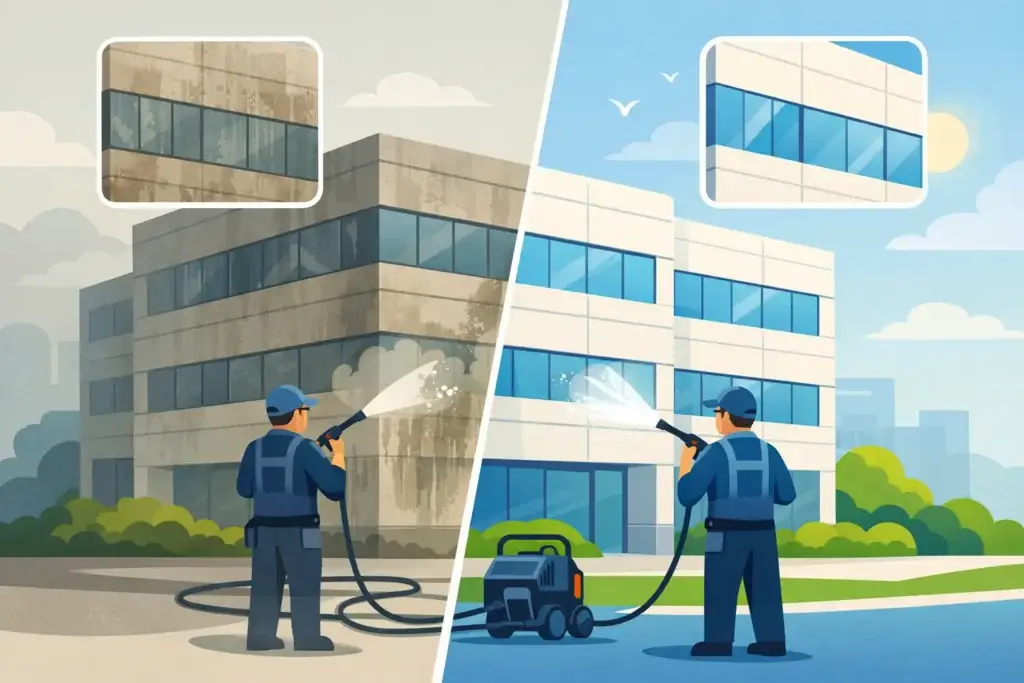
A storefront can lose business before anyone opens the door. Dirt on siding, algae on walkways, stained concrete, and black streaks around entrances all send a message – and it is usually not the message a business wants to send. Commercial building pressure washing helps fix that fast, but the real value is not just appearance. Done correctly, it protects surfaces, improves safety, and helps property owners stay ahead of expensive repairs.
For office buildings, retail centers, restaurants, medical offices, warehouses, and multi-unit properties, exterior cleaning is not a once-in-a-while cosmetic extra. It is part of building maintenance. In Connecticut, where moisture, seasonal debris, traffic film, and winter residue build up quickly, skipping service for too long usually means more staining, more growth, and more wear.
Why commercial building pressure washing matters
The biggest reason property owners schedule exterior cleaning is simple – people notice dirty buildings. Customers notice. Tenants notice. Employees notice. Prospective buyers and inspectors notice too. A cleaner exterior makes a property look maintained, active, and professional.
But appearance is only part of the picture. Mold, mildew, algae, and built-up grime can hold moisture against exterior materials. On some surfaces, that can speed up deterioration. On walkways, entry pads, and loading areas, buildup can also create slick conditions. That turns a cleaning issue into a liability issue.
Regular washing also makes it easier to spot problems early. When surfaces are covered in dirt, stains, and organic growth, cracks, failing caulk, damaged paint, and drainage issues can be harder to see. Cleaning clears the surface so maintenance decisions are based on what is really there.
Not every surface should be cleaned the same way
This is where many property owners get burned. Commercial building pressure washing is not just about spraying everything at high force. Different materials need different methods, and using too much pressure can do real damage.
Concrete can usually handle higher pressure than painted siding or stucco. Vinyl, EIFS, older brick, window trim, signage, and certain coatings often need a lower-pressure approach. Rooflines, gutters, and delicate exterior finishes may be better served with soft washing rather than direct high-pressure blasting.
That is why method matters as much as equipment. A professional crew should know when to use pressure, when to reduce it, and when to rely on cleaning solutions and soft washing techniques to break down buildup safely. The goal is a clean building, not a damaged one.
What a professional cleaning usually includes
Most commercial exterior cleaning projects are tailored to the property. A small storefront and a large industrial building are not going to need the same scope of work. That said, the most common service areas include building walls, entryways, sidewalks, dumpster pads, curbs, loading zones, drive-thru lanes, and concrete around the property.
In many cases, cleaning the building alone is not enough. If the walls look fresh but the walkway is stained and the entrance is slippery, the property still looks neglected. The best results usually come from treating the exterior as a full presentation zone rather than one isolated surface.
A good contractor will also account for water flow, nearby landscaping, customer access, parked vehicles, and the best time of day to complete the work. For active commercial properties, scheduling can be just as important as the washing itself.
When to schedule commercial building pressure washing
There is no one perfect schedule for every property. It depends on the type of business, building materials, traffic level, tree cover, moisture exposure, and how visible the property is from the road.
A restaurant, gas station, retail plaza, or medical office with constant foot traffic will usually need more frequent service than a low-traffic office building. Properties near busy roads often collect grime and exhaust residue faster. Shaded areas tend to hold moisture longer, which can lead to more algae and mildew.
For many commercial properties, one or two cleanings a year is a practical baseline. Heavily used sites may benefit from quarterly service, especially for sidewalks, entrances, and other high-visibility areas. The right schedule is the one that keeps buildup from becoming a bigger problem. Waiting until everything looks bad usually means more aggressive cleaning and less consistent curb appeal.
Signs your building needs service sooner
Some property owners wait for obvious discoloration, but the earlier signs matter too. If concrete darkens in patches, if green growth starts showing along the base of walls, or if entry areas stay stained even after rain, the building is already due for attention.
Black streaks, rust stains, gum buildup, bird droppings, algae on shaded surfaces, and slippery sidewalks are all common signals. Fading tenant satisfaction can be another one. People may not always say a property looks dirty, but they notice when it feels poorly maintained.
If you manage a commercial property, it also helps to think seasonally. Spring often reveals what winter left behind. Late summer can bring mildew and algae. Fall leaves and debris stain surfaces if they sit too long. Staying ahead of those cycles is easier than trying to reverse months of buildup all at once.
Choosing the right company for commercial building pressure washing
Price matters, but it should not be the only filter. Commercial work comes with more variables than a typical residential wash. There may be customer traffic, sensitive surfaces, shared access points, drainage considerations, or the need to work around business hours.
Look for a company that is licensed and insured, communicates clearly, and explains how it plans to clean each surface. If a contractor talks as if every material gets the same treatment, that is a red flag. So is vague pricing or no discussion of safety, scheduling, and site protection.
The best providers make the process simple. They give fast quotes, set clear expectations, show up on time, and clean with a method that fits the building. They also understand that commercial clients want reliability as much as results. A great-looking property does not help much if the job disrupts operations or creates avoidable headaches.
For businesses and property managers in southeastern Connecticut, that local experience matters. Buildings in Groton, Mystic, Waterford, and surrounding shoreline communities deal with moisture, salt exposure, pollen, and seasonal grime that can be tough on exterior surfaces. A contractor familiar with those conditions is more likely to recommend the right approach and the right maintenance schedule.
The trade-off between DIY and professional service
It is possible to rent equipment and try to clean a commercial exterior in-house, but that choice often costs more than it looks. Commercial buildings are larger, access is harder, and the risk of damage goes up quickly when pressure settings, detergents, and spray angles are not matched to the surface.
There is also the time factor. Pulling staff away from their actual work to handle exterior cleaning is rarely efficient. Add in the possibility of etched concrete, damaged siding, water intrusion, or injury, and DIY pressure washing becomes a gamble.
Professional service is not just about convenience. It is about getting a visible result without creating a new problem. For many owners and managers, that peace of mind is worth more than the short-term savings of doing it themselves.
Why routine washing saves money over time
Exterior cleaning is often treated like an appearance expense, but it is better understood as preventive maintenance. Dirt and organic growth do not just sit on surfaces harmlessly. Over time, they can contribute to staining, decay, premature repainting, and avoidable repair work.
Routine washing helps extend the life of paint, concrete, siding, and other exterior materials by keeping harmful buildup under control. It can also reduce the need for major restoration later. A building that is cleaned on schedule usually needs less aggressive treatment than one that has been ignored for years.
That is one reason many owners move to recurring service once they see the difference. The building stays more presentable, the maintenance cycle becomes easier to manage, and there are fewer surprises.
What property owners should expect from the process
A well-run project should feel straightforward. The scope should be clear, the schedule should make sense, and the crew should work with attention to safety and property protection. On the day of service, preparation may include sectioning off work areas, moving obstacles, pre-treating buildup, and using the right cleaning method for each part of the building.
After cleaning, the property should look noticeably brighter and better maintained, but the bigger benefit is confidence. You know the outside of the building reflects the quality of what happens inside.
That matters whether you are attracting customers, keeping tenants happy, or protecting a long-term investment. A clean property does not need to be flashy. It just needs to look cared for, safe, and professionally maintained – because people can tell the difference right away.
If your exterior has started to look tired, stained, or harder to manage, waiting usually does not improve the outcome. The right cleaning at the right time can reset the look of the property and make ongoing maintenance much easier from that point forward.