
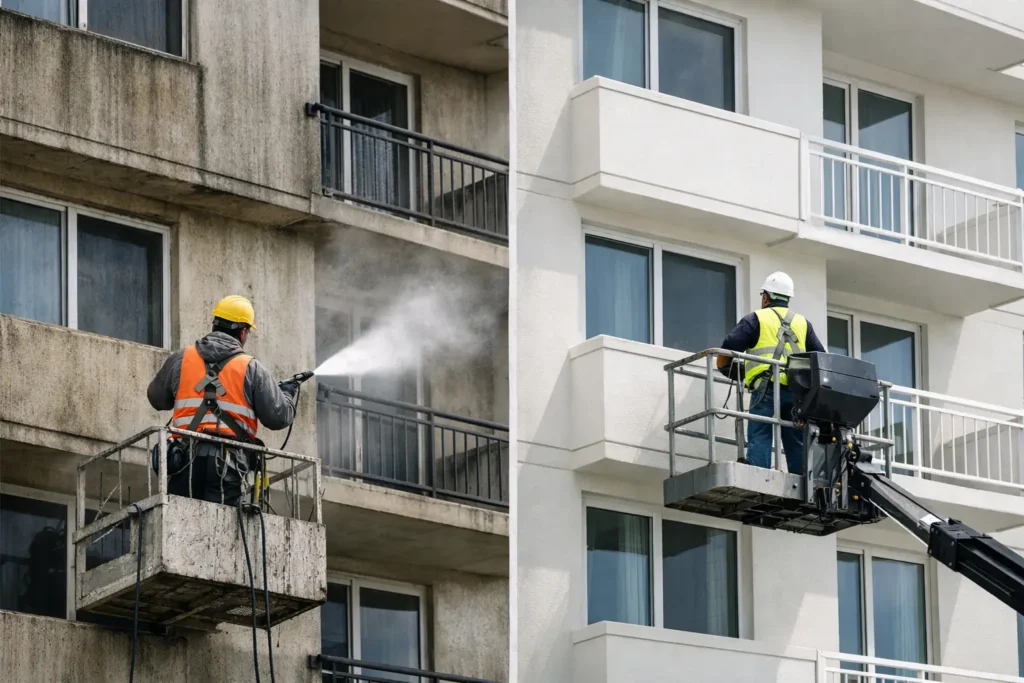
If an apartment building looks dingy from the street, tenants notice it, prospects notice it, and owners usually hear about it. Learning how to wash apartment building exterior surfaces the right way is not just about appearance. It is about protecting siding, paint, masonry, and trim from the mold, algae, dirt, and pollution that slowly wear a property down.
The catch is that large multifamily buildings cannot be cleaned the same way as a small single-family home. Height, access, surface type, landscaping, tenant traffic, and liability all change the job. A clean result matters, but so does avoiding damage, streaking, water intrusion, and complaints from residents.
How to wash apartment building exterior surfaces safely
The safest way to approach an apartment exterior is to match the cleaning method to the material. That is where many property owners get into trouble. High pressure might look effective in a video, but on painted siding, stucco, vinyl, trim, and older surfaces, too much pressure can strip finishes, force water behind cladding, and leave permanent marks.
For most apartment buildings, soft washing is the better starting point. Soft washing uses low pressure and professional cleaning solutions to break down algae, mildew, bacteria, and organic staining before the surface is rinsed clean. This approach is especially useful on vinyl siding, painted wood, composite surfaces, trim, and other materials that need a gentler touch.
Power washing still has a place, but it is usually reserved for tougher, more durable surfaces such as concrete walkways, curbs, retaining walls, dumpster pads, and some brick or block areas. Even then, experience matters. The right pressure for concrete is not the right pressure for EIFS, stucco, or painted masonry.
Start with an exterior inspection
Before any water is sprayed, the building should be inspected from top to bottom. This step saves time and prevents expensive mistakes. You want to know what you are cleaning, what condition it is in, and where the risks are.
Look closely at the siding or wall material, the age of the paint, signs of oxidation, cracks in stucco, loose caulking, failing mortar, open utility penetrations, and any spots where water could get behind the surface. Check for heavy biological growth on shaded elevations, especially the north side of the building or areas under overhangs. Note where landscaping is delicate and where resident vehicles or outdoor furniture may need to be moved.
On occupied apartment properties, inspection also helps with planning. Entry doors, breezeways, staircases, mail areas, and parking layouts all affect how the job should be staged. A good cleaning plan protects resident access while still getting the building washed thoroughly.
Choose the right cleaning method for each surface
Not every section of the building should be treated the same way. In most cases, the best results come from using more than one method on the property.
Vinyl and painted siding
Vinyl and painted exterior surfaces are usually best cleaned with a soft wash process. Organic staining responds better to cleaning agents than to brute force. Low pressure reduces the risk of cracking panels, forcing water behind seams, or leaving wand marks.
Brick and masonry
Brick is durable, but that does not mean it should always be hit with high pressure. Older brick and deteriorating mortar joints can be damaged surprisingly easily. If the staining is mostly mildew or algae, a soft wash or low-pressure treatment may still be the right choice. Heavier mineral staining or grease is a different problem and may require specialty products and more testing.
Stucco and EIFS
Stucco and EIFS need caution. Both can trap moisture problems if cleaned improperly, and both can be scarred by aggressive pressure. Soft washing is typically the safer route, especially if there are hairline cracks, patched areas, or painted finishes.
Concrete, sidewalks, and common areas
These are often the places where pressure washing delivers the biggest visual improvement. Sidewalks, dumpster areas, pool decks, and entry pads collect grime quickly. Here, higher pressure can be appropriate, but runoff control and pedestrian safety still matter.
Prep work matters more than most people expect
A rushed setup usually leads to poor results. Before washing starts, windows and doors should be shut and checked, fragile fixtures identified, electrical components protected as needed, and surrounding plants pre-rinsed. Resident communication is also part of prep on apartment properties. People need to know when work is happening, what areas to avoid, and whether balconies, patios, or parking spaces need to be cleared.
This is one reason large exterior cleaning projects often go more smoothly with a professional crew. The cleaning itself is only part of the job. Site control, safety, and coordination are what keep a property serviceable while work is underway.
The basic process for washing an apartment building exterior
Once inspection and prep are complete, the actual wash process usually follows a predictable order. Dry debris is removed first where needed, especially around ledges, corners, and trim. Then the cleaning solution is applied to the target surfaces, allowed to dwell long enough to break down growth and buildup, and rinsed carefully with the right pressure and nozzle selection.
Working in sections is important. On a hot day, chemicals can dry too fast and leave inconsistent results if the crew gets too far ahead of the rinse. On a large building, starting at the wrong place can also create runoff streaks over areas that have already been cleaned.
Windows, railings, soffits, gutters, trim, and signage may all need slightly different handling. That is another reason apartment exteriors are not a one-size-fits-all cleaning project. The goal is an even, professional result across the whole property, not just a few bright spots.
Common mistakes when people try to wash it themselves
The biggest mistake is assuming more pressure means better cleaning. In reality, pressure mostly removes loose debris and can damage surfaces fast if it is misused. Organic staining usually needs the correct solution to be treated properly. Without that, stains can come back quickly or never fully come off.
Another common mistake is skipping a test spot. A test area shows how the surface reacts, whether oxidation is present, and whether the finish may be more delicate than expected. This matters on older apartment buildings where paint quality and repairs may vary from one elevation to another.
Poor ladder use, overspray on windows, damage to plants, and cleaning during the hottest part of the day are also frequent issues. On a multifamily property, there is also the added problem of working around tenants, parked cars, pets, and foot traffic. That raises the stakes considerably.
When professional washing is the smarter move
If the building is more than one or two stories, has mixed materials, visible mold or algae, oxidation, or a lot of resident activity, professional service is usually the safer investment. The cost of repairing damaged siding, etched concrete, water intrusion, or landscaping can quickly outweigh any savings from doing it in-house.
A professional exterior cleaning company should be able to explain the method clearly, identify which areas need soft washing versus pressure washing, and carry proper licensing and insurance. That matters for apartment owners and property managers because liability is part of the job, not an afterthought.
For Connecticut properties in particular, moisture, shade, pollen, and seasonal grime create a steady cycle of buildup. Buildings near the shoreline often deal with extra exposure and staining, while inland properties may struggle more with tree cover and mildew. Cleaning on a routine schedule is usually easier and more affordable than waiting until the exterior looks neglected.
How often should an apartment building be washed?
It depends on the surface, the setting, and the property standard you want to maintain. Many apartment buildings benefit from a full exterior wash every one to two years, with concrete cleaning, dumpster pad cleaning, and other high-traffic areas handled more often.
If the building has significant shade, persistent green staining, or high visibility from the street, annual service often makes sense. If the property is newer or in a cleaner environment, the interval may be longer. The right schedule is the one that prevents buildup from becoming a restoration problem.
What property owners should look for in a cleaning contractor
You want a company that talks about surface protection, not just speed. Ask how they handle siding versus brick, what process they use for mold and algae, how they protect landscaping, and how they manage resident access during the job. Clear answers are a good sign. Vague promises are not.
It also helps to work with a company that can handle related exterior services at the same property, such as gutter cleaning, window cleaning, or walkway washing. That kind of coordination keeps maintenance simpler and helps the property look consistently cared for.
If you are trying to figure out how to wash apartment building exterior surfaces without creating more maintenance issues, the best approach is simple. Use the right method for the material, prioritize safety, and do not confuse aggressive cleaning with effective cleaning. A building that looks fresh, protected, and well-kept is easier to lease, easier to maintain, and easier to take pride in.