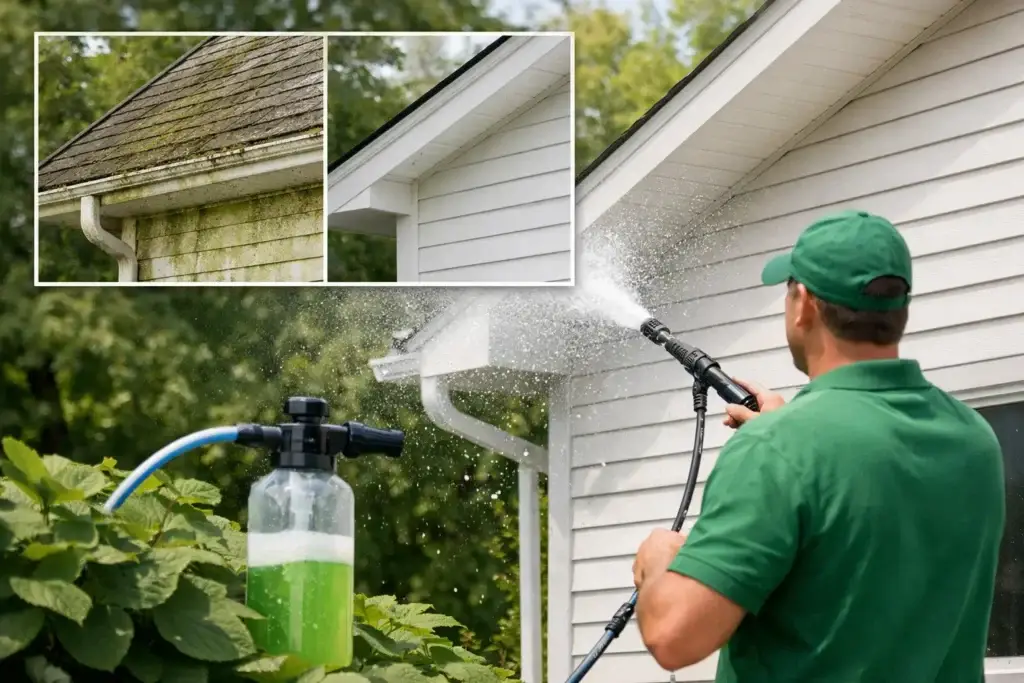
That green film on siding, the black streaks on a roof, and the slippery buildup on walkways all have one thing in common – they tempt property owners to clean aggressively. The problem is that pressure alone can do more harm than good. Eco friendly soft washing methods offer a safer way to remove organic growth, protect exterior surfaces, and improve curb appeal without turning a cleaning job into a repair bill.
For homeowners and property managers, that matters. You want visible results, but you also want to protect shingles, siding, paint, landscaping, and nearby drainage areas. A good soft wash approach is not just about using less pressure. It is about choosing the right cleaning agents, applying them correctly, and controlling runoff so the job is clean from start to finish.
What eco friendly soft washing methods actually mean
Soft washing uses low pressure and cleaning solutions to break down algae, mildew, mold, bacteria, and surface stains at the source. Unlike traditional high-pressure washing, it relies on chemistry and technique rather than force. That makes it a better fit for delicate or aging materials such as vinyl siding, painted wood, stucco, asphalt shingles, and certain exterior trim.
When people hear the phrase eco friendly soft washing methods, they sometimes assume it means spraying plain water or using only household soap. In practice, it is more nuanced than that. Exterior cleaning still has to kill organic growth and remove staining effectively. The eco-friendly part comes from using the least aggressive method that still works, applying solutions in controlled amounts, protecting plants and soil, and avoiding unnecessary water waste or surface damage.
That balance matters in Connecticut, where homes deal with moisture, shade, pollen, salt air in some areas, and long winters that leave behind grime and biological growth. A method that is too weak will not solve the problem. A method that is too harsh may damage the very surface you are trying to restore.
Why low pressure matters more than most people think
A lot of exterior damage happens because the cleaning method is wrong, not because the surface was already failing. High pressure can force water behind siding, strip paint, scar wood, loosen window seals, and shorten the life of roofing materials. It may look fast, but fast is not always cheaper when repairs follow.
Soft washing avoids that by letting the solution do the heavy lifting. The goal is to treat the growth first, give the product enough dwell time, and rinse carefully. That reduces physical stress on the surface while delivering a deeper clean than pressure alone. On roofs especially, this is the difference between cleaning and abuse.
There is also a practical advantage. When algae, mildew, and mold are properly treated rather than just blasted off, surfaces usually stay cleaner longer. That can mean fewer repeat cleanings and better long-term maintenance value.
The core parts of an eco-friendly soft wash process
A responsible soft wash job starts before any solution is applied. The surface has to be inspected so the right mix, tools, and rinse strategy are used. Different materials react differently. What works on a composite deck may not be appropriate for an older painted facade or a roof with vulnerable flashing.
Water management is a big part of the process. Eco-friendly service is not just about the soap in the tank. It is also about using the right amount of water, pre-wetting plants, managing runoff, and rinsing surrounding areas thoroughly. When technicians take time to protect landscaping and control where cleaning solution travels, the entire job is safer for the property.
Product selection matters too. Many modern soft washing detergents are designed to be effective on organic staining while still being used in a controlled, diluted way. Biodegradability can be part of the equation, but it should not be the only selling point. A biodegradable cleaner that fails to remove growth often leads to repeat applications or stronger follow-up treatments. The better standard is targeted cleaning with measured use.
Best surfaces for eco friendly soft washing methods
Soft washing is especially useful on surfaces that need cleaning without hard impact. House siding is one of the most common examples. Vinyl, fiber cement, and painted exteriors can collect mildew, algae, cobwebs, and airborne grime over time. A low-pressure approach removes that buildup without the risk that comes with overpowered washing.
Roof cleaning is another major use case. Black streaks are often caused by algae, not just dirt. Pressure washing an asphalt roof can dislodge granules and shorten roof life, which is why soft washing is the preferred method in most cases. Done correctly, it treats the source of the staining while preserving the roofing system.
Fences, decks, gutters, soffits, and some commercial building exteriors can also benefit. The catch is that not every stain is organic. Rust, oxidation, grease, and deep mineral deposits may require different products or a different method altogether. This is where experience matters. The right contractor knows when soft washing is the answer and when another approach is more effective.
Trade-offs homeowners should know before booking
Eco friendly soft washing methods are effective, but they are not magic and they are not identical on every property. Some surfaces clean up quickly. Others may improve substantially without becoming perfect, especially if staining has been sitting for years or the material itself is already deteriorating.
There is also a timing factor. In some cases, results continue to improve after the wash as treated growth breaks down fully. Roof cleaning is a good example. Immediate improvement is common, but full visual clearing can take more time depending on the level of buildup.
Weather matters too. Wind, extreme heat, and upcoming rain can affect scheduling and application. A professional company should explain if a delay is the better choice rather than rushing through conditions that reduce quality or increase risk.
Price can vary for good reason. A careful soft wash with plant protection, proper dilution, and trained application is not the same as a quick spray-and-go service. The cheapest quote may leave out the very steps that make the method safer and more environmentally responsible.
How to tell if a contractor uses responsible soft washing methods
A trustworthy exterior cleaning company should be able to explain its process in plain English. You should hear more than buzzwords. Ask how they protect landscaping, how they handle runoff, whether they adjust methods based on the surface, and why soft washing is recommended over high pressure for your specific job.
You should also expect professionalism across the board. Licensed and insured crews, clear scheduling, transparent quoting, and satisfaction-backed service are not extras. They are signs that the company is set up to do the work correctly and stand behind it.
For properties in coastal and southeastern Connecticut, this matters even more because moisture-heavy conditions can create recurring algae and mildew issues. A local company that understands regional buildup patterns can recommend a cleaning interval that keeps the property looking good without over-cleaning it.
When eco friendly soft washing methods make the most sense
If your siding looks dingy but is not physically damaged, soft washing is usually the smartest first step. If your roof has dark streaks, it is often the safest solution. If your gutters, trim, and exterior surfaces are showing signs of mildew or organic growth, low-pressure treatment can clean them thoroughly while protecting the finish.
It also makes sense for homeowners who want maintenance to be proactive, not reactive. Regular soft washing can prevent buildup from getting deeply established, which helps preserve curb appeal and can reduce the chance of more expensive restoration work later.
For commercial properties, the value is just as clear. Storefronts, office buildings, multifamily housing, and managed properties need to look clean without exposing surfaces to avoidable damage. A low-pressure, well-managed cleaning process supports that goal with less disruption and better long-term surface care.
CT Softwash LLC works with property owners who want that balance – strong results, safer methods, and a straightforward service experience. That is what professional soft washing should look like.
The best exterior cleaning is not the loudest or the most aggressive. It is the method that removes what should come off, protects what should stay intact, and leaves your property looking cared for instead of just blasted clean.