
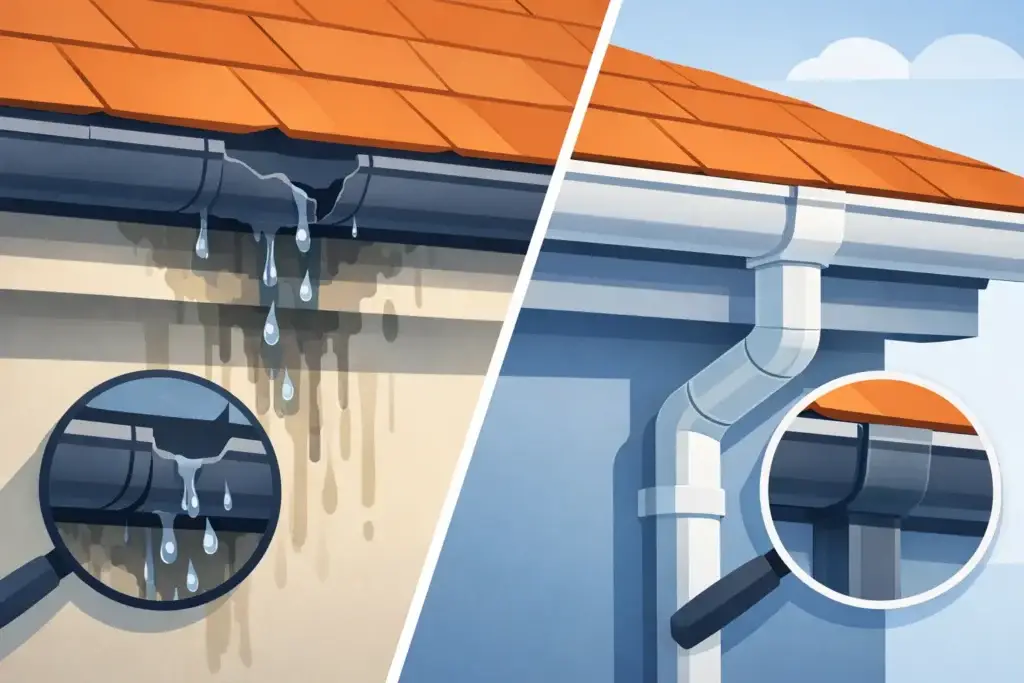
A gutter leak often starts as a small drip during a Connecticut rainstorm, then turns into peeling paint, stained siding, wet soil, or water near the foundation. Understanding common gutter leak causes helps you address the real problem before a minor maintenance issue becomes expensive exterior damage.
Your gutters have one job: collect roof runoff and move it safely away from the house. When water spills over the edge, escapes through a seam, or pools in the channel, it can affect much more than curb appeal. The good news is that many leaks are preventable with regular cleaning, early inspection, and timely repairs.
The Most Common Gutter Leak Causes
Clogs that force water over the edge
Leaves, pine needles, roof grit, seed pods, and shingle debris are the most frequent reasons gutters leak. They build up inside the trough or at the downspout opening, blocking the path water needs to follow. During a heavy downpour, the gutter fills faster than it can drain, and water spills over the front, back, or both sides.
Overflow is not always obvious from the ground. You may instead notice dark streaks on siding, mulch washed out below the roofline, or water dripping from places where there is no downspout. In wooded areas around Groton, Mystic, and the shoreline, seasonal leaf buildup can become a recurring issue, especially after fall and spring storms.
A quick cleanout may solve the problem if the gutter itself is in good condition. But if debris has been sitting for months, it can hold moisture against the gutter, contribute to corrosion, and hide additional damage.
Loose, separated, or failing seams
Sectional gutters are joined together at seams. Over time, changing temperatures, constant water exposure, and normal expansion and contraction can weaken the sealant at those connections. A seam leak usually creates a steady drip from one specific point, even when the rest of the gutter appears to be draining normally.
Look for dripping at corner joints, end caps, and the connection where the gutter meets a downspout outlet. You may also see old caulk peeling away, rust around the joint, or a dark water trail beneath the seam.
Resealing a joint can be a practical repair when the metal is still solid and the sections remain properly aligned. If the gutter has significant corrosion or keeps separating, replacing that section may be the smarter long-term choice.
Holes, cracks, and corrosion
Small holes are easy to overlook until rain exposes them. Aluminum gutters can develop pinholes after years of standing water and debris buildup. Steel gutters are more likely to rust, while vinyl gutters can crack when they become brittle with age or are stressed by ice and impact.
A hole near the bottom of a gutter can release water directly against fascia boards, windows, landscaping, or walkways. In winter, that escaping water may freeze and create a slippery area below.
The right repair depends on the size and condition of the damage. A small, isolated hole may be patched. Multiple holes, rusted sections, or long cracks generally indicate that the gutter is reaching the end of its useful life. Cleaning the gutter first matters because a patch will not hold well over wet debris, algae, or loose corrosion.
Gutters pulling away from the roofline
If a gutter sags or separates from the fascia, water may run behind it instead of into it. This is one of the gutter leak causes that can lead to hidden wood damage because the water is directed toward the roof edge rather than away from the home.
Loose hangers, damaged fascia boards, heavy wet debris, and ice weight can all cause this problem. From the ground, you might notice a dip in the gutter line, a visible gap behind the gutter, or water cascading from the back during rain.
Simply adding a new fastener is not always enough. If the fascia is soft, rotted, or unable to hold the hanger securely, that underlying wood issue needs attention first. Otherwise, the gutter can pull loose again during the next major storm.
Incorrect gutter slope
Gutters need a slight, deliberate slope toward each downspout. Without it, water sits in low spots instead of moving through the system. Standing water is a warning sign because it adds weight, attracts debris, accelerates corrosion, and can freeze during cold weather.
You may notice puddles in the gutter several days after rainfall, even when no obvious clog is present. This can happen after a poor installation, settling, storm damage, or hanger failure.
Re-pitching a gutter is more precise than it sounds. Too little slope leaves water behind; too much can affect appearance and performance. A professional inspection can determine whether adjustment is enough or whether the gutter needs to be rehung or replaced.
Downspout blockages and poor drainage
A gutter can look clean from above while the downspout remains packed with leaves, nesting material, mud, or compacted roof grit. When the downspout cannot carry water away, the entire gutter backs up. The result may look exactly like an overflowing gutter caused by debris in the trough.
Check for water pouring slowly from the downspout during rain, or for overflow near the outlet where the downspout connects to the gutter. Also pay attention to where the downspout discharges. If water ends too close to the foundation, you may not have a gutter leak, but you still have a drainage problem worth correcting.
Extensions can help direct water farther from the home. The best setup depends on the property grade, landscaping, walkways, and local drainage conditions.
Storm damage, ice, and falling branches
Connecticut weather can be hard on gutters. Wind can loosen hangers or bend sections out of alignment. Heavy snow and ice can pull gutters away from the fascia. A falling branch can dent the channel, crack an end cap, or create a low area that holds water.
After a major storm, walk around the property and look for fresh dents, sections that appear crooked, loose downspouts, and new overflow marks. Avoid climbing a ladder during wet, icy, or windy conditions. A ground-level inspection is often enough to identify a concern, and a qualified professional can handle closer evaluation safely.
Signs a Gutter Leak Is Affecting Your Home
Not every gutter issue creates a dramatic waterfall. Small leaks can leave subtle evidence that is easy to miss until damage spreads. Watch for peeling paint near the roofline, streaks on siding, mildew around exterior walls, softened fascia, erosion beneath gutters, and water collecting near the foundation.
Inside, water stains near exterior ceilings or walls can sometimes be tied to roof problems rather than gutters. That is why diagnosis matters. A leak at the roof edge, a failed flashing detail, and a gutter overflowing behind the fascia can produce similar symptoms. The right solution starts with identifying where the water is actually traveling.
When Cleaning Solves the Problem and When It Does Not
Professional gutter cleaning is often the first and most useful step because it removes the buildup that causes overflow and allows the system to be inspected clearly. Once leaves and debris are gone, it is much easier to spot loose fasteners, failed seams, standing water, cracks, and improper slope.
Cleaning alone will not fix a split seam, a rusted-out section, damaged fascia, or a gutter that has been installed at the wrong pitch. Still, routine cleanings can prevent many of these issues from getting worse by keeping moisture and debris from sitting where they should not.
For most homes, gutter cleaning at least twice a year is a sensible baseline: once after fall leaf drop and again after spring debris season. Homes under heavy tree cover may need more frequent service. A clean gutter also makes roof runoff easier to monitor during the next storm.
Protect the Roofline Before a Small Drip Grows
Gutters are easy to ignore when the weather is dry. The better time to inspect them is before the next stretch of heavy rain, when a small seam leak or blocked downspout can be addressed without water already running down the siding.
CT Softwash LLC provides professional gutter cleaning for homeowners who want a clear, safe view of what is happening at the roofline without the ladder risk or mess. If cleaning reveals a repair issue, you can move forward with the right information instead of guessing. A dry foundation, clean siding, and properly draining gutters all start with paying attention to the small drip now.