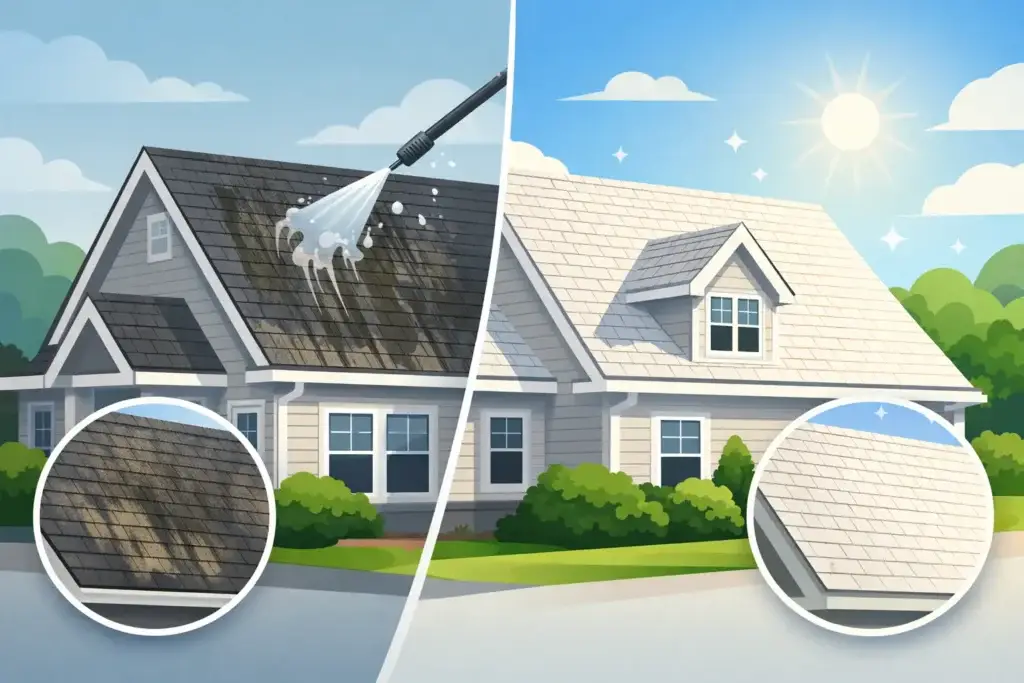
Black roof streaks are easy to dismiss as a cosmetic problem, but they often signal algae, moss, lichen, and moisture holding onto your roofing materials. The top benefits of roof softwashing go well beyond a cleaner-looking home. When handled professionally, this low-pressure cleaning method removes damaging organic growth while protecting the shingles underneath.
For Connecticut homeowners, roof cleaning is especially valuable after damp springs, humid summers, falling leaves, and snowy winters. Those conditions create an ideal environment for roof algae and moss to spread. A professional softwash helps reset the surface without the risks that come with aggressive pressure washing.
What Roof Softwashing Does Differently
Roof softwashing uses a carefully mixed cleaning solution and low-pressure application to treat organic stains at their source. Instead of blasting the roof with high-pressure water, the solution breaks down algae, moss, mildew, and lichen so they can release from the surface and rinse away safely over time.
That difference matters. Asphalt shingles have protective granules that help them shed water and stand up to sun exposure. Too much pressure can dislodge those granules, lift shingle edges, force water beneath the roofing system, or shorten the roof’s service life. Softwashing is designed for the job that a roof actually needs: treatment, not force.
A proper service also includes protecting nearby landscaping, managing runoff, and applying the solution evenly. This is not the same as spraying household cleaner from a ladder. Roof work involves fall risks, chemical handling, and a close understanding of how different roofing materials should be cleaned.
Top Benefits of Roof Softwashing
It removes algae instead of just lightening the stain
The dark streaks commonly seen on asphalt shingles are often caused by algae. Rain may wash away loose dirt, but it does not eliminate the living growth creating the discoloration. High-pressure washing can make a roof appear cleaner for a short time while leaving spores behind in hard-to-reach areas.
Softwashing treats the algae directly. That means the staining is addressed at the source, not simply pushed around the roof surface. In many cases, treated areas brighten quickly, while heavier staining continues to fade as weather naturally rinses away the remaining residue.
It protects shingles from unnecessary damage
A roof is not a driveway, and it should not be cleaned like one. Pressure washing is effective for many hard exterior surfaces, but it can be too aggressive for shingles, cedar shakes, and other roofing materials. The risk is especially high when someone uses a rental machine, works from a ladder, or tries to remove moss by force.
Softwashing relies on low pressure, which helps preserve the roof’s protective surface. That is one of the biggest reasons homeowners choose it over a do-it-yourself pressure washing attempt. The goal is to restore the roof without trading a stain problem for premature wear or expensive repairs.
It can help extend the useful life of your roof
Algae, moss, and lichen hold moisture against the roof. Over time, that moisture can contribute to shingle deterioration, curled edges, granule loss, and vulnerable spots where water has a better chance of getting underneath. Moss is particularly troublesome because it can grow between shingles and interfere with proper drainage.
Roof softwashing does not make an aging roof new again, and it cannot repair missing shingles, leaks, or structural damage. It can, however, remove the buildup that adds stress to an otherwise sound roof. Routine cleaning is a practical form of preventive maintenance, especially for shaded homes or properties surrounded by trees.
It improves curb appeal fast
A stained roof can make an otherwise well-maintained home look older than it is. Since the roof takes up a large portion of what people see from the street, dark streaks and patchy moss can pull attention away from fresh siding, landscaping, or a newly painted exterior.
A clean roof creates an immediate visual improvement. Whether you are preparing to sell, welcoming guests, or simply tired of seeing stains from the driveway, softwashing can make the entire property look cared for again. For commercial properties, that same improvement supports a more professional appearance for customers, tenants, and visitors.
It supports better drainage around the roofline
Roof growth and debris tend to collect in valleys, near dormers, and along lower roof edges where water naturally travels. When moss, leaves, and organic buildup are allowed to remain, water may move more slowly toward the gutters. That can increase the chance of overflow, damp fascia boards, and gutter clogs.
Softwashing works best as part of a broader exterior maintenance plan. Pairing roof cleaning with gutter cleaning helps keep rainwater moving where it should. In coastal and wooded areas around southeastern Connecticut, this combination is often more useful than waiting until an overflow or visible moss problem becomes severe.
It gives you a clearer view of roof condition
Stains and growth can hide details that deserve attention, including cracked shingles, exposed nail heads, worn flashing, or areas where granules have thinned. Once the roof is clean, it is easier for a trained professional and homeowner to see what is really happening on the surface.
Cleaning is not a substitute for a roofing inspection when you suspect a leak or damage. Still, a clean roof makes routine observation more meaningful. If a concern appears after the cleaning, you can address it earlier instead of discovering it only after water reaches the attic or ceiling.
When Softwashing Is the Right Choice
Softwashing is usually the preferred method for asphalt shingle roofs with black algae streaks, light-to-moderate moss, mildew, or general organic staining. It is also commonly used for many delicate exterior surfaces because low pressure reduces the chance of damage.
The right approach still depends on the roof’s age, material, slope, and condition. A roof with loose, broken, or severely deteriorated shingles may need repair before cleaning. Heavy moss may require a careful treatment plan rather than scraping or aggressive rinsing. Metal, tile, slate, and cedar roofs each have their own cleaning considerations, so a one-size-fits-all method is not the answer.
Homeowners should also be realistic about timing. A softwashed roof may not look identical the second the service is complete, particularly when thick moss or lichen has been treated. The organisms need time to release naturally. A professional should explain what results to expect, how the roof will continue to brighten, and whether a follow-up visit is appropriate.
Why Professional Roof Cleaning Is Worth It
Roof cleaning looks simple from the ground, but the work is demanding. Walking on a roof can cause damage and puts the person doing the work at risk. Improper chemical strength can harm plants or discolor nearby materials. Improper pressure can damage shingles. Even the way a technician moves hoses and accesses the roofline matters.
A licensed and insured exterior cleaning company brings the equipment, safety practices, and experience needed to do the job carefully. At CT Softwash LLC, the focus is on treating roofs with a low-pressure process that removes the buildup homeowners want gone without using harsh pressure on vulnerable shingles. You get a visible improvement without spending a weekend on a ladder or wondering whether the roof has been harmed.
Before scheduling, ask whether the company uses true low-pressure softwashing, how it protects landscaping, and what it recommends for your roof material. Clear answers, transparent scheduling, and a detailed quote are signs that the contractor takes your property seriously.
How Often Should a Roof Be Softwashed?
Most homes do not need annual roof softwashing. A typical schedule is every two to five years, but the right interval depends on shade, tree coverage, moisture, roof color, and how quickly algae returns. Homes beneath overhanging branches or near the coast may need attention sooner than sunny, open properties.
The best time to schedule is when you first notice streaking or small areas of moss, not after the entire roof is covered. Early treatment is easier on the roof and usually more affordable than dealing with years of heavy growth. Keeping gutters clear and trimming branches back from the roof can also slow future buildup.
A clean roof is one of the simplest ways to protect the part of your home that protects everything else. If dark streaks or moss are starting to take over, a professional softwash can restore the appearance of your roof while helping you stay ahead of preventable wear.