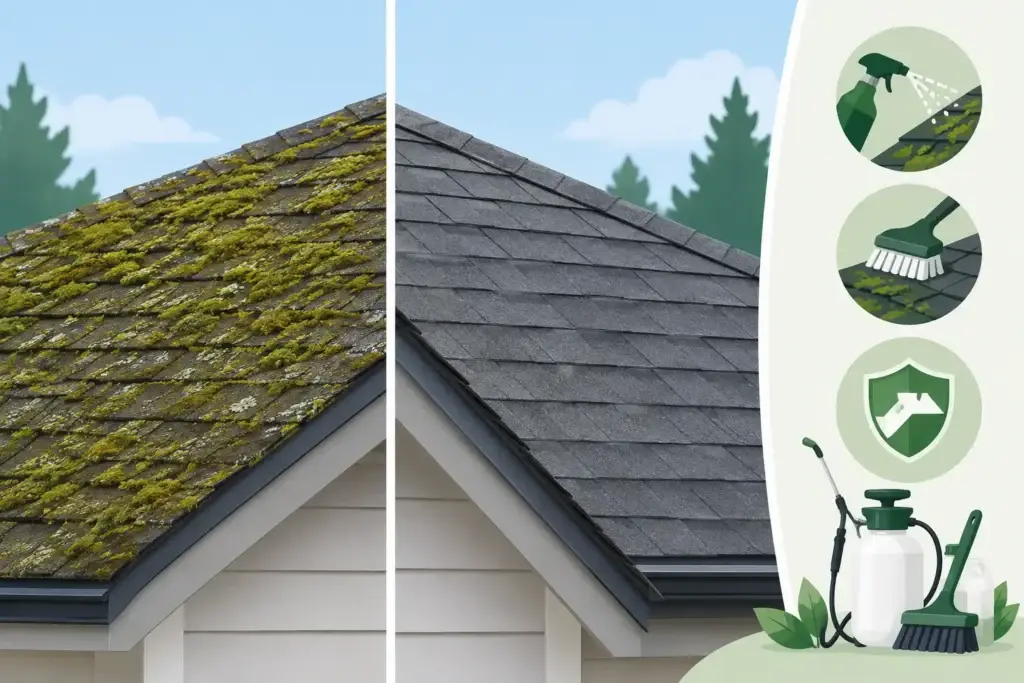
A patch of green moss can make a roof look older than it is. In Connecticut, where damp weather, tree cover, and seasonal debris keep roof surfaces wet, growth can spread quickly. The right roof moss treatment options remove the problem without stripping shingle granules, damaging flashing, or creating an unnecessary safety risk.
Moss is not just a cosmetic issue. It holds moisture against the roof, can work its way beneath shingle edges, and may contribute to premature wear when left untreated. The best approach depends on your roof material, the amount of growth, the roof pitch, and whether algae or lichen are mixed in with the moss.
Why Moss Needs a Careful Approach
Moss thrives in shaded, moisture-prone areas, especially on north-facing roof slopes and beneath overhanging trees. It grows in dense mats that trap water and debris. During Connecticut freeze-thaw cycles, that retained moisture can add stress to shingles and create conditions that shorten their service life.
A roof covered in dark streaks may have algae rather than moss. Lichen is another common issue, identified by its flat, crusty spots that cling tightly to the shingle surface. Each type of growth responds differently, but one rule stays the same: aggressive cleaning is rarely the answer.
Many homeowners assume a pressure washer will provide a fast fix. It may remove visible growth quickly, but it can also blast away protective granules, lift shingles, force water beneath the roof surface, and void manufacturer guidance. A clean-looking roof is not worth a damaged one.
Roof Moss Treatment Options to Consider
There is no one-size-fits-all product or process. A light layer of fresh moss on an accessible low-slope area calls for a different plan than thick growth on an older, steep asphalt-shingle roof.
DIY moss cleaners
Store-bought roof cleaners can be useful for small, early-stage moss growth, provided the product is specifically labeled for your roof type. These treatments are generally applied at low pressure, allowed to work over time, and rinsed only if the product instructions require it.
The trade-off is patience and precision. Many treatments do not make moss disappear the same day. The growth dies gradually, then weather carries it away over several weeks or months. Application also requires careful protection of landscaping, gutters, and nearby surfaces. If you cannot safely reach the roof from a ladder, this is not a job to force.
Avoid using household bleach mixtures, laundry detergent, or random online formulas. A product that is too harsh can discolor shingles, harm plants, corrode metal components, or leave runoff issues behind. Always follow the roof manufacturer’s recommendations and the cleaner label.
Manual removal for loose debris
Light manual removal may help after moss has been treated and loosened. A soft brush or gentle rinse can clear dead material from valleys and roof edges, but scrubbing live moss is usually a poor choice. It can tear granules from asphalt shingles and leave root-like structures behind to regrow.
Manual work is most useful for removing leaves, twigs, and debris that are holding moisture on the roof. Keeping valleys and lower roof edges clear gives moss fewer places to establish itself. It is not a dependable standalone answer for heavy, established growth.
Professional soft washing
For visible moss, algae, lichen, or roof staining across large sections of the roof, professional soft washing is often the safest and most effective option. Soft washing uses a controlled, low-pressure application designed to treat organic growth rather than blast it off the surface.
A qualified technician evaluates the roof condition, applies an appropriate cleaning solution at the correct concentration, and manages runoff to protect surrounding property. The treatment kills the growth at its source, so the roof can clean up naturally over time without the damage associated with high-pressure washing.
This method is particularly valuable for steep roofs, multi-story homes, older shingles, and roofs surrounded by landscaping. It also saves homeowners from walking on a wet, sloped surface, one of the most common causes of home maintenance injuries.
Copper or zinc prevention strips
Copper or zinc strips installed near the roof ridge can help limit future moss and algae growth. When rainwater runs across the metal, trace amounts wash down the roof and create a less hospitable surface for organic growth.
These strips are a preventive measure, not a replacement for cleaning an existing moss problem. Their effectiveness can vary based on roof design, rainfall patterns, tree cover, and the amount of growth already present. They should also be installed properly to avoid unnecessary penetrations or issues with roofing materials.
What to Avoid When Treating a Mossy Roof
The fastest-looking solution is often the one that creates the most expensive repair later. Avoid pressure washing asphalt shingles, wire brushes, harsh scraping, and cleaners not intended for roofing. Do not pull thick moss clumps upward from shingle edges, since that can loosen or crack shingles.
It is also wise to avoid working on the roof after rain, during frost, or when cleaning solution has made the surface slick. Ladders, steep rooflines, and wet shingles are a dangerous combination. If the roof has cracked shingles, loose flashing, soft spots, or signs of leaks, schedule a roofing inspection before any cleaning begins.
How to Prevent Moss From Returning
Treatment works best when paired with simple maintenance. Moss returns when the roof stays damp and shaded for long periods, so reducing those conditions makes a real difference.
Keep gutters clear so water can move off the roof as designed. Remove accumulated leaves and pine needles from valleys, behind chimneys, and around roof penetrations. Trim back branches that hang over the roof when possible. Better sunlight and airflow allow shingles to dry faster after rain.
Regular roof and gutter maintenance is especially helpful in wooded areas around Mystic, Groton, Waterford, and other shoreline communities where humidity and tree cover can create ideal conditions for organic growth. A quick seasonal check can catch buildup before it becomes a thick, stubborn mat.
When Professional Roof Cleaning Is the Better Choice
A professional service is a smart call when growth covers a significant part of the roof, the roof is too steep to access safely, or you are unsure whether you are seeing moss, algae, lichen, or shingle deterioration. It is also the right choice when landscaping, solar panels, skylights, or delicate roof materials require added care.
CT Softwash LLC uses professional soft washing methods designed to clean roofing safely and protect the rest of the property during service. Licensed and insured technicians can assess the condition of the roof, explain the cleaning process clearly, and provide a straightforward quote before work begins.
A proper roof treatment should leave you with more than a better view from the curb. It should remove damaging organic growth, protect your shingles, and make future maintenance easier. Address moss while it is still manageable, and your roof will have a better chance to do its job for years to come.