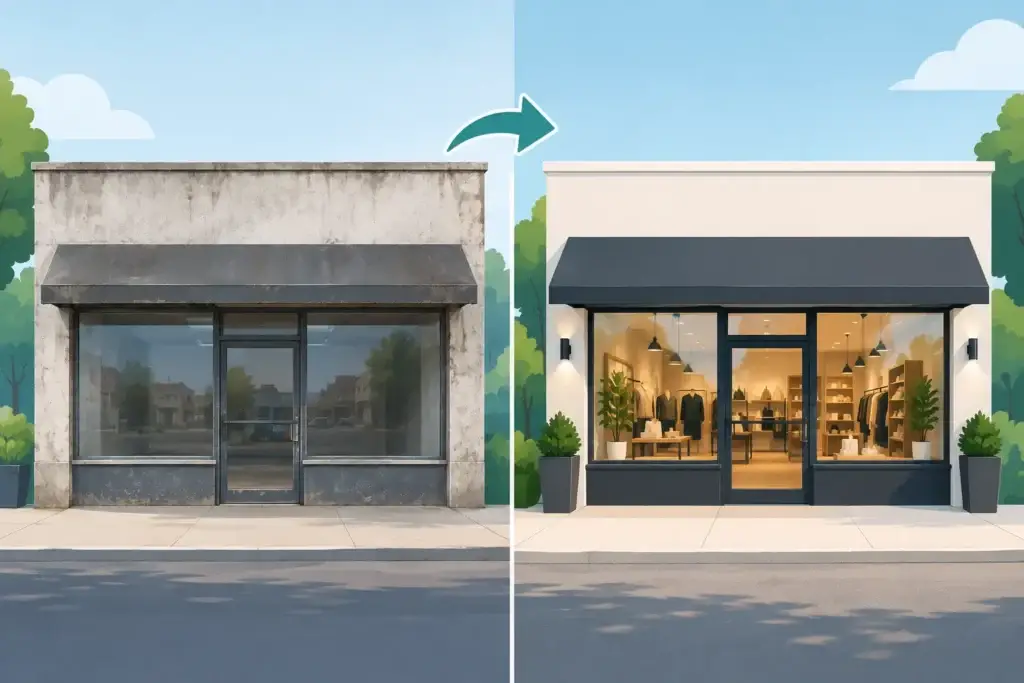
A customer can form an opinion about a business before they reach the front door. Stained siding, black mildew, faded trim, dirty windows, and gum-marked walkways can make an otherwise well-run store look neglected. Professional retail facade restoration gives your storefront the clean, cared-for appearance that helps customers feel confident walking in.
For Connecticut businesses, exterior buildup is not just a cosmetic issue. Coastal moisture, tree pollen, road salt, algae, and seasonal weather can wear down the appearance of a retail property quickly. The right cleaning approach restores curb appeal while protecting the surfaces you have invested in.
What Retail Facade Restoration Really Means
Facade restoration is not always a construction project involving new siding, masonry repair, or a fresh coat of paint. Sometimes those services are necessary, especially when materials are damaged. But many retail facades look worn because dirt, biological growth, oxidation, and environmental staining are hiding the condition underneath.
A professional restoration process begins with identifying the material and the source of the staining. Vinyl, painted wood, brick, stucco, concrete, awnings, signs, and glass all need different treatment. Using high pressure on the wrong surface can force water behind siding, scar soft materials, strip paint, or damage mortar. A safe cleaning plan is what separates a true restoration service from a quick rinse.
For many storefronts, soft washing is the best starting point. This low-pressure process uses professional cleaning solutions to break down algae, mold, mildew, and organic staining, then rinses the surface carefully. It is especially effective for siding, trim, painted surfaces, and other areas where aggressive pressure could cause damage.
Why a Clean Storefront Matters to Your Business
Your facade is working every day, whether you are open or closed. It is visible to regular customers, first-time visitors, neighboring businesses, and people passing by. If it looks dirty or poorly maintained, it can quietly undermine the quality of the products or services inside.
A restored exterior makes signage easier to see, windows brighter, entryways more inviting, and the overall property more professional. That matters for restaurants, medical offices, retail shops, salons, professional offices, apartment leasing offices, and shopping centers alike. Customers may not comment on a clean facade, but they notice when it is not clean.
There is also a property-protection benefit. Mold, algae, and mildew hold moisture against exterior surfaces. Over time, that can contribute to staining, premature paint failure, and deterioration around seams and joints. Cleaning does not replace needed repairs, but routine exterior maintenance can help you spot trouble earlier and keep avoidable buildup from getting worse.
Common Problems Found on Retail Facades
Most storefront cleaning needs are easy to recognize once you know what to look for. Green algae often appears on shaded siding, especially near landscaping or downspouts. Black streaks may be mildew, mold, soot, or runoff staining. White, chalky residue on painted metal or siding can be oxidation, while orange stains around masonry may come from rust or irrigation.
Window frames and entry areas usually collect a mix of pollen, cobwebs, dust, fingerprints, and vehicle exhaust. Concrete near entrances can develop dark staining from foot traffic, spilled drinks, chewing gum, and moisture. In busy commercial areas, these smaller details add up fast.
Not every stain can be removed with the same method, and not every faded surface can be cleaned back to its original color. Severe oxidation, permanent rust staining, damaged caulk, peeling paint, and cracked masonry may require repair or repainting after cleaning. A professional should be honest about that distinction before promising a result.
The Right Method Depends on the Surface
A retail building may have five or six exterior materials on one elevation alone. That is why one-pressure-setting-for-everything is not a safe plan.
Soft Washing for Siding and Painted Areas
Soft washing is ideal when biological growth is the main problem. Rather than blasting algae off the surface, the cleaning solution treats it at the source and allows it to release safely. This method is commonly used for vinyl siding, painted wood, trim, soffits, and many types of exterior cladding.
The result is a deeper clean with far less risk than high-pressure washing. It also helps address the spores that cause green and black growth to return, although no cleaning can prevent future buildup forever in a damp, shaded location.
Pressure Washing for Durable Flatwork
Pressure washing has a place in retail facade restoration, particularly for durable concrete, sidewalks, curbs, and certain masonry surfaces. Properly applied pressure can lift embedded dirt and improve the look of heavily traveled entrances.
The key is control. Water pressure, nozzle selection, cleaning solution, and distance from the surface all matter. An experienced technician adjusts the method to the material rather than treating the building like a driveway.
Window and Detail Cleaning for the Finished Look
A clean wall can still look unfinished if the windows, frames, doors, and entryway are streaked or dusty. Detail work brings the restoration together. It helps storefront signage stand out and gives customers a clear view into the business.
For a property preparing for a grand opening, seasonal promotion, inspection, sale, or professional photos, these finishing touches can make a noticeable difference.
When Should You Schedule Storefront Cleaning?
There is no single schedule that fits every commercial property. A storefront under mature trees or close to the coast may need cleaning more often than a building in an open, dry area. Many businesses benefit from an annual exterior cleaning, while high-visibility properties and locations with recurring algae may need service twice a year.
Spring is a popular time to remove winter grime, salt residue, and early mildew. Late summer or fall cleaning can reset the exterior after pollen, storms, humidity, and heavy foot traffic. If you are planning exterior painting, cleaning should happen first so paint is applied to a properly prepared surface.
Do not wait until the facade looks severely stained. By that point, the buildup may be harder to remove and the property has already spent months making the wrong first impression. Scheduling maintenance before the problem becomes obvious is usually easier on both the building and the budget.
What to Expect From a Professional Service
A professional commercial cleaning visit should start with a clear evaluation of the facade, surrounding landscaping, access points, drainage, and sensitive surfaces. The crew should identify problem areas and select a process that fits the material, not simply arrive with maximum pressure.
Before work begins, windows, doors, plants, electrical components, and nearby outdoor items may need protection or preparation. The team should keep pedestrian safety in mind, especially around storefront entrances and shared plazas. For properties with customer traffic, scheduling during lower-volume hours can reduce disruption.
After treatment and rinsing, the result should look consistently clean rather than patchy. Some stains may need extra attention, and certain surfaces may reveal fading or existing damage once the grime is removed. That is not a failure of cleaning. It is often the first time the true condition of the material has been visible in years.
CT Softwash LLC provides professional exterior cleaning for commercial properties with a focus on safe methods, clear communication, and visible results. Licensed and insured technicians use commercial-grade equipment to clean exterior surfaces without taking shortcuts that put your property at risk.
How to Protect Results Between Services
Property owners can extend the clean look of a storefront by addressing the conditions that feed stains. Keep gutters and downspouts flowing away from the building, trim vegetation back from siding, and correct irrigation that repeatedly sprays walls or windows. Regularly clearing debris from entryways also helps prevent staining around doors and walkways.
If you notice new green growth, dark streaks, or water marks, document where they appear. Repeated staining in the same spot can point to a drainage issue, a leaking gutter, or an area that stays shaded and damp. Cleaning solves the visible buildup, but correcting the cause can make the results last longer.
A Storefront Worth Walking Into
Retail facade restoration is one of the most practical ways to improve a business property’s appearance without a major renovation. The right service can revive siding, brighten concrete, clean entryways, and make your business look ready for the customers you want to attract.
Whether your storefront in Groton, Mystic, New London, or a nearby community needs a seasonal refresh or attention after years of buildup, start with a professional assessment. A clean, well-maintained facade sends a simple message before a customer ever opens the door: this business pays attention to the details.