
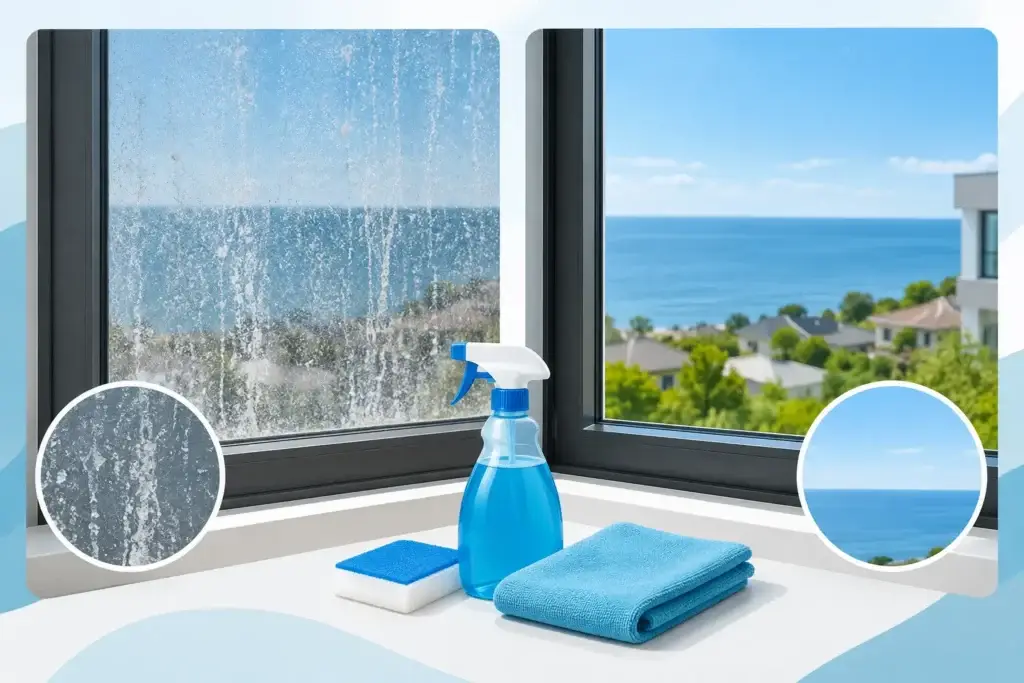
Salt spray does not stay at the shoreline. In coastal Connecticut, it can travel onto windows, screens, trim, and siding after windy weather, leaving a cloudy film that ordinary glass cleaner may not remove. To clean salt stained windows properly, you need to dissolve the mineral residue first, then wash and dry the glass without grinding salt crystals into the surface.
The good news is that fresh salt staining is usually manageable. The problem gets tougher when sea salt mixes with pollen, road grime, hard-water minerals, and moisture over several seasons. That buildup can make windows look hazy from inside the home, reduce curb appeal, and leave frames looking worn long before they actually are.
Why Salt Stains Need More Than Glass Cleaner
Salt residue is water-soluble, but it is not always sitting on clean glass. On homes near Mystic, Stonington, Groton, Westerly, and other exposed areas, coastal spray can combine with dirt and airborne debris to create a stubborn, streaky layer. If you spray cleaner and immediately scrub, the remaining crystals and grit can drag across the glass.
That does not mean salt will instantly ruin a window. Modern glass is durable. Still, repeated abrasive cleaning can create fine scratches, while neglected buildup can discolor aluminum components, screens, tracks, and painted trim. The bigger concern is often the window system around the glass, especially older frames, seals, and hardware that are already exposed to wet weather.
A careful process removes the residue while protecting the surfaces that keep water and drafts out of your home.
What You Need Before You Start
For one-story windows or easy-to-reach interior glass, keep the tools simple. Use clean water, a bucket, a soft microfiber cloth or mop sleeve, a squeegee with a good rubber blade, a soft detailing towel, and a mild dish soap. Distilled water is helpful if your tap water leaves mineral spots, but it is not required for every job.
Avoid using abrasive pads, dry paper towels, razor blades, steel wool, or strong acidic products unless you know exactly what type of glass and coating you have. These tools can cause scratches, damage window film, or affect painted and vinyl frames. A razor may be appropriate for certain professional glass-cleaning situations, but it is not the right first choice for salt residue on a residential window.
If the exterior glass is above ground level, do not stretch from a ladder with one hand on the window. High windows, difficult terrain, fragile landscaping, and coastal exposure are all good reasons to bring in a licensed and insured exterior cleaning professional.
How to Clean Salt Stained Windows Step by Step
Start by rinsing away loose salt and grit
Rinsing is the step homeowners skip most often. Before wiping the glass, gently rinse it with clean water from a hose on a low-pressure setting. The goal is to flush loose salt crystals and sand off the glass, frame, sill, and tracks.
Do not use a pressure washer directly on windows. High pressure can force water behind seals, damage screens, disturb caulking, and crack already-weakened glass. A gentle flow of water is more than enough for this job.
If you are cleaning inside glass only, use a damp microfiber cloth to lightly wipe away loose residue before applying any cleaning solution. Never start with a dry wipe on visibly gritty glass.
Wash the glass with a mild solution
Fill a bucket with cool or lukewarm water and add a small amount of mild dish soap. You do not need a heavily soapy mixture. Too much soap leaves its own film and makes streaks harder to avoid.
Apply the solution with a soft microfiber cloth or window mop. Work from the top down so dirty water does not run over an area you have already cleaned. Pay attention to the lower edge of the window, where salty runoff and dirt often collect.
For stubborn spots, let the solution sit on the glass for a minute or two before wiping again. This gives the water time to dissolve the salt rather than forcing you to scrub harder.
Clean the frames, tracks, and screens separately
Salt residue rarely stops at the glass. Wipe vinyl, fiberglass, or painted frames with the same mild solution, then rinse or wipe with clean water. Use a soft brush only in corners, tracks, and weep holes where dirt has collected.
Be gentle around seals and weatherstripping. These components protect your home from water intrusion and drafts, and aggressive scrubbing can loosen aging material. If the tracks are full of leaves, sand, or black buildup, remove the debris first so water can drain as designed.
Screens should be removed and rinsed separately when possible. A dirty screen can make freshly cleaned glass look dull, especially when salt and pollen have built up together.
Squeegee and dry before water spots form
After washing, pull a clean squeegee from top to bottom in straight, overlapping passes. Wipe the blade with a lint-free towel after each pass. This is the fastest way to get clear, streak-free glass.
Use a dry microfiber towel to detail the edges, corners, sills, and any remaining drips. If you see a haze after drying, it may mean there is still salt residue on the glass or that the cleaning water has high mineral content. Rewash that area with fresh water instead of adding more spray cleaner.
When Salt Stains Do Not Come Off Easily
If a window still looks cloudy after a careful rinse and wash, the issue may not be simple salt. Hard-water spotting, oxidation, failing window seals, etched glass, or residue from a previous cleaning product can all create a similar appearance.
Hard-water spots often feel rough and remain visible even after soap and water. Etching can look like a permanent dull patch or tiny marks within the glass itself. Failed insulated-glass seals typically create fogging between the panes, which cannot be cleaned from the surface.
This is where the right diagnosis matters. Stronger chemicals may improve some mineral deposits, but they can also damage surrounding materials or leave an uneven finish. A professional can identify whether the stain is removable buildup or a condition that requires window repair or replacement.
How Often Should Coastal Homes Clean Their Windows?
It depends on how close you are to the water, how exposed your home is, and whether trees or busy roads add another layer of debris. Homes directly exposed to salt air often benefit from exterior window cleaning two to four times per year. More protected homes may only need a thorough cleaning in spring and fall.
After a major coastal storm, a simple low-pressure rinse can make a real difference. You do not have to complete a full window-cleaning job every time. Removing fresh salt before it dries and mixes with dirt helps prevent the heavier film that takes longer to remove later.
Regular exterior maintenance also protects the larger picture. Salt buildup on windows often appears alongside dirty siding, mildew on trim, clogged gutters, and residue on decks or railings. Addressing these areas on a schedule keeps your property looking cared for and prevents small cleaning jobs from turning into larger maintenance projects.
Protect Your Windows Between Cleanings
Keep screens clear, rinse exposed exterior surfaces after stormy weather, and trim shrubs that make window access difficult or trap moisture against the house. Check window sills and tracks periodically so drainage holes are not blocked by dirt or insect debris.
Be cautious with DIY mixtures. Vinegar can help with some mineral residue, but it is not necessary for routine salt removal and may not be suitable for every surrounding surface. Mild soap and clean water are usually the safest starting point. When stains persist, it is better to identify the cause than keep escalating the cleaner.
For homeowners who would rather skip ladders, streaks, and trial-and-error cleaning, CT Softwash LLC provides professional window cleaning as part of a complete exterior maintenance plan. A trained crew can safely clean hard-to-reach glass while protecting frames, trim, landscaping, and the rest of your property.
Clear windows change how a home looks from the curb and how it feels from the inside. A timely rinse and careful wash after coastal weather can keep salt from becoming the layer you notice every time you look outside.