
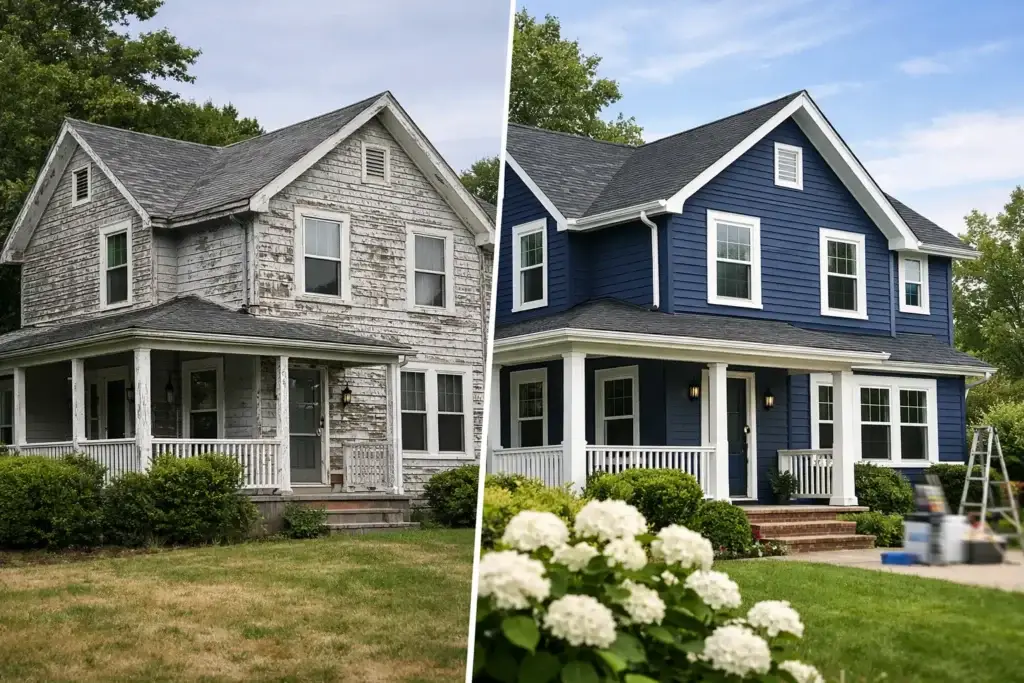
A fresh exterior can make a home look cared for overnight, but durable house painting is about far more than picking a color and applying two coats. In Connecticut, paint has to stand up to wet springs, humid summers, coastal air, freeze-thaw cycles, and the steady buildup of dirt, mildew, and pollen. The finish will only look as good as the preparation underneath it.
For homeowners who want real curb appeal and long-term protection, the goal is simple: fix the surface, prepare it correctly, and use products suited to the material and local weather. Cutting corners may save time at the start, but it often leads to peeling paint, stained siding, and another project much sooner than expected.
House Painting Is Protection, Not Just Curb Appeal
Exterior paint is a protective barrier. On wood trim, clapboard, fascia, and decks, it helps keep moisture from soaking into the material. On properly prepared masonry and other painted surfaces, it provides a cleaner, more uniform appearance while helping reduce weather-related wear.
When paint begins to crack, chalk, blister, or peel, water can find its way behind the coating. That can lead to soft wood, rot around windows, damaged trim, and repairs that cost far more than repainting at the right time. Paint also cannot hide an active moisture problem. If a gutter is overflowing, a roofline is leaking, or landscaping keeps sprinklers against the siding, those issues need attention before the painting work begins.
There is also the visible difference. Faded shutters, discolored trim, and patchy siding can make an otherwise well-maintained property look neglected. A professional paint job brings clean lines, even coverage, and a finish that complements the home rather than calling attention to its flaws.
Prep Work Decides How Long the Paint Lasts
The most common reason exterior paint fails early is poor surface preparation. Painting over mildew, loose paint, chalky residue, or damp wood does not solve the problem. It seals a weak layer beneath a new one.
A proper project begins with a close inspection. Areas around gutters, windows, doors, porch columns, trim joints, and lower siding often need the most attention because they see the most moisture and wear. Any damaged wood should be repaired or replaced before painting. Caulk should be checked around openings and trim seams, but caulk is not a substitute for sound material.
Cleaning comes next. Exterior surfaces collect mildew, algae, pollen, cobwebs, road film, and airborne salt, especially near the shoreline. A controlled soft wash can remove organic buildup safely from many painted surfaces without the risk of forcing water behind siding or damaging the material with excessive pressure. This step gives paint a clean surface to bond to and prevents stains from showing through a new finish.
After cleaning, the surface needs enough time to dry completely. Then loose or flaking paint is scraped, rough edges are feather-sanded, and bare areas receive the right primer. Primer is especially important on exposed wood, patched sections, stains, and surfaces where the old coating has failed. It improves adhesion and creates a more consistent base for the finish coats.
The Right Paint Depends on the Surface
There is no one exterior coating that is best for every home. The right product depends on what is being painted, the condition of the existing finish, sun exposure, and the level of moisture the surface receives.
Wood siding and trim generally need a high-quality exterior paint that can expand and contract as temperatures change. Trim often needs extra attention because horizontal edges, joints, and end grain absorb water more easily. Masonry and stucco may require breathable coatings that are compatible with the surface. Metal railings, doors, and fixtures need products designed to control rust and adhere to metal.
Color matters, too. Dark colors absorb more heat than light colors, which can increase movement in wood and place extra stress on older siding. A dramatic color change may also require a specialty primer or additional coats to achieve even coverage. That does not mean homeowners should avoid bold colors. It means the application plan should match the color choice.
Sheen is another practical decision. Satin and low-luster finishes are popular for siding because they offer a clean appearance without highlighting every small imperfection. Semi-gloss is commonly used on doors and trim because it is easier to wipe clean and gives those details definition. The best choice depends on the home’s style, existing surfaces, and how much maintenance the owner wants to take on later.
Timing Matters More Than a Weekend Forecast
Exterior painting needs dry conditions, stable temperatures, and enough time for each coat to cure. A bright morning does not always mean it is a good painting day. Morning dew, overnight moisture, high humidity, and a late-day shower can all affect adhesion and drying.
Spring and early fall are often comfortable seasons for exterior work in Connecticut, but the right timing depends on the weather window and the manufacturer’s product requirements. Very cold temperatures can slow curing. Excessive heat can cause paint to dry too quickly on the surface, making it harder to maintain a smooth, even finish. Humidity can extend drying times and increase the chance of moisture getting trapped beneath the coating.
A professional crew plans around these conditions instead of rushing through them. That may mean starting on the shaded side of the house, shifting the schedule around rain, or allowing more drying time after washing. Those decisions may seem small, but they protect the finished result.
Signs Your Home Is Ready for Repainting
You do not need to wait until paint is falling off in sheets. Early action can prevent more extensive prep and repair work. Look closely at the areas that receive the most sun and water exposure, including window trim, fascia boards, porch railings, doors, and the lower sections of siding.
Common warning signs include fading, chalky residue that rubs off on your hand, hairline cracks, peeling edges, exposed bare wood, open caulk joints, rust stains, and mildew that returns quickly after cleaning. If the color looks tired but the paint film is still sound, cleaning and a planned repaint may be all that is needed. If there is widespread peeling or soft wood, the project should include more detailed repairs before any finish coat is applied.
It also helps to separate cleaning needs from painting needs. Dirty siding can look faded when it is actually covered in mildew and road film. A safe house wash can reveal whether the existing paint still has life left. On the other hand, no amount of washing will restore a coating that has truly broken down.
What a Professional Painting Process Should Include
A reliable exterior painting service should provide a clear scope before work begins. Homeowners should know which surfaces will be painted, what preparation is included, how damaged areas will be handled, and what conditions could affect scheduling. Fast estimates are helpful, but a thorough visual assessment protects everyone from surprises.
The work itself should be organized and careful. Landscaping, walkways, windows, fixtures, and nearby surfaces need protection. Paint should be applied at the proper spread rate rather than stretched too thin. Edges around doors, windows, shutters, and trim should be clean. At the end, the property should be inspected for missed spots, overspray, drips, and areas that need touch-up.
Licensed and insured professionals also bring a safety advantage. Exterior painting often involves ladders, elevated trim, porches, rooflines, and difficult access points. For many homeowners, the value is not only a better-looking finish. It is avoiding the risk, equipment expense, and trial-and-error that come with doing a major exterior project alone.
Keep the Finish Looking Better Between Paint Jobs
Paint lasts longer when the rest of the exterior is maintained. Keep gutters clear so water does not spill onto fascia and siding. Trim shrubs back from the home to improve airflow and prevent wet leaves from sitting against painted surfaces. Address leaks promptly, and watch for mildew in shaded areas before it spreads.
Gentle cleaning also makes a difference. Annual or periodic soft washing removes the organic growth and grime that can stain paint and hold moisture against the surface. Avoid blasting painted siding with high pressure. The wrong technique can chip paint, scar wood, force water into gaps, and turn routine maintenance into an early repainting project.
For homeowners in Groton, Mystic, Waterford, and surrounding communities, CT Softwash LLC can help coordinate the cleaning and exterior maintenance that supports a quality paint finish. The right plan depends on your home’s materials, age, exposure, and current condition.
A well-painted home should look sharp, but it should also feel protected. Start with a clean, dry, stable surface, choose the right coating, and give the work the time and attention it deserves. That is how an exterior stays ready for the next season instead of becoming the next repair bill.