
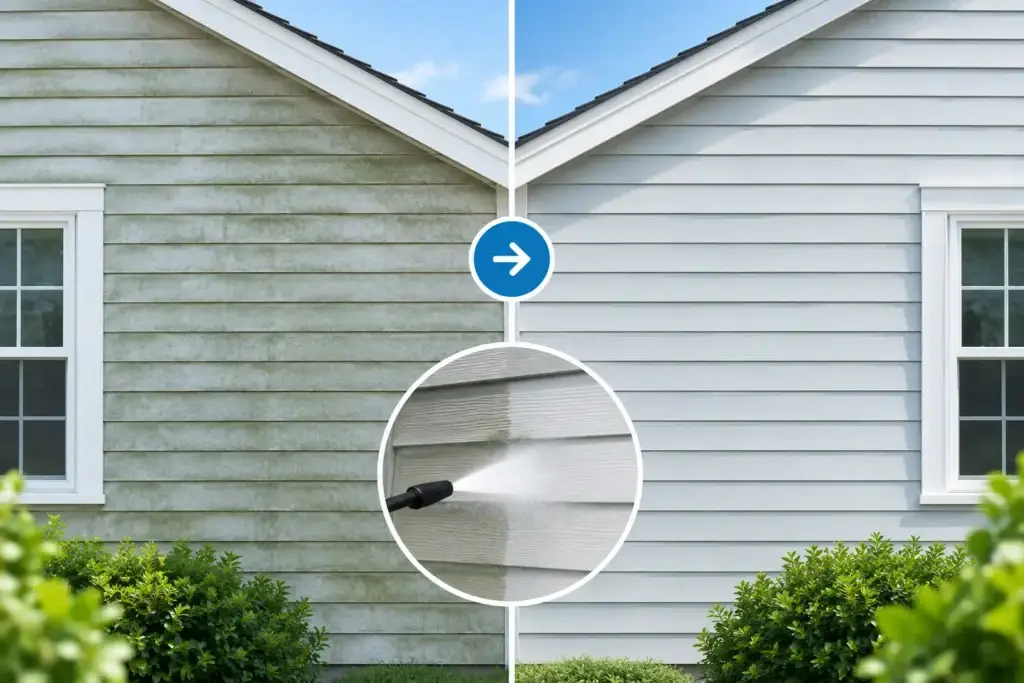
A house can look clean from the curb yet still have dull, chalky siding that wipes off on your hand. If you are researching how to remove siding oxidation, the first step is knowing whether you are dealing with surface dirt, mildew, or a weathered finish. The right answer can range from a careful wash to restoration or repainting. The wrong approach can leave permanent streaks, water intrusion, or damaged siding.
Connecticut homes take a beating from coastal moisture, winter weather, tree pollen, and strong seasonal sun. Oxidation is especially common on older vinyl and painted aluminum siding, but it is not something a high-pressure rinse should be expected to fix.
What Siding Oxidation Actually Looks Like
Oxidation is the gradual breakdown of a siding surface from UV exposure, moisture, and age. On vinyl, it often appears as a pale, chalky film that makes one side of the home look faded or uneven. On painted aluminum siding, oxidation can look like a powdery residue, dull paint, chalking, or fading.
Try a simple spot check before planning any cleaning. Rub a dry, dark microfiber cloth across an inconspicuous area. If a white or colored powder transfers to the cloth, oxidation is likely present. If the material instead feels slimy, green, or black, you may be seeing algae, mildew, or organic staining. Those contaminants can usually be cleaned safely. Oxidation requires more caution.
The distinction matters because cleaning removes material from the siding. Dirt and algae should come off. Oxidized surface material is part of the worn finish itself. Aggressive cleaning can remove it unevenly and make the panels look worse.
How to Remove Siding Oxidation Safely
Start with the least aggressive method that has a realistic chance of improving the appearance. Every home is different, and the correct process depends on the siding material, its age, its color, and how far the oxidation has progressed.
1. Inspect the siding before you clean
Walk around the property in good daylight. Look for cracking, loose panels, exposed fasteners, peeling paint, failed caulk, and warped sections. Pay close attention to walls under gutters, near landscaping, and around windows where water may be getting behind the siding.
Also compare the sunny side of the home with the shaded side. Heavy fading and chalking on the south or west exposure usually point to oxidation. Dark spotting on shaded walls is more likely biological growth. It is common to have both problems at once.
2. Rinse away loose surface debris
Use a garden hose with normal household pressure to rinse away cobwebs, pollen, and loose dirt. Work from top to bottom, directing water downward so it does not get behind the panels. Do not aim water upward beneath laps, vents, trim, or window edges.
This initial rinse helps you see what remains after ordinary grime is gone. Sometimes a home that appears oxidized is simply covered with a stubborn layer of pollen and airborne dust.
3. Use a siding-safe cleaner for dirt and organic growth
For vinyl siding with mildew, algae, or general grime, use a cleaner labeled for the specific siding material and follow its dilution instructions. Apply it to a cool, shaded section of the wall. Let it dwell only as long as directed, keeping it from drying on the surface.
Gently agitate problem areas with a soft-bristle brush or microfiber pad, then rinse thoroughly from top to bottom. Avoid abrasive scrub pads, stiff brushes, and household cleaners that are not intended for exterior siding. They can scratch vinyl, strip paint, or create blotchy spots.
Protect nearby plants by pre-wetting them, rinsing them during the process, and flushing them again when cleaning is complete. Covering plants may trap chemical heat and is not always the best choice, so a steady water rinse is usually safer.
4. Test an oxidation remover in a hidden area
If chalking remains after cleaning, a dedicated siding oxidation remover or restoration product may help. These products vary widely. Some are intended for vinyl, while others are formulated for painted aluminum or other coated surfaces. Never assume one product works safely on every type of siding.
Test a small area behind a shrub, near a utility meter, or on a less visible wall first. Apply exactly as instructed and evaluate the area after it dries. Watch for uneven sheen, streaking, color transfer, or a noticeably cleaner patch that highlights the surrounding faded panels.
A test spot tells you whether the product can improve the appearance, but it also shows whether the job will need to be completed across the entire wall for a consistent result. Spot treatment on aged siding often creates a checkerboard effect.
5. Work in small, controlled sections
If the test is successful, clean one manageable section at a time, keeping a wet edge to reduce streaking. Use light, even passes with a soft applicator. Rinse completely before moving on. Do not allow cleaning or restoration products to dry on glass, painted trim, metal fixtures, or siding.
Pressure is not the solution for oxidation. Even a consumer pressure washer can cut into weathered vinyl, force water behind panels, strip oxidized paint unevenly, and leave visible wand marks. The more faded the siding is, the more likely high pressure will reveal permanent lines.
6. Decide whether restoration is worth it
Mild oxidation can sometimes be improved with careful cleaning and a compatible restoration product. Moderate oxidation may improve, but the finish may not return to its original color. Severe oxidation, widespread fading, or peeling painted aluminum is usually a refinishing issue rather than a cleaning issue.
For vinyl siding, that can mean using a siding restoration product designed for the material or planning replacement when the panels are brittle, cracked, and heavily faded. For aluminum siding with failing paint, professional prep and repainting may provide the most even, durable result. A clean surface is still essential before either option.
What Not to Do on Oxidized Siding
A quick fix is tempting when the house looks tired, but several common methods create expensive problems. Avoid these shortcuts:
- Do not use high-pressure washing directly on chalky, weathered siding.
- Do not use abrasive pads, steel wool, or harsh powdered cleaners.
- Do not mix cleaning chemicals or use a stronger concentration than the product label allows.
- Do not clean hot siding in direct sun, where products dry too quickly and can streak.
- Do not treat a small visible patch without testing whether it will blend with the rest of the wall.
Bleach-based solutions may be appropriate for organic growth when properly diluted and applied, but they do not restore a degraded siding finish. They should be used carefully around landscaping and never treated as a cure for oxidation.
When Professional Soft Washing Makes Sense
Professional soft washing is often the safest choice when the siding has a combination of oxidation, mold, mildew, pollen, and hard-to-reach buildup. A trained exterior cleaning team can identify what is cleanable, use controlled solutions and low-pressure application, and rinse without blasting delicate surfaces.
That said, reputable professionals should be honest about the result. Soft washing can remove the dirt and organic staining that makes oxidation look worse. It may reveal a more even surface. It cannot always reverse UV damage or restore paint that has already broken down.
This assessment is particularly valuable on tall homes, homes with aging vinyl, painted aluminum siding, or properties with extensive landscaping. It is also a practical option when you do not want to spend a weekend handling ladders, chemical rinsing, and repeated test areas. CT Softwash LLC uses surface-appropriate methods to clean exterior siding safely while helping homeowners understand whether cleaning, restoration, or painting is the sensible next step.
Keeping Oxidation From Looking Worse
You cannot stop normal weathering forever, but routine exterior care slows the buildup that makes faded siding look neglected. A gentle annual or seasonal house wash removes pollen, salt air, algae, and mildew before they settle into the surface. Keep gutters clear and downspouts directed away from walls so dirty overflow does not stain the siding.
Trim vegetation back from the house to improve airflow and reduce moisture on shaded walls. If you are considering repainting aluminum siding or applying a vinyl-safe restoration coating, start with a clean, dry surface and use a product made for that exact material. Preparation determines whether the finished wall looks even or fails early.
A careful inspection and a small test area can save you from turning a cosmetic problem into permanent damage. When the siding is heavily chalked, faded, or difficult to access safely, getting a professional opinion is often the fastest route to a cleaner home and a clear plan for what comes next.