
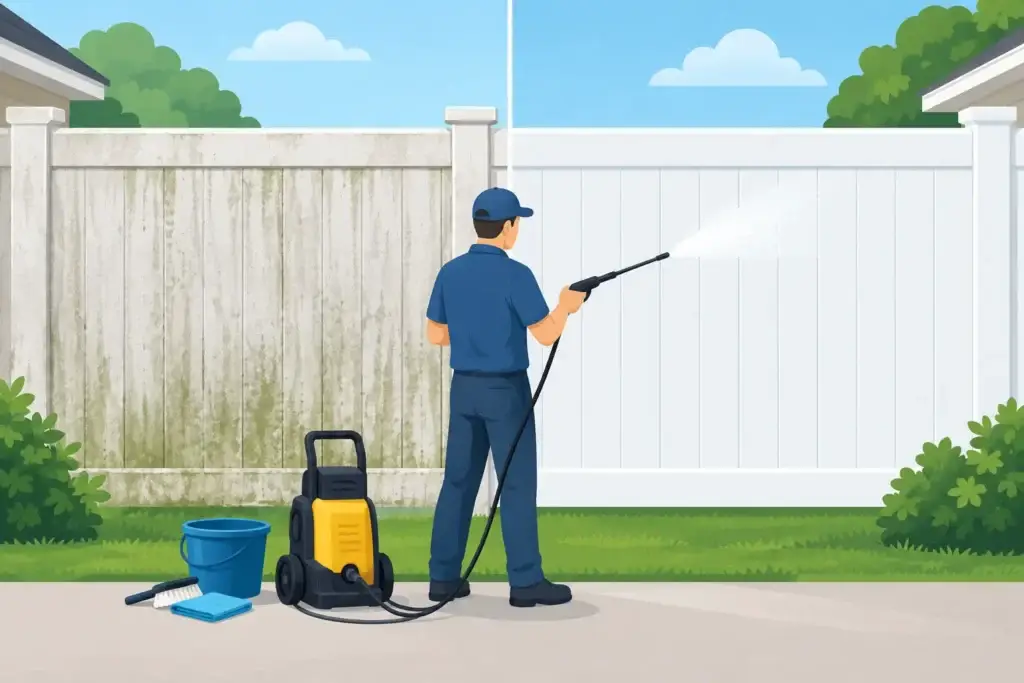
A white vinyl fence can go from crisp to green-streaked surprisingly fast in Connecticut. Damp springs, shade, pollen, coastal air, and falling leaves create the perfect conditions for algae, mildew, and surface grime. Knowing how to wash vinyl fences correctly helps restore curb appeal without leaving behind scratches, streaks, or pressure-washer damage.
Vinyl is low maintenance, not no maintenance. The good news is that most fences respond well to a gentle cleaning routine. The key is using the right solution, giving it time to work, and resisting the urge to blast every stain with high pressure.
What Makes Vinyl Fences Look Dirty?
Not every dark mark on vinyl is the same, so the best cleaning approach depends on what you are seeing. Green or black spotting is usually algae, mildew, or mold growth. A gray film may be road dust, pollen, cobwebs, and airborne dirt. Rust-colored stains can come from sprinkler water with high iron content, while black marks near gates or corners may be scuffs from lawn equipment, trash bins, or shoes.
In shaded yards around Groton, Mystic, Waterford, and other coastal Connecticut communities, organic growth is often the main issue. Cleaning only with water may make the fence look better for a few days, but it does not always treat the growth causing the discoloration. That is why a fence-safe cleaner matters.
Supplies for Washing a Vinyl Fence
For a standard homeowner cleaning, gather a garden hose with a spray nozzle, a bucket, mild dish soap or a vinyl-safe exterior cleaner, a soft-bristle brush, and clean microfiber cloths or a soft sponge. Wear gloves and eye protection if you are using a stronger cleaner for algae or mildew.
Avoid abrasive scouring pads, steel wool, harsh powdered cleaners, and stiff wire brushes. They can dull the finish or create fine scratches that collect dirt more easily later. It is also smart to move patio furniture, planters, and outdoor decorations away from the fence before you begin.
How to Wash Vinyl Fences Step by Step
Start with a full rinse
Rinse one section of the fence from top to bottom using a regular garden hose. This removes loose dirt and helps keep dry debris from turning into muddy streaks when you apply your cleaning solution. Work in manageable sections rather than wetting the entire fence at once, especially on a sunny day.
If the fence is next to landscaping, wet the grass, shrubs, and flowers first. Moist leaves and soil are less likely to absorb cleaning residue. Cover delicate plants only if needed, and uncover them promptly so they do not overheat.
Apply a gentle cleaning solution
For ordinary dirt and pollen, mix mild dish soap with warm water in a bucket. Use enough soap to create light suds, not a heavy concentration that will be difficult to rinse away. Apply the solution with a sponge or soft brush, starting at the bottom and working upward to reduce drip marks.
For green algae or mildew, use a vinyl-safe exterior cleaner designed for organic staining and follow its label directions exactly. Some stronger cleaners require dilution and a short dwell time before rinsing. Never mix cleaning products together, especially products containing bleach, ammonia, or acids.
A small test area is worthwhile before treating the entire fence. Choose a lower, less-visible panel and make sure the cleaner does not affect the finish or nearby landscaping.
Brush only where the buildup remains
Most vinyl fences do not need aggressive scrubbing. Let the cleaner do much of the work, then use a soft-bristle brush on textured grooves, post caps, rail connections, and stubborn spots. Use light, even pressure. Scrubbing hard will not improve a stain that needs more dwell time or a different cleaner.
For scuff marks, try a damp microfiber cloth with mild soapy water first. If that does not work, use a cleaner approved for vinyl surfaces. Be cautious with magic eraser-style sponges. They can remove marks, but they are mildly abrasive and may leave a noticeable dull spot if overused.
Rinse completely from top to bottom
Rinse each cleaned section thoroughly before moving on. Leftover soap or cleaning solution can dry into a hazy film, particularly on white vinyl. A top-down rinse pushes residue away instead of washing it across already-clean panels.
Take an extra moment around hinges, latches, post bases, and decorative details. These are the places where cleaner and grime tend to collect. Once finished, give nearby plants another gentle rinse with plain water.
Can You Pressure Wash a Vinyl Fence?
You can pressure wash a vinyl fence, but it is not always the best first choice. High pressure can force water into joints, loosen caps, scar the surface, or damage older panels that have become brittle from years of sun exposure. It can also turn a simple algae problem into a landscaping problem if the cleaner or runoff is not controlled.
If you decide to use a pressure washer, use low pressure, a wide fan tip, and keep the wand moving. Stand several feet back and never aim directly into seams, gate hardware, or the underside of caps. Treat pressure as a rinsing tool, not a stripping tool.
For widespread green or black buildup, professional soft washing is often the safer option. Soft washing uses low-pressure application and surface-appropriate cleaning solutions to treat organic growth without the unnecessary force that can damage fencing. CT Softwash LLC uses professional methods that focus on visible results while protecting the surfaces around your home.
Common Vinyl Fence Cleaning Mistakes
The most common mistake is using too much pressure because the fence looks heavily stained. Another is applying cleaner in direct hot sun and allowing it to dry before it can be rinsed. Dried product can leave streaks, and fast drying makes it harder to get an even result.
Homeowners also sometimes use concentrated bleach without considering the fence, the plants, or the runoff. Bleach-based products can be effective for organic growth when used properly, but they require careful dilution, plant protection, thorough rinsing, and attention to the product label. If you are not comfortable handling stronger cleaning chemistry, it is better to choose a milder vinyl cleaner or schedule professional service.
Do not ignore the source of recurring staining, either. If one section turns green every few months, nearby tree cover, poor drainage, sprinkler overspray, or a consistently shaded area may be feeding the problem. Trimming back vegetation and redirecting sprinklers can extend the time between cleanings.
How Often Should You Clean a Vinyl Fence?
Most homes benefit from washing vinyl fencing once a year, usually in spring after pollen season or in early fall before winter weather settles in. A fence near heavy shade, water, woods, or busy roads may need attention twice a year.
A quick hose rinse after a dusty landscaping project or a long pollen stretch can prevent grime from building up. It is easier and more affordable to maintain a fence regularly than to wait until the panels are covered in stubborn algae and mildew.
When It Makes Sense to Call a Professional
DIY cleaning is practical for a small fence with light surface dirt. Professional help makes more sense when the fence is long, heavily stained, difficult to access, surrounded by sensitive landscaping, or part of a larger exterior cleaning project. Combining fence cleaning with house washing, deck cleaning, or gutter cleaning can give the entire property a more consistent appearance without adding another weekend chore.
A clean vinyl fence should look bright, even, and free of residue – not chalky, scratched, or blasted at the seams. Use gentle tools, give the right cleaner time to work, and address organic growth before it takes over. That simple approach keeps your fence looking like the low-maintenance investment it was meant to be.