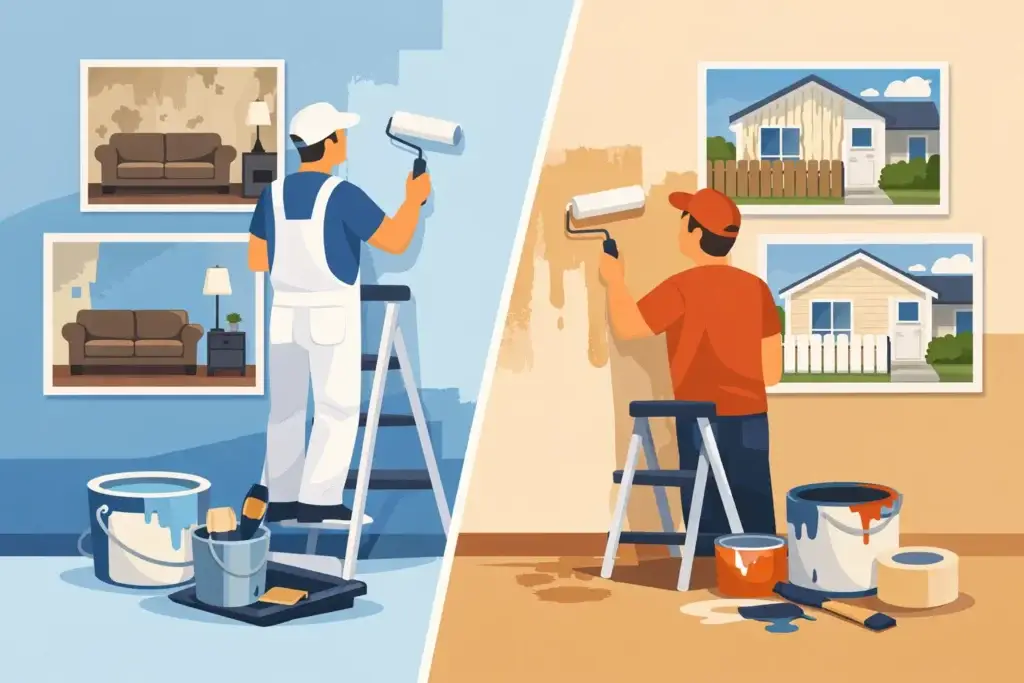
A peeling porch rail, faded trim, or siding that has lost its color can make an otherwise well-kept home look overdue for maintenance. When comparing professional painters versus DIY, the paint itself is only part of the decision. The bigger question is whether you have the time, equipment, preparation skills, and safe access needed to get a finish that protects your home as well as it improves curb appeal.
For some small projects, a careful DIY approach makes perfect sense. For larger exterior work, hiring a professional often prevents the expensive problems homeowners are trying to avoid in the first place: early paint failure, damaged siding, uneven coverage, and unsafe ladder work.
Professional Painters Versus DIY: Start With the Real Scope
Painting a single ground-level door or a small section of fence is very different from painting a full exterior. The visible square footage is only one part of the job. Before paint can go on, the surface needs to be clean, dry, sound, and properly prepared.
Connecticut homes deal with humid summers, wet springs, coastal air in many communities, freeze-thaw cycles, pollen, mildew, and wind-driven debris. Those conditions can leave behind chalky paint, organic growth, loose caulk, and moisture problems that fresh paint will not fix. If paint is applied over a dirty or damp surface, it may look good briefly, then blister, peel, or fade sooner than expected.
A professional painter evaluates those conditions before opening a paint can. They can identify whether a surface needs washing, scraping, sanding, priming, caulking, minor repair, or additional dry time. That assessment is one of the biggest differences between a lasting paint job and a quick cosmetic cover-up.
The DIY Advantage: Lower Upfront Cost and Full Control
DIY painting can save money when the project is genuinely manageable. If you already own basic tools, can work safely from the ground, and have enough time for careful prep, painting a small exterior feature yourself can be rewarding. You also control the schedule, paint color, and pace of the work.
The key is being realistic about what DIY really costs. In addition to paint, most homeowners need brushes, rollers, trays, drop cloths, painter’s tape, scraper blades, sandpaper, caulk, primer, cleaning supplies, extension poles, ladders, and protective gear. A sprayer may be useful for certain surfaces, but using one well takes practice and requires extensive masking to protect windows, landscaping, vehicles, and neighboring property.
Time is another cost. Exterior painting rarely fits neatly into one free afternoon. Proper work may involve washing one day, allowing the surface to dry, completing repairs and prep, applying primer, then painting multiple coats under suitable weather conditions. A project that seems inexpensive can become frustrating when it takes several weekends and disrupts normal routines.
DIY is usually a reasonable choice when the area is small, access is easy, the existing paint is in good condition, and you are comfortable doing detailed preparation. It becomes less appealing when there is extensive peeling, second-story work, wood rot, lead-paint concerns, or a large amount of trim and detail work.
What Professional Painting Services Deliver
Professional painters are not simply paying for labor. You are paying for a process built around surface protection, finish quality, and efficiency. Experienced crews know how to prepare different materials, including wood, vinyl, fiber cement, stucco, and previously painted surfaces. They also know when a problem needs repair before painting begins.
A quality exterior paint job generally starts with surface cleaning. Mildew, algae, chalking, cobwebs, and dirt need to be removed so coatings can adhere properly. This is especially important in shaded areas and on homes near the Connecticut shoreline, where moisture and salt air can be harder on exterior finishes.
Preparation follows. Professionals scrape loose paint, sand rough edges, secure or repair small damaged areas when included in the scope, caulk gaps, and spot-prime bare material. They protect windows, walkways, plants, decks, and surrounding surfaces before applying the selected coating system.
The application itself matters too. Pros use the right tools and technique for the material and location. They maintain a wet edge to reduce lap marks, apply paint at the recommended spread rate, and avoid painting when temperature, humidity, or rain risk could compromise the result. The finish should look consistent from the street and hold up through changing seasons.
Just as important, a reputable company is licensed and insured. That protection matters when work involves heights, ladders, scaffolding, or exterior equipment. It also creates clearer expectations for scheduling, workmanship, cleanup, and the final walkthrough.
Cost Comparison: Cheap Now or Durable Later?
DIY often wins on the initial price tag, especially for a small job. But it does not automatically win on total value. Paint failure can require extra materials, more labor, and a complete redo much sooner than planned. A missed preparation step can cost more than hiring help from the beginning.
Professional painting costs more upfront because it includes skilled labor, equipment, insurance, preparation, protection of adjacent surfaces, and a more efficient timeline. The better comparison is not just the estimate versus the cost of paint. Compare the expected life of the finish, the quality of prep, the risk of mistakes, and the value of your own time.
For example, repainting a weathered porch may appear straightforward. But if the boards hold moisture, the old coating is peeling, or gaps are allowing water in, a weekend paint job may only conceal the issue. A professional can address the surface condition before applying the new finish, helping the paint last longer.
That said, not every project needs a painting crew. A homeowner who enjoys hands-on work and wants to refresh a well-maintained shed, mailbox post, or one-story railing can often get a good result with the right materials and patience. The best choice depends on the condition of the surface, not just the size of the budget.
Safety Is Not a Minor Detail
Falls are one of the most serious risks in exterior maintenance. Reaching awkward angles from a ladder while carrying paint, working near rooflines, or moving ladders across uneven ground creates a real hazard. The risk increases around second-story gables, dormers, steep grades, and areas near power lines.
There are also surface and material risks. Older homes may have layers of paint that require lead-safe practices. Pressure washing without proper technique can scar wood, force water behind siding, or damage delicate trim. Using the wrong cleaner can harm landscaping or leave residue that interferes with paint adhesion.
Professional crews use commercial-grade equipment and established safety practices to manage these conditions. Homeowners do not need to take unnecessary risks just to avoid a service bill. If a project requires you to stretch beyond your comfort level or work at a dangerous height, it is a strong sign to call a professional.
When to Hire a Painter Without Hesitation
Some warning signs make the professional choice clearer. Consider hiring help if your home has widespread peeling or flaking paint, visible wood deterioration, mildew or algae buildup, staining that will not wash away, high sections that require extension ladders, or detailed trim that demands a precise finish.
You should also consider the timing. If you are preparing to sell, hosting an event, finishing other exterior improvements, or trying to protect exposed wood before another harsh season, a professional crew can complete the work on a dependable schedule. That convenience is valuable when curb appeal and property protection cannot wait for an open weekend.
At CT Softwash LLC, exterior preparation and property care are treated as part of the result, not an afterthought. A clean, properly prepared surface gives new paint its best chance to look sharp and perform as intended.
How to Make the Right Call for Your Home
Walk around your property in daylight and look beyond the color. Check for peeling paint, soft wood, open caulk joints, mildew, moisture staining, and difficult-to-reach areas. Then ask whether you can safely clean, prep, prime, and apply multiple coats without rushing the work.
If the answer is yes and the project is modest, DIY can be a smart way to refresh part of your property. If the work is high, extensive, time-sensitive, or tied to underlying surface problems, professional painting is usually the better investment.
A fresh coat of paint should do more than create a nice first impression. It should help protect the surfaces you have already invested in. Choose the approach that gives your home the attention, safety, and finish quality it deserves.