Saturday starts with good intentions. You buy the cleaner, drag out the hose, and figure a few hours of work will handle the siding, deck, gutters, or roof stains. By midafternoon, the job is taking longer than expected, the results are uneven, and you’re left wondering whether professional washing versus DIY cleaning was really a close call in the first place.
For some exterior tasks, doing it yourself can make sense. For others, it can cost more in damage, wasted time, and repeat work than most homeowners expect. The right choice depends on what you’re cleaning, how dirty it is, how sensitive the surface is, and how much risk you’re willing to take on.
Professional washing versus DIY cleaning: what really changes?
The biggest difference is not just who holds the wand. It is the method, the equipment, and the understanding of how different surfaces respond to water pressure, detergents, and dwell time.
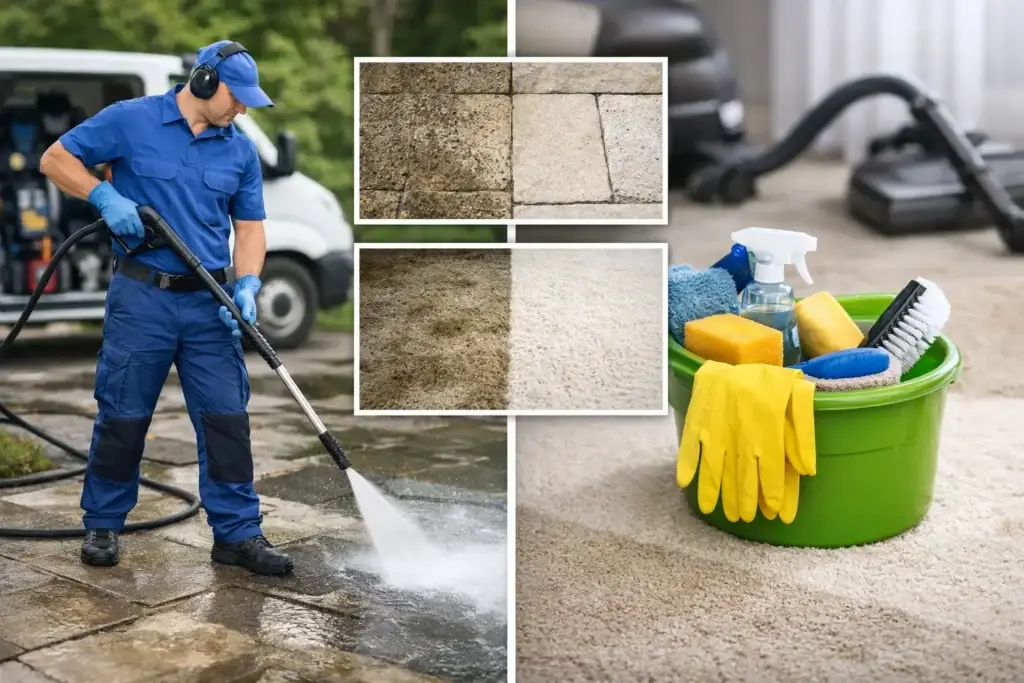
DIY cleaning usually relies on consumer-grade tools and trial-and-error. That can work for light buildup on durable surfaces. But many exterior surfaces around a home are not as forgiving as they look. Vinyl siding can be forced loose by bad spray angles. Roof shingles can be damaged by high pressure. Wood can be scarred. Concrete can end up looking striped from uneven passes.
Professional exterior cleaning is built around matching the process to the material. That often means soft washing for siding and roofing, pressure washing for harder surfaces, and specialized detergents that do more than rinse away visible dirt. The goal is not just to make a surface look cleaner for a week. It is to remove the organic growth, grime, and staining in a way that lasts and does not create a new repair bill.
Where DIY cleaning can be a reasonable choice
There are situations where a homeowner can handle the work without much downside. If you are rinsing off patio furniture, washing a small section of concrete with light dirt, or cleaning a first-floor area with the right product and low pressure, DIY may be perfectly fine.
It also makes sense when the surface is sturdy, the staining is mild, and there is little chance of forcing water into cracks, vents, or seams. If you already have the proper equipment, know how to use it, and are comfortable working safely from the ground, a smaller maintenance task can be manageable.
The problem is that many jobs start in this category and turn out not to belong there. What looks like simple dirt is often algae, mildew, oxidation, or deep-set staining. That is when homeowners start increasing pressure, scrubbing too aggressively, or mixing products without a clear plan. Results slip fast after that.
When professional washing is the smarter investment
If the job involves roofing, upper-story siding, gutters, painted surfaces, decks, fencing, pavers, commercial storefronts, or heavy organic buildup, professional service is usually the better decision.
This is especially true when safety is part of the equation. Ladders, slippery surfaces, electrical fixtures, and wet walkways create risk quickly. A roof streak or clogged gutter may look like a simple weekend task, but falls and water intrusion are expensive ways to save money.
There is also the issue of finish quality. Professional crews are expected to deliver a consistent result across the whole property, not just the areas that are easiest to reach. That matters if you care about curb appeal, are preparing to paint, getting ready to sell, or trying to maintain a home or commercial building without visible patchiness.
A good professional service also protects what should not be blasted or soaked. Landscaping, window seals, light fixtures, trim, and surrounding materials all need attention during the process. That level of control is hard to replicate with rented or store-bought equipment.
The cost question is more complicated than it looks
At first glance, DIY cleaning appears cheaper. You pay for detergent, maybe rent a pressure washer, and put in your own labor. On paper, that can look like a smart savings.
But real cost includes more than the receipt. You need to account for your time, fuel, equipment rental, repeat attempts, and the chance of surface damage. If a homeowner etches concrete, strips paint, gouges wood, or drives water behind siding, the repair cost can erase any savings immediately.
Professional washing costs more upfront because you are paying for labor, experience, commercial-grade equipment, insurance, and a process designed to get the job done correctly the first time. For many homeowners, that value is not just about convenience. It is about avoiding mistakes that are hard to reverse.
This is why professional washing versus DIY cleaning should be judged on total outcome, not just the initial price tag. A cheaper job that needs to be redone or causes damage is not the less expensive option.
Results depend on the surface
Siding
Vinyl, painted wood, stucco, and composite siding all benefit from the right cleaning method. Too much pressure can damage finishes or push water behind the exterior. Soft washing is often the safer and more effective choice because it treats organic growth instead of just knocking off the top layer.
Roofs
Roof cleaning is one of the clearest examples of where DIY often goes wrong. Black streaks are usually caused by algae, not just dirt. High pressure can shorten shingle life and void warranties. A professional soft wash approach is designed to clean the roof without beating it up.
Concrete and hardscapes
Driveways, walkways, patios, and retaining walls can usually tolerate more pressure, but technique still matters. Uneven cleaning leaves visible lines. Some stains need pretreatment, not just stronger pressure. Professionals also know when oil, rust, algae, and general grime require different solutions.
Decks and fences
Wood is easy to damage. One wrong pass can leave permanent marks, raise the grain, or strip away protective coatings. Even composite materials need the right balance of cleaning strength and surface protection.
Gutters and windows
Gutter cleaning sounds simple until you’re dealing with height, downspouts, and heavy debris. Window cleaning seems easy until dried spotting and streaking show up in full sun. These are classic examples of jobs that many people can start, but fewer can finish to a professional standard.
Time, safety, and peace of mind matter too
Most property owners are not deciding between a fun hobby and a service call. They are deciding how they want to spend a weekend and how much risk they want to assume.
Professional service removes a lot of friction. There is no rental pickup, no guessing on chemicals, no learning curve, and no second round because one side of the house still looks dirty. For busy homeowners and commercial property managers, that alone is often worth it.
Safety is even more important. Exterior cleaning creates slippery conditions fast. Add a ladder, roofline, or multi-story wall and the risk changes completely. Licensed and insured professionals are not just selling convenience. They are reducing exposure for the property owner.
How to decide which route makes sense
If the surface is delicate, the buildup is heavy, the area is high or difficult to reach, or the finish really matters, hire it out. If the task is small, low-risk, and on a durable surface, DIY can be reasonable.
It also helps to ask a practical question: if this goes wrong, what happens next? If the answer is minor inconvenience, you may be comfortable doing it yourself. If the answer is water damage, injury, roof wear, or a repair bill, professional service is usually the smarter move.
For homeowners in Connecticut, that calculation often leans toward hiring help because weather, moisture, and seasonal buildup are hard on exterior surfaces. Mold, algae, pollen, and salt residue do not just affect appearance. They shorten the clean look and can wear down materials over time if they are handled the wrong way.
A company like CT Softwash LLC is built for exactly that kind of problem – safe cleaning, the right method for the surface, and clear results without the guesswork.
The real question is not whether you can do it
Most homeowners can clean something outside. The better question is whether it will come out the way you want, without damage, wasted time, or unnecessary risk.
That is the heart of professional washing versus DIY cleaning. DIY can work for lighter jobs and basic upkeep. Professional service makes more sense when the stakes are higher, the surfaces are more sensitive, or you want the job done quickly and correctly.
If you are looking at stains that keep coming back, buildup that covers more than a small section, or a project that involves ladders, roofing, or delicate materials, it may be time to stop testing fixes and choose a cleaning method that protects your property while actually improving it.