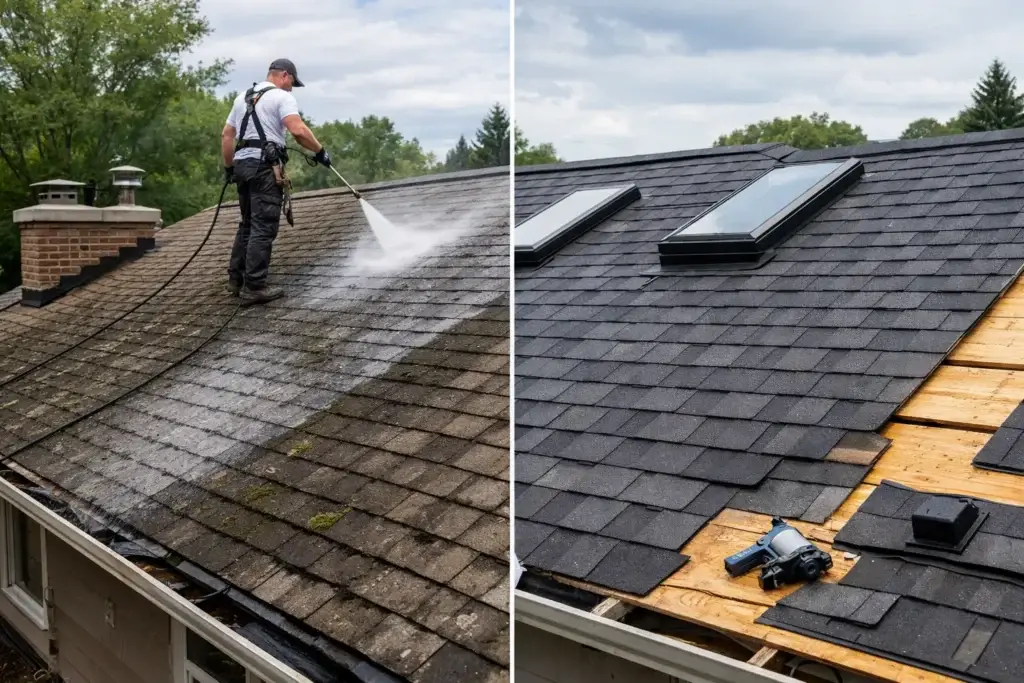
A roof with black streaks, moss, or heavy staining can make the whole property look older than it is. For many homeowners, the real question is not whether the roof looks bad – it is whether they are looking at a cleaning job or a full tear-off. When it comes to roof cleaning vs roof replacement, the right answer depends on the condition of the shingles, the age of the roof, and whether the problem is cosmetic or structural.
A lot of roofs in Connecticut look worse than they really are. Algae staining, lichen, moss, and debris buildup can create the impression that the roof is failing, even when the shingles still have years of service life left. On the other hand, some roofs are cleaned when they should have been replaced, which only delays a bigger problem and adds unnecessary cost.
Roof cleaning vs roof replacement: what is the difference?
Roof cleaning is maintenance. It removes organic growth, surface staining, and debris that hold moisture against the roof. When done correctly with a soft wash process, it is designed to restore appearance and help protect the shingles without the damage that comes from high-pressure washing.
Roof replacement is a construction project. It involves removing some or all of the existing roofing materials and installing a new system. That is the right move when the roof has reached the end of its life, has widespread material failure, or has damage that cleaning cannot solve.
This distinction matters because the price gap is significant. Professional cleaning is a fraction of the cost of replacement. If the roof is still structurally sound, cleaning can improve curb appeal, extend usable life, and buy you time before a major expense. If the roof is failing, though, cleaning will not fix leaks, brittle shingles, rotted decking, or missing granules.
When roof cleaning is the better option
If the shingles are intact and the main issue is discoloration, roof cleaning is usually the smart first step. Black streaks are often caused by algae. Moss and lichen are also common, especially on shaded roof sections. These growths are not just ugly. They trap moisture, contribute to premature wear, and can shorten the life of roofing materials if left untreated.
A proper soft wash can remove these contaminants without stripping the roof surface. That is especially important for asphalt shingles, which can be damaged by aggressive methods. If your roof is under 15 to 20 years old, has no active leaks, and has no widespread cracking or curling, cleaning often makes more sense than replacement.
Cleaning is also a good option if you are preparing to sell the home. A stained roof can hurt curb appeal fast. Many buyers assume a dirty roof means an old roof, and that can affect how they view the rest of the property. Cleaning can improve the appearance dramatically without the cost of putting on a new roof just to solve a cosmetic problem.
For many property owners, the biggest benefit is simple: you avoid replacing a roof that still has life left in it.
Signs your roof may only need cleaning
A roof may be a good candidate for cleaning if the shingles are lying flat, the granule loss is minor, and the staining is mostly caused by algae or moss. If there are no visible soft spots, no recurring leaks inside the home, and no obvious storm damage, the issue may be more about maintenance than replacement.
This is where a professional assessment helps. A trained exterior cleaning company can often spot the difference between a roof that is dirty and a roof that is deteriorating.
When roof replacement makes more sense
There are cases where cleaning is the wrong investment. If the roof is near the end of its expected lifespan, badly worn, or already leaking, replacement is usually the safer and more cost-effective call.
Curling shingles are a red flag. So are bald spots where granules have worn away, cracked tabs, repeated repairs, sagging areas, or water intrusion in the attic. If moss has been growing for years and has lifted shingles or created moisture damage underneath, surface cleaning will not reverse that.
Age also matters. Most asphalt shingle roofs have a general lifespan of around 20 to 30 years, depending on material quality, ventilation, installation, and weather exposure. If the roof is already near that range, spending money on cleaning may not give you much return.
Another factor is insurance and resale. If an inspector or roofer has already documented material failure, a fresh-looking roof will not change the underlying condition. In that case, replacement is the more honest and practical path.
Signs replacement should be on the table
If you are seeing recurring leaks, widespread shingle damage, sagging roof lines, rotted wood, or major flashing failure, start planning for replacement. Those are not cleaning issues. Those are roofing issues.
It is also worth being realistic about patchwork. If repairs are stacking up and each storm seems to create a new problem, replacement may save money over the next few years compared with continued temporary fixes.
Cost is important, but value matters more
It is easy to compare cleaning and replacement by price alone, but that misses the bigger point. The goal is not to choose the cheapest option. The goal is to choose the option that protects the home and avoids wasted money.
Cleaning delivers excellent value when the roof is still healthy. You spend less, improve appearance, and remove harmful buildup before it causes more wear. For homeowners in damp, shaded areas of southeastern Connecticut and nearby Rhode Island, that can be especially worthwhile because algae and moss tend to come back if roofs are ignored.
Replacement delivers value when the roof is done. Yes, it costs more upfront, but it resets the clock, resolves structural concerns, and reduces the risk of interior damage from ongoing leaks. Paying for cleaning on a failing roof can feel cheaper today, but it often becomes more expensive if it delays a necessary project and allows damage to spread.
Why the cleaning method matters
One of the biggest mistakes homeowners make is assuming all roof cleaning is the same. It is not. High-pressure washing can void warranties, loosen shingles, and remove protective granules. That may make the roof look clean for the moment, but it can shorten the roof’s life.
Soft washing is different. It uses low pressure and cleaning solutions designed to treat algae, mildew, moss, and other biological growth at the source. That is the safer approach for asphalt shingles and one reason professional roof cleaning is not the same as spraying the roof with a pressure washer from the ground.
If you are comparing roof cleaning vs roof replacement, make sure you are comparing proper cleaning to replacement – not unsafe washing to replacement. A bad cleaning method can create damage that makes replacement necessary sooner.
How to decide without guessing
The best decision usually starts with a visual inspection from someone who understands exterior surfaces and knows what cleaning can and cannot fix. You want a clear answer to three questions: Is the roof structurally sound? Is the problem mostly biological staining and buildup? How much usable life is likely left?
If the answer points to a sound roof with cosmetic or surface-level contamination, cleaning is often the practical move. If the answer points to system failure, replacement is the better investment.
For homeowners, the mistake is usually making the call based on appearance alone. A roof can look terrible and still be serviceable. It can also look acceptable from the driveway and still be failing in ways you do not see from the ground.
That is why a straightforward, honest assessment matters more than a sales pitch. A reputable contractor should be willing to tell you when cleaning is enough and when it is not.
A smart middle ground for many homeowners
Sometimes the answer is not immediate replacement or no action at all. If the roof is older but still functional, cleaning can be a useful short-term step to improve appearance and maintain the property while you budget for replacement later. That approach makes sense when the roof is nearing the end of its life but is not yet causing major problems.
The key is transparency. Cleaning should never be presented as a cure for an aging roof. It is maintenance, not reconstruction. But when used at the right time, it can absolutely help you protect the roof you have and postpone a major expense responsibly.
If your roof is stained, streaked, or covered in moss, do not assume replacement is the only answer. And if your roof is leaking, sagging, or shedding shingles, do not assume cleaning will save it. The smartest move is to deal with the roof in front of you, not the one you are worried it might be. That is how you protect your home, your budget, and your peace of mind.