
A gutter can look clear from the ground and still be one hard rain away from overflowing behind the siding. That is why a practical roof drainage protection guide starts with more than gutters alone. Your roof, valleys, flashing, gutters, downspouts, and the ground around your foundation all need to move water in the right direction.
For Connecticut homeowners, drainage problems can build through every season. Spring pollen and seed pods collect in gutters, summer storms test weak downspouts, fall leaves create dense clogs, and winter freeze-thaw cycles turn small backups into ice and water damage. Staying ahead of it protects your roof, siding, landscaping, foundation, and curb appeal.
Why Roof Drainage Problems Get Expensive
Water is supposed to leave your roof quickly. When debris or poor drainage interrupts that path, water can spill over gutter edges, sit near fascia boards, run down exterior walls, or pool against the foundation. None of those conditions should be ignored.
Overflowing gutters can stain siding and contribute to mildew growth. Constant moisture around fascia and soffit areas can lead to wood rot. At ground level, water that drains too close to the home can saturate soil, worsen basement moisture, and create cracks or shifting around walkways over time.
The issue is not always a dramatic waterfall during a storm. A slow drip at a gutter seam, a downspout that empties beside the foundation, or a low spot in the yard can create ongoing trouble. The earlier these details are corrected, the simpler and more affordable the work usually is.
Roof Drainage Protection Guide: Start at the Roofline
Your roof is the first part of the drainage system. Leaves, pine needles, branches, moss, and roof granules can all travel into gutters and downspouts. In wooded areas of New London County and along the shoreline, wind-blown debris can return quickly even after a recent cleaning.
Look for visible debris in roof valleys, especially where two roof planes meet. Valleys direct a high volume of rainwater into a concentrated area. If leaves pile up there, water can slow down and work beneath shingles or overflow into nearby gutters.
Roof cleaning matters, but the method matters just as much. High-pressure washing can damage shingles, loosen granules, and force water where it does not belong. A professional soft wash is designed to treat organic roof growth safely while protecting the roofing material. Removing algae, moss, and debris helps restore the roof’s appearance and supports proper water flow without taking unnecessary risks.
Also check the roof edge from the ground after rain. Water should enter the gutter rather than run behind it. If you see water slipping behind the gutter, the problem may involve gutter placement, damaged drip edge, or a section that has pulled away from the fascia. This is a repair issue, not something to cover up with more sealant.
Keep Gutters Clear and Properly Pitched
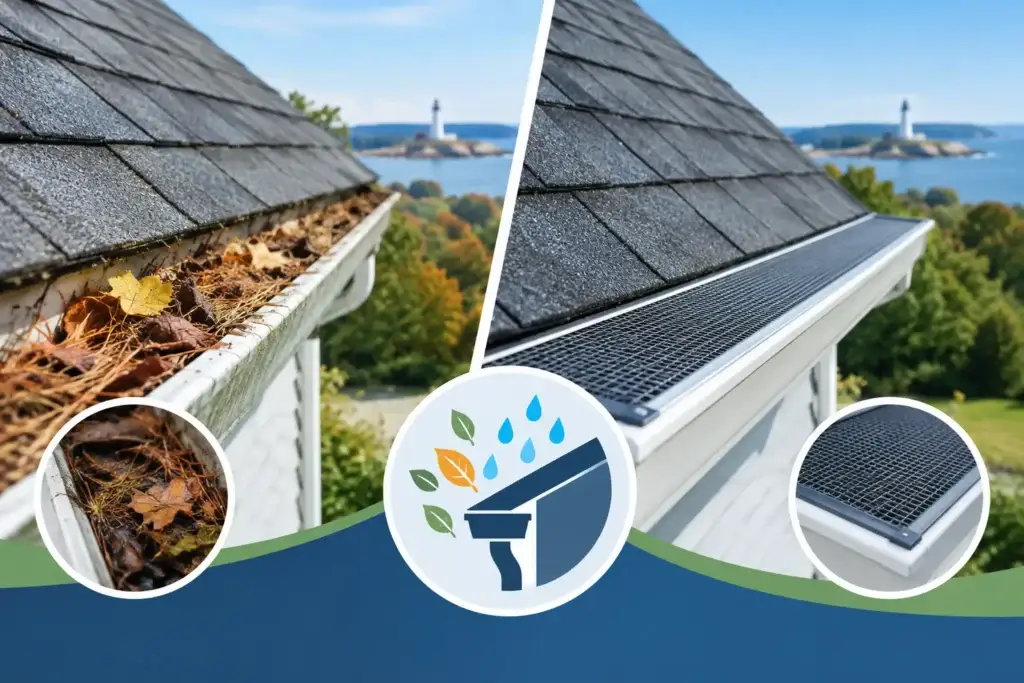
Clean gutters are the foundation of roof drainage protection. A gutter filled with leaves may still carry a little water, but it will not handle a heavy Connecticut downpour. As material gets wet, it compacts into a dense layer that traps more debris and can add significant weight to the gutter system.
Most homes benefit from gutter cleaning at least twice each year: once after spring debris has fallen and again after the majority of autumn leaves are down. Homes beneath large trees may need additional service. There is no one schedule that works for every property, so pay attention to the trees around your home and how your gutters perform during storms.
While cleaning, inspect for sagging sections, standing water, loose hangers, rust, and separated seams. Gutters need a slight slope toward the downspout. If water remains in a section after debris is removed, the pitch may be off. Standing water can attract mosquitoes in warm weather, contribute to corrosion, and freeze during cold snaps.
Do not overlook gutter size. Standard gutters handle many homes well, but steep rooflines, large roof areas, and valleys that concentrate runoff may need larger gutters or additional downspouts. If one section consistently overflows despite being clean, capacity could be the issue.
Make Downspouts Carry Water Far Enough
A clear gutter is only half the job. The downspout has to carry water away from the home after it leaves the gutter. Check each downspout during a steady rain, or carefully run water through the gutter with a hose when conditions are safe.
If water pours over the top of the downspout opening, there may be a clog in the elbow or vertical pipe. If the downspout is clear but the water lands directly at the foundation, add or improve an extension. As a general rule, discharge water at least 4 to 6 feet away from the house, farther when grading is poor or the property has a history of basement moisture.
The extension should direct water onto a stable area that slopes away from the structure. Avoid sending runoff toward a neighbor’s property, a driveway that turns icy, or a walkway where standing water becomes a slip hazard. Flexible extensions are convenient, but rigid extensions and properly designed underground drainage can be more durable in high-flow areas.
Check the Ground, Not Just the Gutters
Even a perfectly clean gutter system cannot solve a grading problem by itself. Water needs somewhere to go after it reaches the ground. Walk around the house after a storm and look for puddles, muddy areas, mulch washing away, or water sitting along the foundation wall.
Soil should generally slope away from the home. Over time, landscaping beds settle, mulch builds up, and soil levels change. That can create a shallow channel that sends water back toward the house. Correcting minor grading issues early can prevent a much larger drainage project later.
Pay close attention to basement stairwells, window wells, low patios, and areas where downspouts discharge. These are common places for water to collect. Keep drains and grates clear of leaves and never bury a downspout outlet where you cannot inspect it for a clog.
Are Gutter Guards Worth It?
Gutter guards can reduce the amount of large debris entering the gutter, but they are not a substitute for maintenance. The best option depends on the roof design, nearby trees, and the type of debris your property gets.
Mesh guards can block many leaves while allowing water through, although very fine pollen, roof grit, and small seed pods may still collect on top. Surface-tension styles can work well in some installations but may struggle during intense rain if the system is poorly sized or installed at the wrong angle. Foam inserts are easy to install but can hold organic material and may require more frequent replacement.
The right guard should make gutter cleaning easier, not make inspections disappear. Debris can still gather along the roof edge, around fasteners, and at downspout openings. A professional can help determine whether guards make sense for your property instead of selling a one-size-fits-all solution.
Prevent Winter Ice and Hidden Water Damage
Ice at the roof edge is often treated as a gutter problem, but the source may be higher up. Ice dams form when snow melts on a warmer section of roof, then refreezes at the cold eave. This can trap water behind the ice and allow it to work beneath shingles.
Keeping gutters free of dense debris helps water drain when temperatures rise, but it will not fix inadequate attic insulation, poor ventilation, or air leaks from the living space below. If ice dams happen repeatedly, have the roof and attic conditions assessed. The most effective solution often combines drainage maintenance with improvements that keep the roof temperature more consistent.
Never chip ice aggressively from shingles or use open flames, salt products, or pressure washing to force it away. Those shortcuts can damage roofing materials and create a larger repair bill.
When to Call a Professional
Gutter cleaning from a ladder can be dangerous, particularly on uneven ground, near power lines, or on multi-story homes. It also becomes harder to spot drainage defects when the job is rushed. Call a professional if you see recurring overflow, loose gutters, roof debris in difficult areas, water stains near the roofline, or basement moisture after rain.
A qualified exterior maintenance team can clean the system, inspect visible trouble spots, and help you understand whether the next step is a simple extension, a gutter repair, a roof treatment, or a drainage contractor. CT Softwash LLC provides safe exterior cleaning and gutter maintenance for homeowners who want the work handled professionally without risking roof or siding damage.
After the next heavy rain, take five minutes to walk your property. The path water takes will tell you more than a dry-day inspection ever can, and fixing one small drainage issue now can protect your home through the next storm season.