
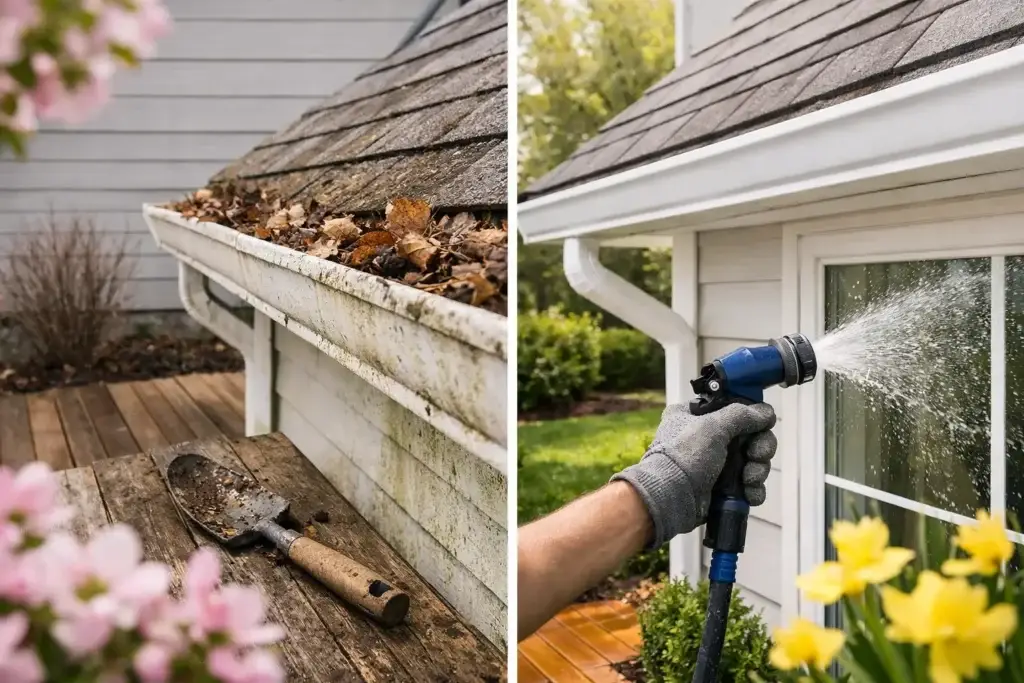
Winter leaves clues everywhere. A loose gutter spike, green film on siding, black roof streaks, grit on the driveway, and clogged downspouts usually show up before the trees fully leaf out. That is why a solid spring exterior home maintenance checklist matters. It helps you catch small issues early, protect your property, and avoid paying for repairs that started as simple cleaning or routine upkeep.
In Connecticut, spring is also when moisture, pollen, and freeze-thaw wear start showing their effects. What looked fine in January can turn into staining, wood rot, drainage problems, or slippery walkways by May. A smart approach is not just about making the house look better. It is about protecting the surfaces you already paid for.
What to check first on your spring exterior home maintenance checklist
Start with a slow walk around the entire property. Do it in daylight and look at the house from a distance before you focus on details. Stains, sagging gutters, missing paint, and uneven roof lines are easier to notice when you step back first.
Then move closer and check each major exterior surface. Siding should be free of algae, mildew, oxidation, and obvious damage. Roof areas should be checked for dark streaks, moss, missing shingles, and debris buildup near valleys. Gutters should sit tight against the house and drain away properly. Concrete and pavers should be checked for surface staining, weed growth, and areas that stay wet too long.
This first pass tells you whether you are dealing with simple seasonal cleanup or the start of a bigger maintenance issue. That difference matters. A dirty surface can often be cleaned. A damaged surface needs repair before cleaning or painting makes sense.
Siding, trim, and painted surfaces
Siding usually takes the biggest visual hit over winter. On vinyl, you may see green algae, dark spotting, or chalky oxidation. On painted wood or trim, you might notice peeling, bubbling, or soft spots where moisture got in. Brick and masonry can show dirt streaks, white mineral deposits, and darkened areas near gutters or landscaping.
This is where homeowners sometimes make an expensive mistake. They assume more pressure means better cleaning. It usually does not. High pressure can crack siding, strip paint, force water behind exterior panels, and scar softer materials. For many homes, soft washing is the safer option because it treats organic growth and rinses surfaces clean without the damage risk that comes with aggressive pressure washing.
If your exterior only has light dust and pollen, a basic rinse and spot cleaning may be enough. If you are seeing mildew, algae, or years of buildup, professional cleaning is usually the better call. Cleaning also gives you a clear view of whether touch-up painting is enough or whether broader repairs are needed.
Roof and gutter inspection
Your roof does not need to be old to look bad in spring. Dark streaks, moss, and lichen often show up on shaded sections first, especially after a damp winter. Those stains are not just cosmetic. Organic growth holds moisture against roofing materials and can shorten the life of the roof if ignored.
A common mistake is treating roof cleaning like driveway cleaning. It is not the same job. Roofs need low-pressure methods and the right cleaning solutions. Too much force can dislodge granules, loosen shingles, and create leaks. If you see roof streaking or moss, this is one area where professional service is worth the cost.
Gutters deserve equal attention. Check for overflow marks, sagging sections, joint separation, and downspouts that dump water too close to the foundation. Even one clog can cause fascia damage, landscape erosion, basement moisture, or staining on siding. If your gutters were not cleaned in late fall, spring is the time to do it. In many homes, especially those near trees, twice-a-year cleaning is the safer schedule.
Windows, screens, and frames
Winter leaves behind more than dirt on glass. Window frames and screens can collect grime, pollen, spider webs, and mildew that make the whole property look neglected even when the siding is clean. Spring is also a good time to check for failed caulking, damaged seals, and soft wood around trim.
If your windows look cloudy even after rain, they likely need more than a quick spray with a hose. Proper window cleaning improves curb appeal fast and helps you spot frame issues before they become repair projects. It is a simple item on a spring exterior home maintenance checklist, but the result is immediate.
Decks, patios, and outdoor living areas
Deck boards, railings, patios, and steps go through a lot during winter. Moisture, leaf staining, and freeze-thaw cycles can leave surfaces slippery, faded, or structurally weakened. Start by checking for loose boards, popped nails, wobbly railings, and soft wood. Then look at surface condition. If the deck is green, blackened, or slick after rain, it needs attention before outdoor season starts.
Cleaning methods depend on the material. Wood decks need a more careful approach than concrete patios. Composite decking can hold grime in surface texture and may require product-specific cleaning. Stone and pavers often need both cleaning and joint maintenance. This is one of those it-depends areas where the wrong method can do real harm, especially on older wood.
If you plan to stain or paint a deck later in the season, cleaning comes first. Applying new product over dirt, mildew, or failing coating usually leads to peeling and uneven finish.
Driveways, walkways, and hard surfaces
Concrete takes on oil spots, rust stains, algae, and winter residue faster than most homeowners realize. Walkways and entry paths are not just a visual issue either. If they stay slick, they become a safety problem.
Pressure washing can be effective here, but the surface and stain type matter. Standard dirt and algae usually respond well. Rust, fertilizer stains, and deep oil spots may need targeted treatment. Pavers also need extra care because too much pressure can remove joint sand and destabilize the surface over time.
Spring is a good time to clean these areas because you can remove winter buildup before it bakes in through summer. It also instantly improves the look of the property, which is one reason many homeowners schedule driveway and house washing together.
Landscaping edges and drainage
A strong checklist should include the areas around the house, not just the house itself. Trim shrubs away from siding and windows so surfaces can dry properly after rain. Check mulch beds and soil lines to make sure they are not piled too high against the foundation or siding. Make sure downspouts move water away from the home, not into planting beds that are already saturated.
Poor drainage causes a chain reaction. Wet soil leads to splashback on siding, standing water on walkways, and extra stress on foundations and basements. In coastal and humid parts of southeastern Connecticut, that moisture can also speed up algae and mildew growth on lower exterior walls.
When to do it yourself and when to call a professional
Some parts of a spring exterior home maintenance checklist are easy to handle yourself. A visual inspection, light yard cleanup, and basic checks around windows, gutters, and drainage can all be manageable if you do them carefully.
The line usually gets drawn at height, equipment, and surface risk. Roof cleaning, second-story washing, gutter work on tall homes, and any cleaning that requires chemical handling or controlled pressure are better left to trained professionals. The same goes for delicate surfaces like roofing, painted wood, stucco, and older siding.
That is not just about convenience. It is about avoiding damage. A licensed and insured exterior cleaning company can usually identify whether a surface needs soft washing, pressure washing, repair first, or no cleaning at all. That kind of judgment saves money.
For homeowners across Connecticut, spring is often the best time to get ahead of the season before schedules fill up and growth gets worse. Companies like CT Softwash LLC handle this type of work every day, which means the job gets done safely, quickly, and with the right method for each surface.
A practical spring schedule that works
Early spring is best for inspection, gutter cleaning, and roof or siding assessment. Mid-spring works well for house washing, window cleaning, and hard surface cleaning once temperatures are more consistent. Late spring is ideal for paint touch-ups, deck finishing, and any follow-up repairs once surfaces are clean and dry.
That timing is not rigid. If you have heavy tree coverage, a north-facing roof, or constant shade, you may need to move faster on algae and gutter issues. If your home is more exposed and dries quickly, you may have a little more flexibility.
The main goal is simple. Do not wait until dirt becomes damage. Spring is the season when the outside of your home tells you exactly what it needs. If you pay attention now, you can keep your property cleaner, safer, and easier to maintain all year.