
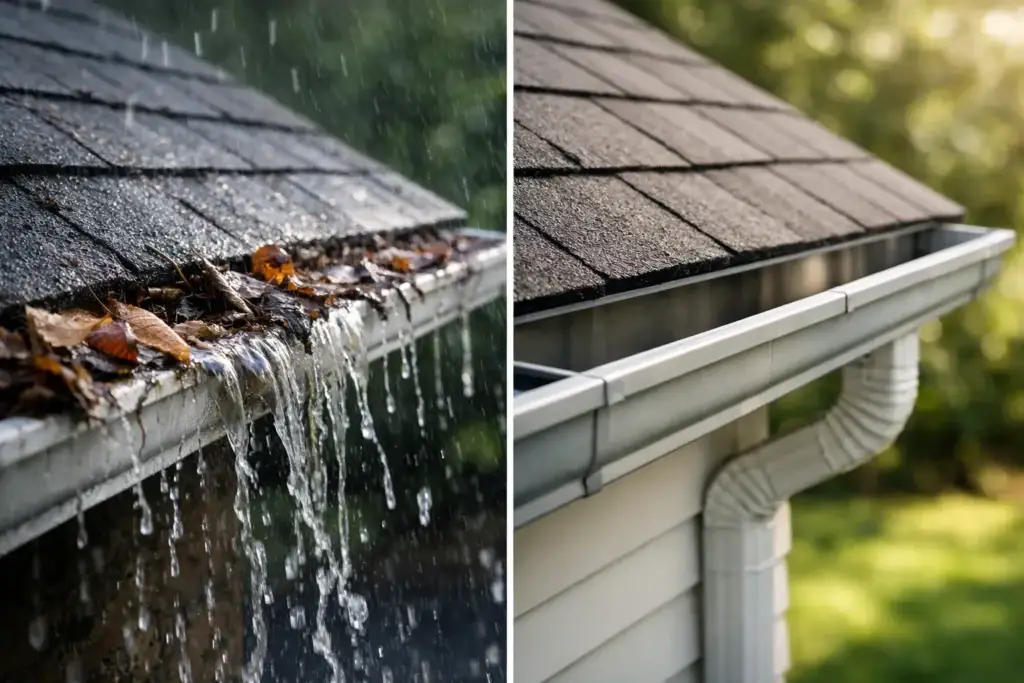
A gutter that spills over during a hard rain is easy to dismiss as a weather problem. It usually is not. Water should travel through the gutter, into the downspout, and safely away from your foundation. When it pours over the edge instead, your home may be dealing with a blockage, poor drainage, or a gutter system that needs attention. Knowing the top signs your gutters overflow helps you act before a routine cleaning issue turns into damaged siding, wet basements, rotted trim, or costly foundation repairs.
Connecticut homes face plenty of leaf drop, pine needles, spring pollen, coastal moisture, and freeze-thaw weather. That buildup does not need long to interfere with drainage. Here are the warning signs to watch for and what to do next.
1. Water Pours Over the Front or Back Edge
The clearest sign is water cascading over the gutter like a small waterfall during rain. It may happen along one section or across the entire roofline. Either way, the gutter is not carrying water where it needs to go.
A clog is the most common cause. Leaves, shingle grit, twigs, seed pods, and roof moss can collect in the trough and block the outlet leading to the downspout. Water then backs up until it finds the easiest escape route – over the edge.
Overflow can also happen when gutters are installed at the wrong angle, have pulled away from the fascia, or are simply too small for the amount of water coming off a steep or large roof. The cause matters because cleaning alone will not fix a pitch or installation issue. Still, clearing debris is the right first step in most cases.
2. Your Downspouts Drip Slowly or Not at All
During a steady rain, look at the bottom of your downspouts. A healthy system should send a consistent stream of water away from the house. If water is overflowing from the gutter while the downspout is barely dripping, there is likely a clog at the outlet or somewhere inside the downspout.
Do not assume the visible gutter channel is clear just because you can see part of it from the ground. A compacted clog can sit inside an elbow, behind a downspout screen, or at the point where the downspout meets the gutter. Wet leaves can form a dense blockage that will not rinse away on its own.
Water should also discharge far enough from the foundation. Even a clear downspout can create a problem if it empties directly beside the home. Extensions and properly directed drainage help keep water from soaking the soil around your basement or crawl space.
3. You See Stains, Streaks, or Dirty Siding Below Gutters
Overflowing water leaves evidence behind. Look for vertical dirt streaks on siding, dark marks beneath the gutter line, peeling paint, or concentrated mildew growth. These stains often appear where water has repeatedly run down the exterior instead of moving through the downspout.
This is more than a curb appeal issue. Constant moisture can wear down painted surfaces, get behind certain types of siding, and contribute to wood rot around trim, soffits, and window areas. On homes with vinyl siding, overflow may also carry debris and organic matter into seams where mold and algae can develop.
House washing can restore the appearance of stained siding, but it should come after the drainage problem is corrected. Otherwise, the same streaks may return after the next storm.
4. Gutters Sag, Pull Away, or Have Visible Plant Growth
A gutter full of wet debris is surprisingly heavy. When standing water and decomposing leaves sit in the channel, the added weight strains hangers, fasteners, and the fascia board behind the gutter. You may notice a low spot, a section separating from the roofline, or water pooling in one area after rain stops.
Plants growing from the gutter are an even stronger warning sign. Moss, weeds, and small seedlings mean organic debris has been sitting long enough to create soil-like material. At that stage, rainwater is unlikely to flow freely, and the gutter may already be retaining moisture against your home.
Sagging does not always mean the whole system needs replacement. Sometimes a thorough cleaning, reattachment, and adjustment can restore proper drainage. If the fascia board is soft or damaged, though, repairs may be needed before the gutter can be secured properly.
5. Water Collects Near Your Foundation
One of the most serious signs your gutters overflow is water pooling near the base of your home. After a storm, walk around the property and check for puddles, muddy splash zones, washed-out mulch, or soil erosion beneath roof edges and downspouts.
Gutters exist to control roof runoff. When they fail, thousands of gallons of water can land in the wrong place over the course of a season. That moisture can seep toward basement walls, add pressure around the foundation, and make existing cracks or drainage weaknesses worse.
Not every wet area means gutter overflow is the only issue. Poor grading, short downspouts, and underground drain problems can also contribute. But if the pooling lines up with a gutter section that spills during rain, start there. Fixing the overflow may substantially reduce the amount of water reaching the foundation.
6. Basement Dampness Appears After Storms
A musty odor, damp basement wall, wet corner, or small amount of water on the floor after rain can point to an exterior drainage problem. Gutters are not always the sole cause, but clogged gutters and poorly directed downspouts are common contributors.
Pay attention to timing. If basement moisture is worse after heavy rain and occurs near the side of the home where gutters overflow, that connection is worth investigating. Repeated runoff near the foundation can saturate the surrounding soil and increase the chances of water finding its way inside.
Addressing gutters is a practical, affordable place to begin before assuming you need major waterproofing work. A professional can clear the system, confirm that downspouts are flowing, and identify visible drainage concerns around the roofline.
7. You Notice Ice Buildup Along the Gutter in Winter
In Connecticut, winter can expose drainage problems that were less obvious in fall. When gutters are packed with leaves and standing water, that trapped water can freeze. You may see heavy ice in the gutter, icicles forming in unusual locations, or water backing up under the lower edge of the roof.
Ice dams involve several factors, including attic insulation and heat loss, so gutter cleaning is not a guaranteed cure for every ice issue. Still, a clean, properly draining gutter gives melting snow a clear route away from the roof. It also reduces the weight and stress caused by frozen debris sitting in the system.
Avoid climbing a ladder or chipping at ice during winter conditions. That can damage the gutter and create a serious fall hazard. Schedule cleaning and inspection before cold weather arrives whenever possible.
Why Gutter Overflow Should Not Wait
It is tempting to wait until the next dry weekend, especially if overflow only happens in a downpour. The trouble is that water damage is cumulative. One storm may only leave a stain. Repeated storms can deteriorate wood, loosen gutters, flood planting beds, and send water where it does not belong.
The right cleaning schedule depends on your property. Homes surrounded by mature trees often need service at least twice a year, commonly after spring debris falls and again after autumn leaves. Pine trees, nearby maples, roof moss, and heavy shade may call for more frequent attention. A property with minimal tree cover may need less, but an annual inspection is still a smart safeguard.
When to Call a Professional Gutter Cleaner
Ground-level checks are helpful, but gutter cleaning involves ladders, wet debris, roof edges, and concealed drainage issues. It is best to call a professional when your gutters are high, the system is visibly sagging, downspouts appear blocked, or overflow has already caused staining or water near the foundation.
A professional gutter cleaning should do more than remove leaves from the top. The service should clear the channels, check outlets and downspouts for flow, remove compacted debris, and identify visible concerns such as loose fasteners, damaged sections, or drainage directed too close to the home.
CT Softwash LLC provides professional gutter cleaning for homeowners throughout southeastern Connecticut and nearby communities. Licensed and insured technicians use the right equipment to clear buildup safely, helping protect your exterior without adding another risky weekend project to your list.
The next time rain starts, take a minute to watch where the water goes. If it is coming over the gutter instead of through it, schedule cleaning before the next storm gives that small warning sign a chance to become a larger repair.