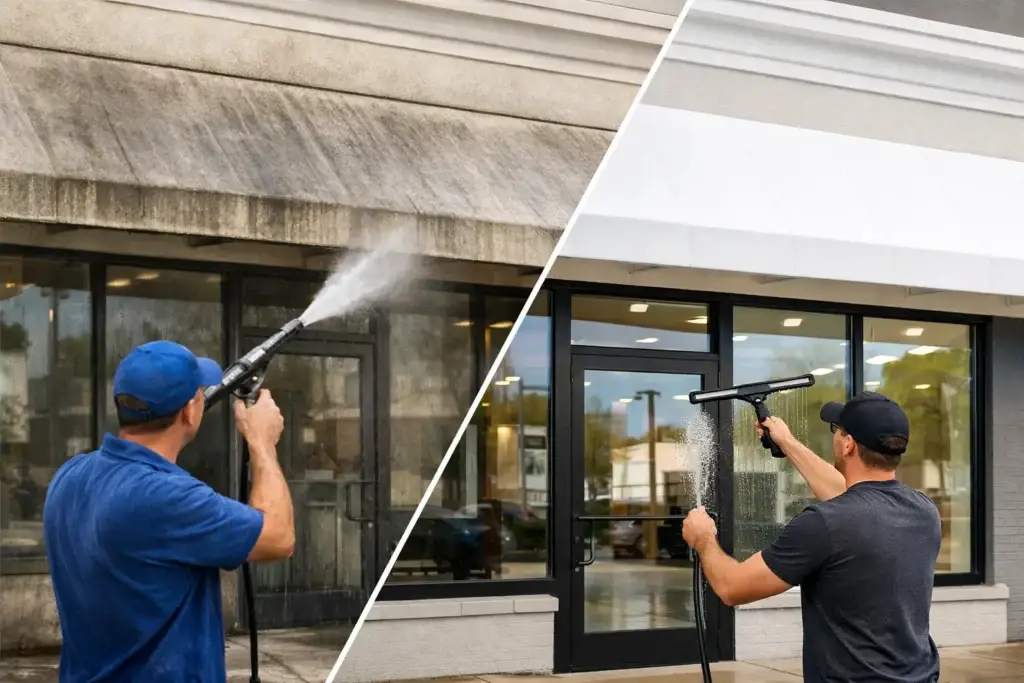
A dirty storefront costs you before a customer ever opens the door. Smudged glass, stained concrete, algae on trim, and buildup around entryways all send the same message – this place is not on top of the details. This guide to storefront exterior cleaning is built for property owners and business managers who want a cleaner, safer, more professional-looking entrance without causing damage in the process.
For most businesses, exterior cleaning is not just about appearance. It affects foot traffic, slip risk, tenant satisfaction, and how often surfaces need repair or repainting. In Connecticut, where moisture, salt, pollen, and winter grime all take their turn, storefronts collect buildup faster than many owners expect. The right cleaning plan keeps your property looking sharp while protecting materials that are expensive to replace.
What storefront exterior cleaning really includes
When people think about storefront cleaning, they usually picture the front windows. That matters, but it is only one part of the job. A proper exterior cleaning plan usually includes glass, frames, doors, siding, awnings, trim, signage, entry pads, sidewalks, curbs, and sometimes the building face above the storefront.
Each surface behaves differently. Glass can spot and streak. Painted trim can oxidize. Concrete can hold oil, gum, rust, and algae. Vinyl, stucco, and composite panels all require different pressure levels and cleaning solutions. That is where many problems start. Storefronts get damaged when someone treats every surface the same.
A guide to storefront exterior cleaning by surface
The safest way to approach a storefront is to clean based on material, not convenience. That keeps results consistent and helps avoid etched glass, chipped paint, damaged sealants, and forced water intrusion around doors and frames.
Windows and glass doors
Clean glass does a lot of heavy lifting for curb appeal. Customers notice fingerprints, haze, hard water spots, and drip marks immediately. Basic glass cleaning works well for routine maintenance, but stubborn mineral staining or construction residue may need more specialized treatment.
The key is using the right tools and not overdoing chemicals. Aggressive scraping or the wrong pads can scratch glass, especially if debris is trapped on the surface. Frames and seals matter too. If they stay dirty, the whole entrance still looks neglected even when the pane itself is clear.
Sidewalks and entry concrete
Concrete near storefronts takes constant abuse from foot traffic, gum, beverage spills, dirt, grease, and weather. In shaded areas, algae and mildew can also become a safety issue. Pressure washing is often effective here, but the pressure needs to match the age and condition of the concrete.
Older surfaces, patched sections, or decorative coatings can be more delicate than they look. If the goal is cleaning without leaving lines, scars, or blown-out joints, technique matters as much as equipment. Pretreatment and even surface cleaning usually produce a better result than blasting stains with a wand.
Signage, trim, and façade materials
Signs attract attention only when they are actually readable and bright. Dust, oxidation, cobwebs, and traffic film can make even a good sign look worn out. The same goes for trim, columns, and façade panels. Soft washing is often the better option for these areas because it removes organic growth and surface grime with less risk than high pressure.
This is especially important for painted finishes, vinyl siding, EIFS, stucco, and older storefront materials. High pressure may seem faster, but it can strip paint, force water behind panels, or leave visible damage that costs more to fix than the cleaning itself.
Awnings and canopies
Awnings collect airborne dirt, mildew, bird droppings, and black streaking. They also fade if cleaned too aggressively. Fabric and vinyl awnings need a gentler process than concrete or masonry, and some stains will improve more than they fully disappear depending on age and material.
That is one of the trade-offs owners should understand. The goal is often to safely restore a cleaner, brighter appearance, not promise a brand-new look on every old awning. A good contractor will set that expectation upfront.
Why soft washing matters for storefronts
A lot of commercial owners hear pressure washing and assume more force means a better result. In some areas, that is true. For concrete, curb edges, and durable masonry, pressure washing has a clear place. But storefronts are mixed-material environments. Glass, painted surfaces, sign faces, metal trim, sealants, and decorative finishes are not all built for high pressure.
Soft washing uses lower pressure along with cleaning solutions designed to break down mold, mildew, algae, and grime. It is often the safer choice for vertical surfaces and detail areas where appearance matters. It also tends to clean organic buildup more thoroughly instead of just knocking the top layer off.
If your storefront has green growth near shaded walls, dark streaking under trim, or buildup around signage, soft washing is usually the smarter method. If the issue is oil staining or heavily soiled sidewalks, pressure washing may still be part of the plan. Most properties need both.
How often should a storefront be cleaned?
It depends on location, traffic, and exposure. A busy retail frontage on a main road may need glass touched up weekly and sidewalks cleaned monthly or quarterly. A quieter office storefront may be fine with less frequent service. Coastal air, road salt, tree cover, and irrigation overspray can all increase buildup.
Season also matters. In Connecticut, spring often brings pollen and mildew, summer adds dust and foot traffic, fall drops leaves and tannin stains, and winter leaves behind salt residue and grime. That is why many businesses benefit from a recurring maintenance schedule instead of waiting until the property looks obviously dirty.
Routine cleaning is usually cheaper than catch-up cleaning. Once stains set in or organic growth spreads, removal gets harder and surface wear becomes more likely.
Common mistakes that make storefronts look worse
The biggest mistake is using the wrong pressure on the wrong surface. That is how owners end up with etched concrete, chipped paint, damaged caulking, and water pushed into places it should not go. The next issue is inconsistent cleaning. Freshly washed sidewalks next to stained glass frames or dirty signage make the job look incomplete.
Timing can also create problems. Cleaning during peak business hours may inconvenience customers or leave slippery entryways at the worst time. And then there is the do-it-yourself approach. Small touch-ups are one thing, but full exterior cleaning often involves ladders, chemical handling, runoff considerations, and equipment that can damage property quickly in untrained hands.
Choosing the right storefront cleaning approach
A good storefront cleaning plan starts with an honest look at the surfaces involved and the type of buildup present. Organic staining, grease, gum, oxidation, and hard water marks do not respond the same way. Neither do painted wood, aluminum, vinyl, brick, and concrete.
That is why professional cleaning should feel specific, not generic. You want a company that can explain why one area needs soft washing while another needs surface cleaning or targeted stain treatment. You also want clear scheduling, visible results, and no guessing about pricing or scope.
For business owners, reliability matters as much as the wash itself. Missed appointments, poor communication, and inconsistent results create headaches fast. A dependable contractor will show up when scheduled, work safely around entrances, and leave the storefront looking better without disrupting normal business more than necessary.
When to bring in a professional
If your storefront has multiple surface types, visible algae or mildew, staining that keeps coming back, or customer-facing areas that need to stay presentable year-round, professional service usually makes the most sense. The same goes for multi-tenant properties, restaurants, and high-traffic retail spaces where first impressions are tied directly to revenue.
Professional cleaning is also the safer choice when there are height issues, electrical fixtures, delicate signage, or painted surfaces involved. Licensed and insured crews with commercial equipment can usually clean faster, more thoroughly, and with far less risk than an improvised in-house attempt.
In towns across southeastern Connecticut, where weather swings and moisture can do real damage over time, keeping storefront exteriors clean is part of basic property maintenance. It protects appearance, helps surfaces last longer, and gives customers one less reason to keep walking.
If your storefront is starting to look tired, do not wait until it becomes a bigger repair problem. A clean entrance tells people your business pays attention – and that is exactly the impression most owners want to make.