
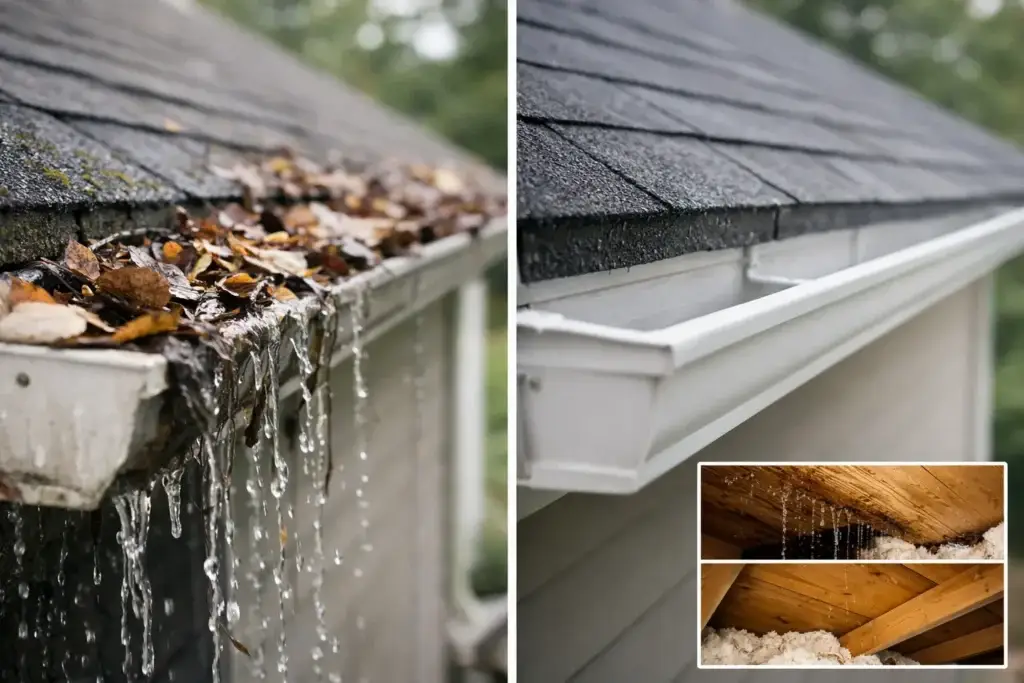
A heavy Connecticut rainstorm can expose a gutter problem fast. If water is spilling over the edge, dripping behind the gutter, or pooling near your foundation, you may be asking: can clogged gutters cause leaks? Yes. A blockage that seems minor can force water into places it was never meant to go, including behind siding, under roof edges, and into basements.
Gutters are a simple system with an important job: collect rainwater from the roof and move it safely away from the home. When leaves, pine needles, shingle grit, moss, and debris stop that flow, water backs up. The result can range from a messy overflow to costly water damage.
How Clogged Gutters Cause Leaks
A gutter does not need to be packed solid to create trouble. Even a partial blockage around the downspout can slow drainage enough for water to rise during a hard storm. Once water reaches the top of the gutter, it follows gravity, wind, and the path of least resistance.
Overflowing water often runs down exterior walls and collects around windows, doors, and trim. Over time, it can work through failing caulk, cracked paint, loose flashing, or small gaps in the siding. This is one reason homeowners sometimes notice a stain inside near a window and assume the window itself is leaking, when the real issue begins at the roofline.
Water can also back up against the fascia board, the wood or trim directly behind the gutters. If that area stays wet repeatedly, the fascia can rot and pull away. That creates a gap where rainwater can enter the soffit, wall cavity, or attic area.
Roof-edge leaks and ice dams
Clogs can be especially damaging in late fall and winter. When wet debris holds water in the gutter and temperatures drop, ice can build up. Snowmelt from the roof may then freeze at the edge, creating an ice dam. Water trapped behind that dam can move beneath shingles and leak into the home.
Not every winter roof leak is caused by gutters alone. Poor attic insulation, air leaks, and inadequate ventilation also contribute to ice dams. Still, clean, freely draining gutters remove one avoidable part of the problem.
Basement and foundation leaks
Clogged gutters do not only affect the roof. Water that spills over near the foundation saturates the soil alongside the house. When that happens repeatedly, moisture pressure can build against basement walls and find its way through cracks, joints, or older masonry.
A working gutter system should carry water through properly connected downspouts and discharge it well away from the foundation. If a downspout is clogged, disconnected, or dumping water at the base of the wall, even clean gutters cannot do their full job.
Signs Your Gutters May Be Causing a Leak
The earlier you catch a drainage problem, the better your chance of avoiding repairs. Watch the gutters during a steady rain from the safety of the ground. You should see water moving through the downspouts, not pouring over the gutter lip or cascading behind it.
Other warning signs include water stains on ceilings near exterior walls, peeling paint around soffits, dark streaks on siding, or damp spots in the attic near the roof edge. You may also notice sagging gutters, plants growing from debris, rust spots, or sections pulling away from the home.
Inside, a musty basement smell or a new damp area along a foundation wall can point to poor water management outside. It does not automatically mean the gutters are the cause, but it is a smart place to start checking.
Damage Can Build Slowly, Then Show Up All at Once
One overflowing gutter during a brief storm may not create an immediate leak. The bigger concern is repeated exposure. Wood fascia, trim, roof decking, and siding are more likely to fail when they are soaked again and again.
That slow damage is why gutter cleaning is preventive maintenance, not just a curb appeal task. Debris holds moisture against metal and wood, increasing the chance of corrosion, rot, mildew, and premature deterioration. In wooded areas of Connecticut, pine needles and leaves can refill gutters quickly, particularly after fall leaf drop and spring storms.
There is also a cost trade-off. Routine cleaning is usually far less expensive than replacing rotted fascia, repairing interior drywall, correcting foundation drainage, or addressing a roof leak that has spread into insulation. Waiting until water is inside the house often means the original gutter issue has already become a repair project.
What to Do If Water Is Overflowing Now
First, avoid climbing a ladder in rain, wind, or icy conditions. Wet roofs and ladders are dangerous, and a quick gutter fix is not worth a fall.
If water is actively entering the home, protect the interior by moving belongings, placing a container under drips, and documenting the damage with photos. Then look for safe, visible clues from the ground. Check whether a downspout extension has come loose, whether water is shooting out of a gutter joint, or whether the gutter is overflowing at one concentrated point.
After the weather clears, the system should be inspected and cleaned. The work involves more than scooping out leaves. A proper gutter service should remove debris from gutters and downspouts, check that water flows correctly, identify loose sections or damaged hangers, and make sure downspouts direct water away from the foundation.
If you see a leak at the roof edge, around a chimney, or in an attic, consider having the roof and flashing evaluated as well. Gutters may be the source, but they can also reveal another weak point that only appears under heavy water flow.
How Often Should Gutters Be Cleaned?
For many homes, twice a year is a practical starting point: once after the leaves fall and once in spring. Homes beneath mature trees, near pine trees, or with low-pitch roof sections may need more frequent service. A property with gutter guards still needs inspections because fine debris, roof grit, and seeds can collect on top of guards or clog the downspouts below.
The best schedule depends on the property. If you have noticed overflow before, deal with it promptly rather than waiting for the next seasonal appointment. A clogged downspout can turn a normal rainstorm into a water-management problem in minutes.
Why Professional Gutter Cleaning Is Often the Safer Choice
Gutter cleaning can look straightforward from the ground, but the risks are real. Ladders must be placed correctly, roof edges can be slippery, and older gutters may not support any weight or pressure. There is also the question of what happens after the debris is removed. Without checking flow, slope, fasteners, and downspout drainage, a gutter may look clean while still sending water toward the house.
A professional team brings the right equipment and a safer process for clearing buildup, flushing problem areas, and spotting visible damage. For homeowners in Groton, Mystic, Waterford, and surrounding communities, CT Softwash LLC provides professional gutter cleaning designed to help protect the roofline, siding, and foundation from avoidable water damage.
Can Clogged Gutters Cause Leaks Even With Gutter Guards?
Yes. Gutter guards reduce the amount of large debris that enters the gutter, but they are not a maintenance-free solution. Small particles can accumulate, and wet leaves can form a layer over some guard styles. Water may then skim over the top instead of entering the gutter, especially during a heavy downpour.
Guards are worth considering for some homes, particularly where large leaves are a constant issue. But they work best with periodic inspection and cleaning, not as a reason to ignore the system for years.
A clean gutter is one of the simplest ways to control where rainwater goes. If yours are overflowing, sagging, or sending water toward the foundation, scheduling service before the next major storm can protect much more than the gutter itself.