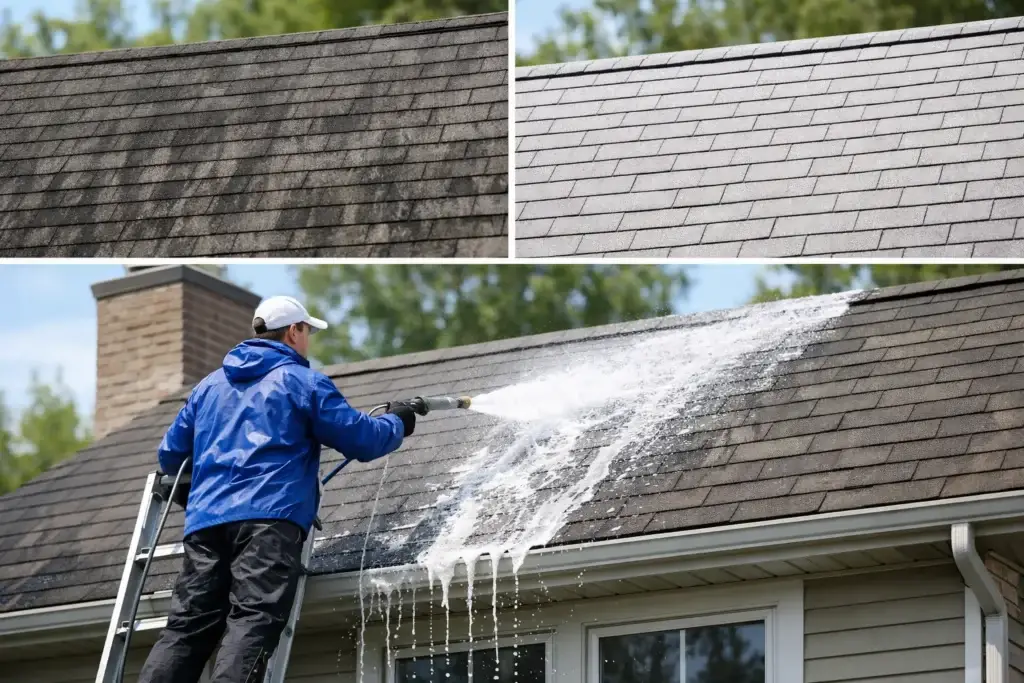
Those dark streaks running down your shingles are not just a curb appeal problem. In Connecticut’s damp, tree-covered environments, they are often algae growth that holds moisture against the roof. Professional roof washing removes that buildup safely, helping your home look cared for while supporting the long-term condition of its roofing materials.
A roof is one of the most expensive parts of your property to replace, so the cleaning method matters as much as the result. The goal is not to blast shingles clean. It is to treat and remove organic growth without stripping granules, forcing water beneath the roofing system, or damaging surrounding landscaping.
What Causes Roof Streaks, Moss, and Lichen?
Most black roof streaks are caused by a type of algae that thrives in humidity and shaded areas. It commonly appears on north-facing roof sections, beneath overhanging trees, and around areas where leaves and debris collect. As it spreads, it can make a relatively new roof look worn, stained, or neglected.
Moss and lichen are different problems, and they deserve more attention. Moss can retain water and grow between shingle edges. Lichen attaches itself firmly to the roof surface and may be difficult to remove without patience and the right treatment. Neither issue means your roof automatically needs replacement, but leaving growth in place for years can create unnecessary moisture exposure and complicate routine maintenance.
Connecticut homes are especially susceptible because seasonal weather creates the conditions organic growth likes: wet springs, humid summers, falling leaves, and long periods of shade. Roofs near wooded lots in Groton, Mystic, Ledyard, and surrounding coastal communities can develop visible staining faster than homeowners expect.
Why Roof Washing Requires a Different Method
Roof shingles are not concrete, brick, or a driveway. They cannot handle the same high-pressure cleaning approach used for hard exterior surfaces. Pressure washing a roof can dislodge protective granules, lift or crack shingles, damage flashing, and send water into places it does not belong. A roof may look clean for a moment, but the hidden damage can cost far more than the cleaning service.
That is why professional roof washing typically relies on soft washing. Soft washing uses low pressure and a roof-safe cleaning solution to break down algae, mildew, moss, and other organic staining. The treatment does the work rather than forceful water pressure.
For light to moderate algae staining, the visual improvement can be dramatic. Heavy moss and lichen may require a more careful approach. Some dead growth may release gradually after treatment instead of being scraped aggressively from the shingles. That can feel less immediate, but it is often the safer choice for the roof.
A qualified exterior cleaning team should assess the roof material, its age, the extent of growth, drainage conditions, and nearby landscaping before starting. Asphalt shingles are common, but metal, cedar, tile, and specialty roofing materials each need their own cleaning plan.
The Benefits of Professional Roof Washing
The obvious benefit is a cleaner-looking home. Dark stains can make a roof appear old even when it still has years of useful life left. Removing visible buildup brightens the entire exterior, improves curb appeal, and can make a meaningful difference before listing a property for sale or hosting an important event.
The bigger benefit is preventive maintenance. Algae, moss, leaves, and debris can keep parts of a roof damp longer than they should be. Cleaning gives homeowners a chance to address buildup before it becomes a persistent issue. It also makes it easier to spot damaged shingles, exposed flashing, blocked valleys, or gutter problems that would otherwise remain hidden.
Roof washing can also support energy efficiency in certain situations. Dark algae streaks absorb more heat than clean, reflective roofing surfaces. The effect varies by roof color, material, sun exposure, and insulation, so it should not be treated as a guaranteed utility-cost reduction. Still, a clean roof better reflects the appearance and intended performance of the material.
Professional service also saves homeowners from an unnecessary risk. Walking on a wet or sloped roof, handling cleaning products, and working near gutters and power lines are not casual weekend tasks. Licensed and insured technicians have the equipment, training, and process to complete the work with far less risk to people and property.
When Should You Schedule Roof Washing?
There is no single schedule that fits every property. A sunny home with few trees may only need attention every few years. A shaded home surrounded by pines, maples, or oak trees may need more frequent service. The right timing depends on what is happening on your roof, not just the calendar.
Visible black streaking is a clear reason to request an inspection or quote. So are moss patches, lichen spots, recurring debris in roof valleys, and gutters that clog quickly after storms. If you are already scheduling house washing, gutter cleaning, or window cleaning, it can also be convenient to evaluate the roof at the same time.
Spring and fall are popular seasons for exterior maintenance because homeowners are addressing winter debris or preparing for colder weather. However, roof cleaning can be scheduled whenever conditions are appropriate. A professional will consider weather, roof temperature, precipitation, and the condition of the surface before proceeding.
It is smart to act before growth becomes thick and established. Early treatment is usually simpler, safer, and more affordable than waiting until moss has spread across large sections of the roof.
What to Expect From a Professional Roof Washing Service
A reputable roof cleaning appointment should begin with a review of the property. The technician should identify the roof type, problem areas, access points, gutters, downspouts, and any sensitive plants or outdoor features nearby. This preparation is not an extra step. It is how the crew protects your property while delivering consistent results.
Before treatment begins, surrounding vegetation should be watered and protected as needed. The cleaning solution is then applied at low pressure to target algae and organic growth. The crew monitors runoff and keeps plant protection in place throughout the job. Proper application matters because too little treatment may leave staining behind, while careless use can affect landscaping or exterior surfaces.
After the wash, the roof should look noticeably cleaner, especially where algae staining was the primary concern. With heavier moss or lichen, some material may remain temporarily as it dries out and releases over time. An honest contractor will explain that upfront rather than promising a harsh same-day removal that could damage shingles.
At CT Softwash LLC, the focus is on safe soft washing methods that restore exterior surfaces without treating every job like a high-pressure job. Homeowners should expect clear scheduling, a straightforward explanation of the process, and respect for the property from start to finish.
Roof Washing Mistakes to Avoid
The most common mistake is renting a pressure washer and using it on shingles. Even if the roof appears fine afterward, high pressure can shorten the life of roofing materials and create leaks that do not become obvious until the next hard rain.
Another mistake is relying on harsh DIY chemicals without understanding dilution, runoff, or plant protection. Household cleaners may not treat the actual source of the staining, and improperly mixed products can harm landscaping, siding, painted surfaces, or personal safety.
Ignoring the source of excess moisture is another missed opportunity. If branches keep the roof shaded, gutters overflow, or roof valleys hold leaves, organic growth will return faster. Cleaning works best when paired with practical maintenance such as gutter cleaning, trimming back roof-contacting branches, and keeping drainage paths clear.
Finally, do not choose a contractor based on the lowest price alone. Ask whether they use low-pressure soft washing for roofs, whether they are licensed and insured, how they protect plants, and what results are realistic for your roof’s condition. A lower quote is not a bargain if the method risks expensive roof damage.
A Cleaner Roof Starts With the Right Care
Your roof does not need aggressive pressure to look better. It needs a careful assessment, the right cleaning solution, and a team that understands how to protect the surface beneath the stains. If algae, moss, or dark streaks are taking away from your property, scheduling a professional evaluation is a practical first step toward a cleaner, better-protected home.