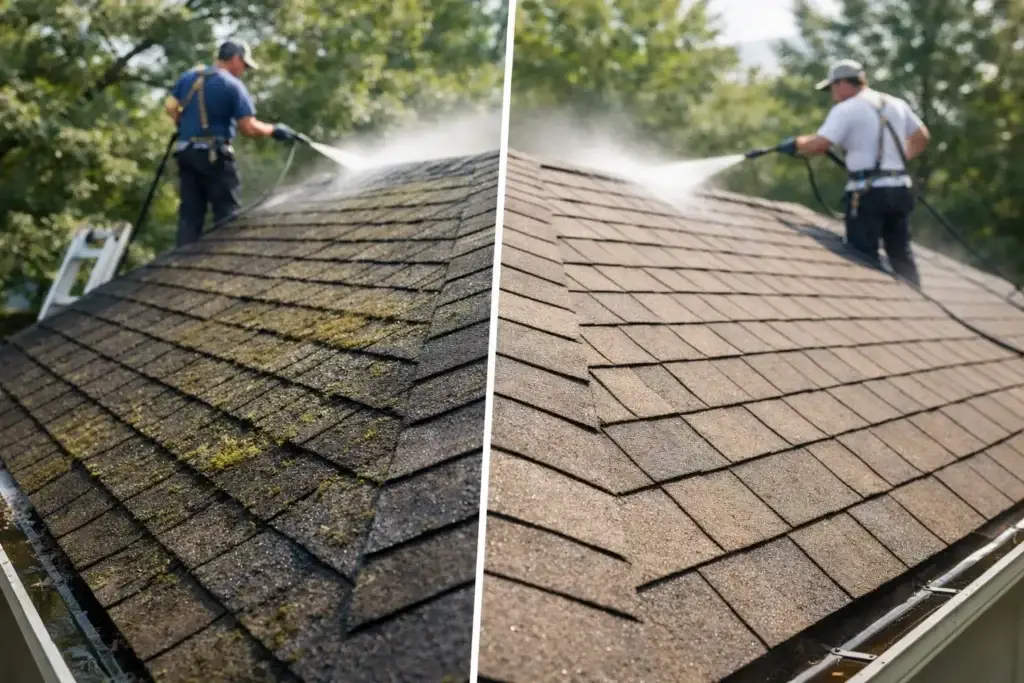
Those black roof streaks are not just a curb appeal problem. On many Connecticut homes, they are living algae that hold moisture against the roof and spread across shingles over time. So, does roof cleaning extend shingle life? When it is done with the correct soft wash method, it can help protect the conditions shingles need to perform as intended.
The key word is correct. A roof can be damaged by aggressive pressure washing, harsh scrubbing, or an inexperienced cleaner walking carelessly across it. Professional roof cleaning is not about blasting a roof until it looks new. It is about treating organic growth safely, rinsing only when appropriate, and protecting the shingles, landscaping, and surrounding property.
How roof cleaning can extend shingle life
Asphalt shingles are designed to shed water and protect the roof deck below. Their protective granules help block sunlight, reduce weathering, and give the shingles their textured finish. Anything that accelerates moisture retention, heat buildup, or granule loss can shorten the roof’s useful service life.
Algae, moss, lichen, leaves, and pine needles do not all affect a roof in the same way. The familiar black streaks are usually algae. They are often more of an appearance issue at first, but their presence signals that the roof has enough shade, moisture, and organic material to support growth. Left alone, the buildup can become heavier and create a more persistent damp environment.
Moss is more concerning. It can grow beneath shingle edges, lift them slightly, and interfere with water shedding. In freezing weather, trapped moisture can expand and put additional stress on already vulnerable areas. Lichen can attach firmly to the shingle surface and is difficult to remove without patience and the right treatment.
Cleaning does not make an old roof young again. It cannot reverse cracked shingles, missing granules, failing flashing, or an aging roof near the end of its expected lifespan. What it can do is remove biological growth and debris before they contribute to avoidable moisture-related wear. That is why roof cleaning is best viewed as preventive maintenance, not a substitute for repair or replacement.
Why Connecticut roofs need extra attention
Connecticut roofs deal with a mix of conditions that encourage buildup: humid summers, leaf-heavy falls, freeze-thaw winters, coastal moisture in shoreline communities, and shaded lots with mature trees. North-facing roof slopes and areas beneath overhanging branches often show staining first.
A few scattered dark marks may not be an emergency. But a roof with widespread streaking, thick moss, visible lichen, or debris packed into valleys deserves attention. Waiting for growth to become obvious from the street can mean waiting until it is more established and more difficult to manage safely.
Keeping gutters clear matters, too. When gutters overflow, water can back up near roof edges, saturate fascia boards, and add to the damp conditions that moss and mildew prefer. Roof cleaning and gutter cleaning work well together because they address both the roof surface and the drainage path that helps keep it dry.
The damage comes from neglect and the wrong cleaning method
Homeowners sometimes hear that roof cleaning is harmful because they have seen the results of pressure washing gone wrong. That concern is valid. High-pressure washing can dislodge granules, break brittle shingles, force water beneath the roofing system, and shorten the roof’s life instead of extending it.
Even a pressure washer on a lower setting can be risky in untrained hands. Asphalt shingles are not a driveway, patio, or vinyl-sided house. The goal is never to scour the surface clean.
A proper soft wash uses a low-pressure application designed for roofing, along with a cleaning solution that treats algae, moss, mildew, and lichen at the source. The treatment does the work rather than water pressure. Depending on the roof’s condition, staining may lighten quickly while heavier organic growth releases gradually after treatment. That slower result is often the safer result.
What safe roof cleaning should look like
Professional roof cleaning starts with an inspection. The technician should look for loose or damaged shingles, exposed nail heads, failing flashing, soft areas, heavy moss, and other concerns that may need a roofer’s attention before cleaning begins.
Next comes property protection. Nearby plants, siding, windows, outdoor furniture, and landscaping need to be thoroughly wetted and monitored throughout the job. Downspouts and runoff areas also require attention. A careful crew plans for where the solution goes, not just where it is applied.
The roof is then treated using low pressure. There should be no aggressive scraping, no high-pressure blasting, and no attempt to make fragile shingles look instantly brand new. Technicians should also limit unnecessary foot traffic. Walking on a roof always carries some risk, especially on steep slopes, hot shingles, or older roofing materials.
At CT Softwash LLC, the focus is on a safe, professional approach that removes the growth without using damaging pressure on your shingles. Licensed and insured service gives homeowners another layer of confidence when a job requires working at height around one of the home’s most important protective systems.
When roof cleaning is worth it and when it is not
Roof cleaning is usually a smart investment when the shingles are structurally sound but show algae streaks, moss, lichen, or debris accumulation. It can improve curb appeal immediately and help prevent organic growth from continuing to trap moisture and compromise shingle edges.
It may not be the right first step if your roof has significant storm damage, active leaks, curled or broken shingles, widespread granule loss, or a roof deck that feels soft. In those situations, cleaning can hide symptoms without addressing the real problem. A roofing inspection should come first.
Age matters as well. A 20-year-old roof with severe wear may be close to replacement regardless of how clean it becomes. On the other hand, a newer or mid-life roof with staining can often benefit greatly from safe treatment and consistent upkeep. The best decision comes from the roof’s actual condition, not just its age or appearance.
How often should you clean a shingle roof?
There is no single schedule that fits every home. Many homeowners benefit from a roof inspection every year and cleaning only when visible growth begins to take hold. Homes surrounded by trees, homes in deep shade, and properties near the coast may need attention more often than homes in open, sunny areas.
Avoid cleaning simply because a calendar says it is time. Unnecessary cleaning creates unnecessary foot traffic and exposure to cleaning products. Instead, watch for black streaks spreading across slopes, green moss near shingle edges, lichen spots, piles of leaves in valleys, and gutters that regularly fill with roof debris.
A practical maintenance routine also includes trimming back branches that overhang the roof, keeping gutters and downspouts flowing, and addressing damaged shingles promptly. Better sunlight and airflow can reduce the moisture that algae and moss need to thrive.
Warning signs you should not ignore
Call for a professional assessment if you notice moss thick enough to lift shingles, dark stains expanding quickly, water spilling over gutter edges, loose granules collecting in gutters, or signs of leaking inside the attic. Those issues do not automatically mean the roof is failing, but they deserve a closer look before small maintenance needs become larger repairs.
Never try to remove moss with a wire brush, rake, or pressure washer. Pulling at established growth can tear granules from the shingle surface or lift the shingle itself. Store-bought products can also harm landscaping or create uneven results when mixed or applied incorrectly. Roof work is risky enough without combining steep slopes, slippery growth, and unfamiliar chemicals.
The long-term value is protection, not just appearance
A clean roof can make the entire property look better, especially when roof streaks draw attention away from clean siding, fresh landscaping, or a well-maintained driveway. But the larger benefit is reducing conditions that contribute to premature wear.
Think of roof cleaning as part of a broader maintenance plan. It works alongside gutter care, tree trimming, roof inspections, and timely minor repairs. Each step helps the roofing system shed water and dry properly between storms.
If your shingles are stained or showing moss growth, a safe inspection is the right place to start. A qualified soft wash professional can tell you whether cleaning is appropriate, explain what results to expect, and help you protect the roof you already paid for. Taking care of the growth early is usually simpler, safer, and more affordable than waiting for it to become a bigger roof problem.