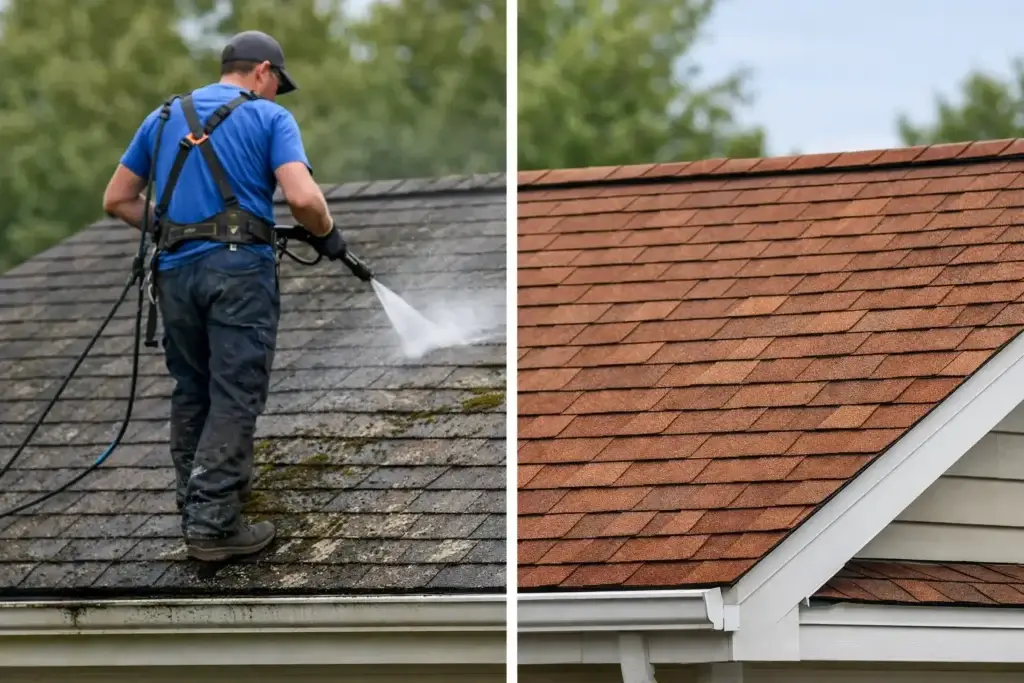
Those dark streaks on your shingles are not just a curb appeal issue. In Connecticut’s humid climate, they often signal algae growth that can spread across the roof and hold moisture where it does not belong. So, when should roofs be cleaned? The right answer is usually before staining, moss, or debris becomes severe – not after the roof looks neglected from the street.
A professional roof cleaning is preventive maintenance, not a cosmetic shortcut. Done with the proper soft washing method, it removes organic growth without the aggressive pressure that can damage shingles, dislodge granules, or shorten the life of your roof.
When Should Roofs Be Cleaned in Connecticut?
Most homes benefit from a professional roof inspection and cleaning every two to three years. However, that schedule changes based on your roof’s shade, surrounding trees, age, and exposure to moisture. A home near the coast in Mystic, Stonington, or Westerly may experience more persistent dampness and airborne buildup than a sunny, open property farther inland.
The best time to schedule service is when you first notice visible growth or staining. Waiting until moss is thick, gutters are overflowing, or shingles are covered in black streaks generally makes the job more involved. It can also allow moisture to remain against the roofing material for longer periods.
For many Connecticut homeowners, late spring through early fall is an ideal cleaning window. The weather is more predictable, temperatures support effective treatment, and a clean roof helps the home look its best through the outdoor season. That said, roof cleaning can be appropriate at other times of year when conditions are safe and dry enough for professional work.
Signs Your Roof Needs Cleaning Now
Your roof does not need to be completely green to need attention. Early action is usually simpler, safer, and more affordable than waiting for heavy buildup. Watch for these common warning signs:
- Black streaks or dark patches, especially on the north-facing or shaded side of the roof
- Green moss growing between shingles or around roof edges
- Lichen, which appears as pale green, gray, or white crusty spots attached to shingles
- Leaves, pine needles, and branches collecting in roof valleys
- Granular-looking debris or organic buildup near gutters and downspouts
- A roof that looks noticeably darker or dirtier than it did a season or two ago
Black roof streaks are frequently caused by algae. While algae may begin as an appearance problem, it thrives in damp conditions and can make an otherwise well-maintained home look older than it is. Moss is more concerning because it retains water and can lift or separate shingles as it grows. Lichen can bond tightly to the roof surface and should be handled patiently with the right treatment rather than scraped away.
If you can see any of these issues from the ground, it is time to request a professional assessment. There is no reason to climb a ladder and walk on a potentially slippery roof to confirm what is already visible.
Why Timing Matters More Than Homeowners Think
Roof growth tends to build gradually. A few streaks in one season can become widespread staining after another wet fall and winter. Tree cover, fallen leaves, pollen, and windblown debris all create conditions where moisture lingers, especially on shaded roof sections.
Cleaning early helps preserve the roof’s appearance and avoids allowing moss and debris to settle into vulnerable areas. Roof valleys, flashing, and areas near gutters deserve special attention because they direct water off the home. When those areas stay clogged or damp, water can back up and create problems that a simple cleaning might have prevented.
There is also a practical resale and curb appeal benefit. A stained roof can make clean siding, fresh landscaping, and well-kept windows look less impressive. Homeowners preparing to sell often discover that a professionally cleaned exterior changes the first impression of the entire property without the expense of premature roof replacement.
Cleaning is not a substitute for roof repair, though. Missing shingles, active leaks, damaged flashing, or a roof at the end of its service life should be evaluated by a qualified roofing professional. A reputable exterior cleaning company will recognize the difference between surface contamination and structural damage.
The Best Season for Roof Cleaning
Spring is a popular choice because winter leaves behind branches, leaf debris, and damp conditions that encourage growth. A spring cleaning prepares the home for warmer weather and gives you a clear view of the roof’s condition before summer storms arrive.
Summer is also a strong option, particularly for roofs that have developed visible algae or moss during a wet spring. Dry, stable weather can make scheduling easier, although very hot days may require the cleaning team to adjust its process so treatments remain effective.
Early fall works well for homeowners who want to clear organic buildup before leaves begin dropping in large numbers. If your property has heavy tree cover, pairing roof cleaning with gutter cleaning is often the smart move. Clean gutters and roof valleys help rainwater move where it should instead of pooling near the roofline.
Winter is not automatically off-limits, but freezing temperatures, snow, ice, and unsafe roof conditions can delay service. It is better to schedule before winter when possible, especially if the roof already has moss or debris that could trap moisture through repeated freeze-thaw cycles.
Do Not Pressure Wash Asphalt Shingles
This is the most important part of roof cleaning: the method matters. Standard high-pressure washing can strip protective granules from asphalt shingles, force water beneath the roofing system, and leave shingles looking damaged or uneven. A roof may look cleaner for a moment while suffering harm that costs far more to correct.
Professional soft washing uses low pressure and purpose-made cleaning solutions to treat algae, moss, lichen, and organic staining at the source. Instead of blasting growth off the shingles, the treatment breaks it down safely. Some stubborn moss or lichen may lighten and release gradually after treatment, which is normal and far safer than aggressive scraping.
The goal is not to make a roof look artificially new in one risky afternoon. The goal is to clean it thoroughly while protecting the materials that keep your home dry.
Factors That Change How Often You Need Service
A two- to three-year schedule is a useful baseline, but some properties need more frequent attention. Homes with large overhanging trees often collect more leaves, pollen, needles, and shade. North-facing slopes receive less direct sunlight, so they stay damp longer and commonly show algae first.
Nearby water, wooded lots, and consistently humid conditions can also accelerate growth. Coastal and shoreline communities may see more moisture exposure, while homes in dense neighborhoods can receive less sunlight across parts of the roof. Conversely, a newer roof on a sunny, open lot may stay cleaner for longer.
Roof material matters, too. Asphalt shingles are common throughout Connecticut and require a gentle approach. Cedar, tile, metal, and specialty roofing materials have their own care requirements. Before any cleaning begins, the technician should identify the surface, assess the growth, and choose a method that protects the roof rather than treating every material the same way.
Can You Clean a Roof Yourself?
Homeowners can safely remove loose leaves from the ground with appropriate tools or keep nearby trees trimmed by a qualified professional. But applying chemicals, working from ladders, and walking on a sloped roof carry real risk. Wet algae and moss make shingles extremely slippery, and using the wrong cleaner can harm landscaping, siding, or roofing materials.
DIY pressure washing is particularly risky. Even if the roof appears to tolerate it at first, pressure can remove shingle granules and compromise the surface over time. The cost of a professional soft wash is small compared with repairing damaged shingles or replacing a roof earlier than planned.
A licensed and insured team also has the equipment and process to protect plants, manage runoff, and reach difficult roof areas without turning the project into a weekend hazard. CT Softwash LLC uses a soft washing approach designed to remove roof staining safely while protecting your home’s exterior.
Pair Roof Cleaning With Other Exterior Maintenance
Roof cleaning works best as part of a practical exterior maintenance plan. Gutters should be clear so water can drain freely. Siding may need soft washing if algae has spread down from the roofline. Window cleaning, driveway washing, and deck cleaning can be scheduled around the same visit when the goal is a complete curb appeal reset.
You do not need every service every year. The right plan depends on what your property shows you. A quick visual check from the ground each spring and fall can reveal roof streaks, gutter overflow, leaf-filled valleys, or siding mildew before they become bigger maintenance concerns.
Your roof protects everything beneath it. If dark streaks, moss, or trapped debris are starting to show, scheduling a safe professional cleaning now can help keep a small exterior issue from becoming a larger one later.