
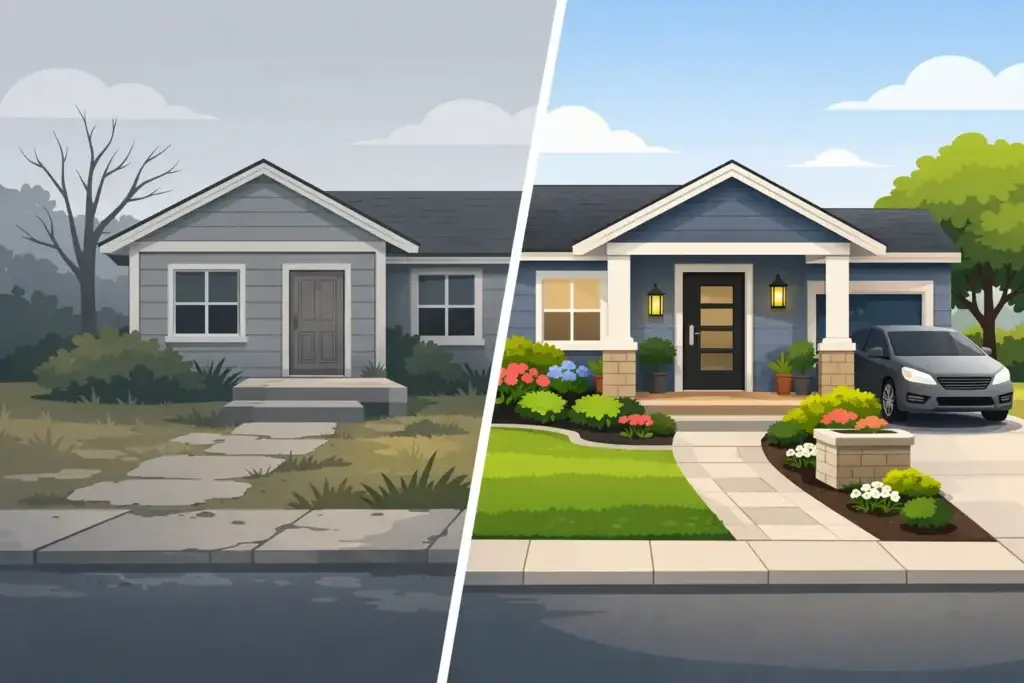
A dark roof streak, green siding, and a driveway marked by years of winter runoff can make an otherwise well-kept home look neglected from the street. The good news is that the most effective curb appeal upgrades do not always involve a major renovation. Often, the biggest change comes from restoring the exterior surfaces and details people notice first.
For Connecticut property owners, curb appeal is about more than a good first impression. Regular exterior upkeep helps protect siding, roofing, gutters, concrete, decks, and trim from the moisture, algae, mildew, salt, and seasonal debris common across the region. Start with the work that improves appearance while preventing a smaller maintenance issue from becoming an expensive repair.
1. Start With a Clean Exterior
Before choosing a new paint color, replacing fixtures, or planting a single shrub, look at the condition of the home itself. Dirt, pollen, mildew, algae, and cobwebs build up gradually, so many homeowners do not realize how dull their siding has become until they see it cleaned.
A professional house wash can brighten vinyl, painted siding, brick, and other exterior materials without the unnecessary risk of blasting the surface with excessive pressure. Soft washing uses the right cleaning solutions and controlled application methods to break down organic growth, then rinse it away safely. That matters for siding, trim, and delicate areas around windows, vents, and landscaping.
This is one of the highest-return improvements because it changes the entire appearance of the property at once. Freshly cleaned siding also gives you a more accurate picture of whether paint, caulking, or minor repairs are actually needed.
2. Remove Roof Streaks Before They Take Over
Black roof streaks are often caused by algae, not dirt. They can make a newer roof look worn out years before its time, especially on homes surrounded by trees or exposed to regular coastal humidity.
Roof cleaning is not a job for high-pressure equipment. Pressure can disturb shingles, remove protective granules, and force water where it does not belong. A professional soft wash treatment is designed to address algae, moss, and lichen at the source while protecting the roofing material.
A clean roof creates an immediate visual lift because it is one of the largest visible surfaces on the property. It also makes other improvements – such as landscaping, shutters, and a new front door color – look sharper instead of getting lost beneath stained shingles.
3. Clear and Brighten the Entryway
The front door area is where visitors, delivery drivers, buyers, and neighbors focus their attention. It should feel clean, safe, and easy to approach. This does not require an elaborate redesign. It requires attention to the small details that signal the home is cared for.
Wash the front steps, porch, railings, door frame, and nearby siding. Replace worn house numbers, a faded welcome mat, or a damaged mailbox. If the door paint is peeling or outdated, a new coat in a color that works with the home’s exterior can make a strong difference without the cost of replacing the door.
Lighting deserves a close look, too. A dirty, cloudy, or mismatched porch fixture can age the entryway quickly. Choose a fixture scaled appropriately for the door and keep the glass clean. The goal is not to make the entrance look overly staged. It should simply look maintained, inviting, and easy to find after dark.
4. Make the Driveway and Walkways Look Cared For
Concrete, pavers, stone, and asphalt collect oil spots, tire marks, rust stains, mud, and organic growth. These surfaces are easy to overlook because they sit underfoot, but they take up a large portion of the view from the road.
Professional power washing can restore a driveway, front walk, patio, or retaining wall dramatically. The right method depends on the material and condition. Concrete may need a different approach than older pavers, natural stone, or a surface with fragile joint sand. This is where experience matters: aggressive cleaning may remove surface staining, but it can also leave marks, damage mortar, or create an uneven finish when done incorrectly.
Cleaning walkways also improves safety. Mildew and algae can create slippery conditions on shaded steps, sidewalks, and patios, particularly after wet weather. A bright, clean path to the front door looks better and gives guests a safer place to walk.
5. Bring Gutters Back Into the Picture
Gutters are not a glamorous upgrade, but clogged, sagging, or streaked gutters can undermine the appearance of the entire roofline. Overflowing gutters may also lead to water near the foundation, landscaping damage, fascia issues, and basement moisture concerns.
Have gutters cleaned when leaves, pine needles, roof grit, and other debris start to restrict water flow. In heavily wooded areas, one annual cleaning may not be enough. A spring check and a fall cleaning are often a practical baseline, though homes under mature trees may need additional service.
Do not forget the exterior gutter faces. Dark vertical streaks, sometimes called tiger striping, can remain after a basic rinse. Cleaning the gutter exteriors along with the siding and trim creates a much more finished look from the street.
6. Refresh the Deck, Porch, or Fence
A faded deck or green-stained porch can pull attention away from a clean house. Wood and composite surfaces are exposed to rain, sun, fallen leaves, and foot traffic, which means they need regular attention to stay attractive and safe.
Cleaning is the first step. For wood, the process should be controlled to avoid raising the grain or damaging the fibers. Once clean and fully dry, inspect for loose boards, protruding fasteners, and areas that may need staining or sealing. If paint is failing on porch rails, columns, or trim, targeted painting can deliver a polished result without committing to a full exterior repaint.
A fence can be worth refreshing if it is clearly visible from the road. However, do not spend heavily on a fence hidden behind dense landscaping when the siding, roof, and front walk need attention first. The best curb appeal upgrades prioritize what people can see and what protects the property.
7. Use Landscaping to Frame, Not Hide, the Home
Landscaping works best when it supports a clean exterior rather than tries to distract from one. Overgrown shrubs can block windows, hide architectural details, trap moisture against siding, and make a home feel smaller. A simple trim, fresh mulch, and defined bed edges can make the front yard look intentionally maintained.
Choose plants that fit the available sunlight and your willingness to maintain them. Low-maintenance evergreens, native perennials, and seasonal containers can provide color without creating a weekly chore. Keep shrubs away from the siding to allow airflow and make future house washing easier.
If your lawn has bare spots, address them, but do not let a perfect lawn delay more important repairs or cleaning. A tidy lawn and properly edged beds are usually more valuable than a complicated landscape design that quickly becomes difficult to maintain.
8. Wash the Windows and Check the Trim
Clean windows make rooms look brighter from outside and improve the view from inside. They are especially noticeable after the siding, roof, and walkways have been cleaned. Dirty glass, water spots, insect debris, and grimy screens can make even updated windows look tired.
Professional window cleaning is particularly helpful for second-story glass, skylights, and hard-to-reach windows. While the windows are being cleaned, inspect the surrounding trim for peeling paint, failed caulk, soft wood, or gaps that could allow moisture inside. Catching those issues early is far less costly than waiting for visible rot.
For homes with painted exterior trim, selective painting can provide a crisp finished appearance. It is often a better value than repainting the entire home when the main siding is still in good condition.
9. Plan Upgrades in the Right Order
The smartest way to improve curb appeal is to avoid redoing work. Clean first, repair second, then paint, plant, or add decorative details. Washing siding after installing fresh mulch, for example, risks disturbing the beds. Painting before removing mildew can lead to poor adhesion and a shorter-lasting finish.
A practical order is to address roof and gutter issues, wash the house and hard surfaces, clean windows, make needed repairs, then handle painting and landscaping. This sequence protects your investment and helps each finished area look its best.
For commercial properties, the same principle applies. Storefronts, sidewalks, entryways, awnings, and parking areas all shape how customers view the business before they walk through the door. Consistent exterior cleaning is not just cosmetic – it supports a professional, well-managed image.
Choose Improvements That Protect Your Property
Not every project has to happen at once. If your budget is limited, focus first on visible buildup, roof staining, clogged gutters, slippery walkways, and failing paint. These projects improve the property now while helping prevent avoidable damage later.
CT Softwash LLC helps homeowners and property owners throughout southeastern Connecticut restore exterior surfaces with safe soft washing, professional power washing, gutter cleaning, window cleaning, deck cleaning, and exterior painting. A fast professional assessment can help you decide which work will make the biggest difference without paying for upgrades your property does not need.
A clean exterior gives every other improvement a better chance to stand out. Begin with the surface that is creating the biggest visual or maintenance concern, then build from there at a pace that works for your property and budget.