
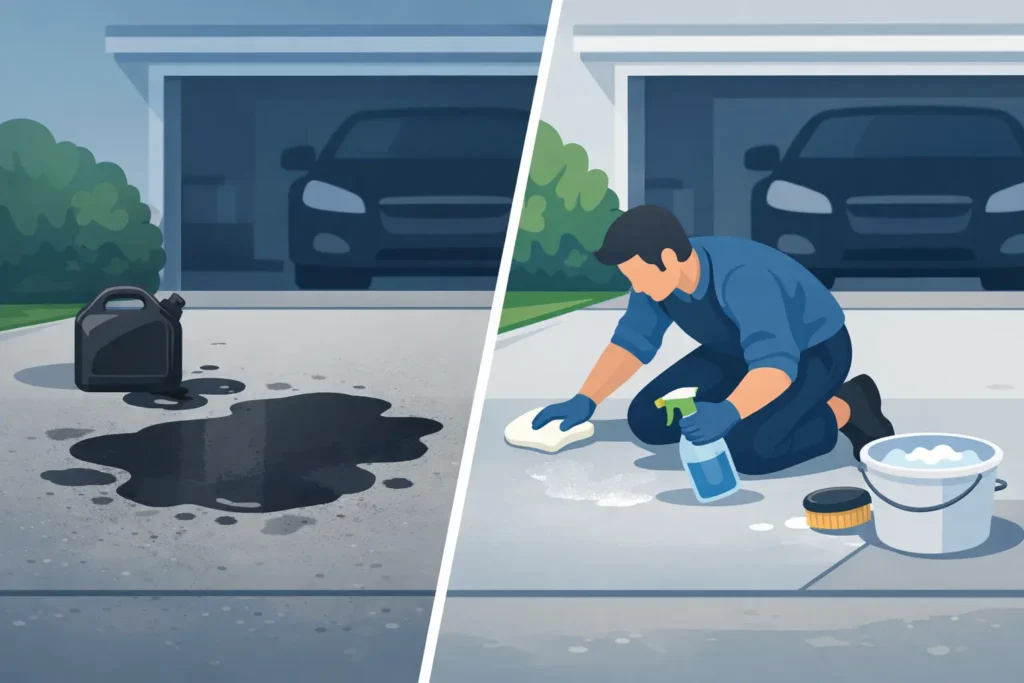
An oil spot beneath a parked car can turn into a dark, greasy driveway stain faster than most homeowners expect. To lift oil from driveways effectively, you need to treat the spill before it works deeper into the surface – not simply spray it with a hose and hope it disappears.
Oil stains are common on Connecticut driveways, especially after a vehicle leak, lawn equipment repair, or a delivery truck visit. They hurt curb appeal, can make the surface slick when wet, and may carry contaminants toward nearby drains. The right approach depends on how fresh the spill is, how much oil was released, and whether your driveway is concrete, asphalt, pavers, or another material.
Why Oil Stains Are So Hard to Remove
Concrete looks solid, but it is porous. Motor oil, transmission fluid, hydraulic fluid, and cooking oil can soak below the visible surface, where ordinary soap and water cannot reach them. A stain may look lighter after a quick rinse, then reappear as the driveway dries.
Asphalt creates a different challenge. It contains petroleum-based binders, so harsh degreasers, solvents, and excessive pressure can soften or strip the surface. Pavers also require care because cleaning chemicals may affect joint sand, nearby landscaping, or the color of the stone.
That is why stronger is not always better. A cleaner must break down and lift the oil without damaging the driveway material or pushing contaminated runoff into the street.
Act Fast When Oil Hits the Driveway
Fresh oil is far easier to remove than a stain that has sat through sun, rain, and freezing weather. If the spill is still wet, start by keeping it contained. Do not immediately flood it with water. Water spreads the oil across a larger area and can wash it into a storm drain.
Cover the spill with an absorbent material such as clay-based kitty litter, oil absorbent granules, baking soda, or a commercial spill absorbent. Let it sit long enough to pull up the liquid, then sweep it carefully into a container for proper disposal. Do not sweep oily material into the grass, curb, or roadway.
For a minor fresh spot, an absorbent treatment followed by a driveway-safe degreaser can make a noticeable difference. Read the product label closely and test it in a small, less visible spot first. This is particularly useful on decorative concrete, stamped finishes, and older asphalt.
How to Lift Oil From Driveways With a DIY Approach
Homeowners can often improve a small, recent oil stain with patience and the right materials. The goal is to draw out the oil, emulsify the residue, and rinse responsibly – not to blast the surface at maximum pressure.
Start by removing as much loose oil as possible with an absorbent. Next, apply a biodegradable degreaser designed for driveways or concrete. Give it the recommended dwell time so the product can work into the pores. Scrub with a stiff nylon brush, not a wire brush that can scar the surface or leave metal marks.
Use a controlled amount of water to rinse the treated area. If you use a pressure washer, keep the nozzle moving and use a fan tip rather than a narrow, concentrated stream. Too much pressure in one spot can etch concrete, leave visible cleaning lines, or damage asphalt. Collect or control runoff whenever possible, especially near catch basins and drains.
Expect a reduction rather than a perfect result after one attempt. Older stains may need several applications because the oil has penetrated beyond the top layer. Repeating a careful treatment is safer than using aggressive chemicals or pressure that creates permanent surface damage.
Avoid These Common Driveway Cleaning Mistakes
Brake cleaner, gasoline, paint thinner, and similar solvents may seem like a quick fix, but they are a poor choice for residential driveways. They can create flammable fumes, harm asphalt, damage surrounding grass and plants, and introduce hazardous runoff into drainage systems.
Dish soap may help with a very light surface spot, but it usually cannot pull established automotive oil out of porous concrete. It can also leave a slippery film if it is not thoroughly rinsed. Bleach is not an oil remover either. It may brighten surrounding dirt or organic staining, but it does not properly break down petroleum-based residue.
A rental pressure washer is useful for general grime, but pressure alone is rarely the answer to oil. Without the right degreasing process, it can spread the stain, force oil farther into pores, or leave zebra-striping across the driveway. The result may be a cleaner-looking driveway with a stubborn dark patch in the middle.
When Professional Driveway Cleaning Makes Sense
Professional service is the better option when the oil spill is large, has been sitting for months, keeps returning after DIY treatments, or is located close to a drain. It also makes sense if you have a large concrete driveway, commercial parking area, delicate pavers, or asphalt that could be harmed by the wrong cleaning method.
A trained exterior cleaning team evaluates the surface first, chooses a compatible degreaser, allows proper dwell time, and uses commercial equipment at a controlled setting. This combination is more effective than relying on pressure alone. The objective is to lift the oil while protecting the driveway, adjacent landscaping, and surrounding property.
For many homeowners, professional cleaning is also the practical choice before listing a home, hosting an event, or completing a broader exterior cleanup. An oil-stained driveway can make otherwise well-maintained siding, walkways, and landscaping look neglected. Removing or significantly reducing that stain creates a visible improvement at the point where visitors first arrive.
CT Softwash LLC provides professional driveway and exterior cleaning with a focus on safe methods, clear scheduling, and results you can see. Licensed and insured technicians use commercial-grade equipment and surface-appropriate treatments instead of taking a one-size-fits-all approach.
Concrete, Asphalt, and Pavers Need Different Care
Concrete can typically handle a targeted degreaser and measured pressure washing, but it can still etch if cleaned carelessly. Older concrete, cracked areas, and deteriorating surfaces need an even gentler approach. Some deep stains may fade substantially without disappearing completely, particularly if they have been there for years.
Asphalt requires lower pressure and carefully selected cleaners. Petroleum solvents or high heat may loosen the binder, leaving a rough or patchy surface. If the stain is extensive, cleaning may improve appearance but cannot replace the need for resealing or repair when the driveway itself is failing.
Pavers are durable, yet their joints and surface finish need protection. Cleaning should avoid dislodging too much joint sand or driving contaminated water beneath the pavers. A professional can determine whether the pavers need cleaning alone or cleaning followed by joint-sand replacement and sealing.
Prevent the Next Oil Stain
Once the driveway is clean, keep an eye on the source of the spill. A small engine leak can become an expensive driveway problem if it is ignored for a season. Place a drip pan or absorbent mat beneath a known leak until the vehicle or equipment is repaired.
For frequently used work areas, keep absorbent material on hand so a fresh spill can be contained immediately. If your driveway sees regular vehicle traffic, periodic cleaning can also prevent oil, tire marks, algae, and road film from building into a larger curb-appeal issue.
A driveway does not need to be spotless to look cared for, but oil should never be left to sink in and spread. Treat fresh spills quickly, avoid harsh shortcuts, and call a professional when the stain is deep, widespread, or too close to drainage. A careful cleaning now can protect the surface and keep the front of your property looking as well maintained as the rest of your home.