
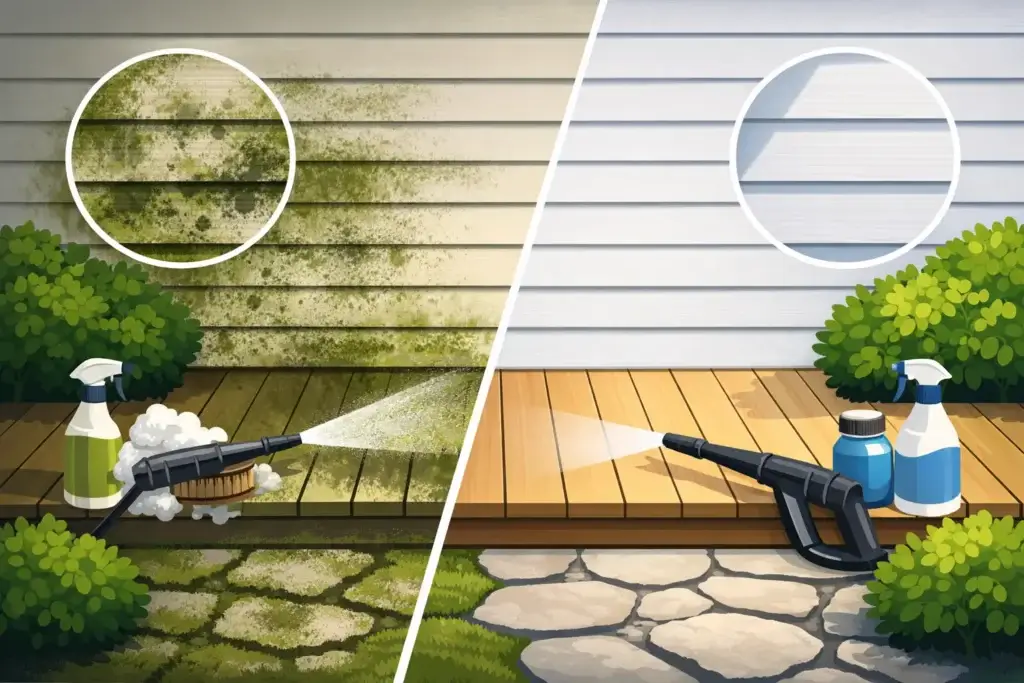
Green or black spotting on your siding can make an otherwise well-kept home look neglected fast. The best ways to remove mildew depend on the surface, the size of the affected area, and whether the growth is simply cosmetic or part of a bigger moisture problem. The goal is not just to brighten the surface for a weekend. It is to clean it safely, protect the material underneath, and slow the return of new growth.
Connecticut’s humid summers, shaded yards, coastal moisture, and leaf-heavy fall seasons create ideal conditions for mildew, algae, and organic buildup. A careful approach gives your property a cleaner appearance without the costly damage that can come from using too much pressure or the wrong chemical.
Start by Identifying What You Are Cleaning
Many exterior stains get called mildew, but the right cleaning method can vary. Mildew is usually a powdery gray, white, or light green growth that develops where moisture lingers. Algae often looks green or dark and may feel slick. Black streaks on a roof are commonly algae, while dark patches on siding can be a mix of mildew, algae, dirt, and airborne pollutants.
You do not need a laboratory test to make a practical cleaning decision. Look at the location and pattern. Growth that appears on the north side of a house, under gutters, behind shrubs, or beneath roof overhangs is usually connected to shade and retained moisture. Before cleaning, also check for a leaking gutter, overflowing downspout, damaged caulk, or landscaping that keeps the wall damp. Cleaning the stain without addressing the moisture source often means it will return sooner.
Best Ways to Remove Mildew Without Damaging the Surface
The safest cleaner is not always the strongest one. Material matters. Vinyl siding, painted wood, composite decking, asphalt shingles, concrete, and natural stone all respond differently to water pressure and cleaning solutions.
1. Use a Gentle Cleaner for Small, Light Mildew Spots
For a small area on vinyl siding, painted trim, patio furniture, or sealed outdoor surfaces, start with a mild detergent mixed with water. Apply it with a soft brush or sponge, allow it to sit briefly, then rinse thoroughly with a garden hose. Work from the bottom upward when applying cleaner to help prevent streaking, then rinse from the top downward.
This method is best for light surface buildup. It is inexpensive and low-risk, but it may not fully remove established organic staining. Never scrub aggressively on oxidized vinyl, older paint, or delicate finishes. You can leave visible marks or remove loose paint along with the mildew.
2. Choose an Oxygen-Based Cleaner for Decks and Wood
Mildew on a deck is more than an appearance issue. It can make walking surfaces slick, especially after rain. For many wood and composite decks, an oxygen-based exterior cleaner is a strong first choice. It can lift organic grime with less risk of bleaching the wood unevenly than chlorine-based products.
Apply the product according to its label, keep the area wet for the recommended dwell time, and agitate gently with a deck brush. Rinse well. Avoid letting the solution dry on the surface, and protect nearby plants with water before and after cleaning.
Wood can be unforgiving. Too much pressure raises the grain, creates lap marks, and shortens the life of the boards. If the deck needs repeated heavy scrubbing or has deep black staining, professional cleaning may be the smarter investment before staining or sealing.
3. Use a Properly Diluted Mildew Treatment on Siding
Vinyl, fiber cement, and many painted exterior surfaces often respond well to a professional-grade mildew treatment that is applied at the correct dilution. The solution does the cleaning work, while low-pressure rinsing carries away the contamination. This is the core idea behind soft washing.
A chlorine-based treatment can be effective on stubborn biological growth, but it must be handled carefully. Concentration, dwell time, plant protection, and complete rinsing all matter. A mix that is too strong can discolor finishes, harm landscaping, fade fabrics, or leave uneven results. Mixing cleaning products is never safe, especially products containing ammonia or acids.
For widespread mildew on a house, soft washing is usually safer and more effective than trying to blast the siding clean with a pressure washer. It treats the growth rather than merely stripping away its visible layer.
4. Keep High Pressure Away From Roof Shingles
A pressure washer does not belong on an asphalt shingle roof. High pressure can dislodge protective granules, break shingle seals, push water beneath the roofing system, and shorten the roof’s service life. Even if it looks cleaner immediately, the long-term cost can be significant.
The appropriate method for roof mildew or algae is a low-pressure roof treatment designed for shingles. The cleaning solution is applied carefully and allowed to work over time. Some staining may fade gradually with rain rather than disappearing in a single rinse, and that is normal. A slower process is often the safer one for your roof.
Roof work also comes with fall hazards. If staining is visible from the ground, consider professional roof cleaning instead of climbing ladders with chemicals and hoses.
5. Treat Concrete, Pavers, and Walkways for Both Stains and Safety
Concrete collects mildew in shaded sections of driveways, patios, pool decks, and walkways. Because these surfaces can become slippery, cleaning is partly a safety task. A concrete-safe cleaner, a stiff brush, and controlled pressure can remove most buildup effectively.
Pressure can be useful on concrete, but more is not always better. A concentrated nozzle held too close can leave striping, etch softer concrete, or disturb joint sand between pavers. Use even passes and test an inconspicuous area first. If pavers are sealed, confirm that the cleaning product and pressure level are compatible with the sealer.
After cleaning, improve drainage and trim back plants that block sunlight. That simple maintenance step can make a noticeable difference in how long the surface stays clean.
6. Clean Gutters and Fix Water Problems
Mildew that keeps returning in the same place is often a water-management issue. Clogged gutters can overflow onto siding and trim. A downspout that empties too close to the foundation can keep lower walls and walkways damp. Sprinklers aimed at the house can also create a daily moisture cycle that encourages growth.
Look for dark streaks directly beneath gutter lines, wet mulch against siding, or drips around window frames. Clear the gutter system, make sure downspouts direct water away from the home, and keep soil and mulch below the siding line. These corrections reduce the conditions mildew needs to grow.
7. Call a Professional for Large, High, or Delicate Areas
DIY cleaning makes sense for a small, accessible spot when you have the right product and a clear understanding of the surface. It becomes less practical when mildew covers multiple sides of the home, affects roofing, appears on second-story areas, or returns quickly despite repeated cleaning.
Professional exterior cleaning crews use commercial equipment, surface-specific solutions, and controlled application methods. They can soft wash siding and roofs, clean decks and concrete, protect landscaping, and avoid the common damage caused by excessive pressure. For property owners who want visible results without spending a weekend on ladders, hoses, and trial-and-error products, that experience matters.
CT Softwash LLC provides professional soft washing and exterior cleaning for homeowners and businesses throughout southeastern Connecticut and nearby communities. A trained team can assess the staining, recommend the right method, and clean the surface without treating every material like concrete.
How to Keep Mildew From Coming Back
No exterior surface stays spotless forever, particularly in shaded or wooded areas. Still, a few habits can extend the time between cleanings. Keep shrubs and tree limbs trimmed back from the house so air and sunlight can reach the siding. Remove leaves from roof valleys and gutters, correct drainage problems, and rinse pollen or salt buildup from vulnerable areas when needed.
Regular maintenance is less disruptive than waiting until staining covers the entire property. Many homeowners schedule exterior cleaning before listing a home, after a heavy pollen season, or as part of annual curb appeal maintenance. If your siding, roof, deck, or walkways are starting to show organic staining, addressing it early usually means a simpler, safer cleaning job and a better-looking property for the season ahead.