
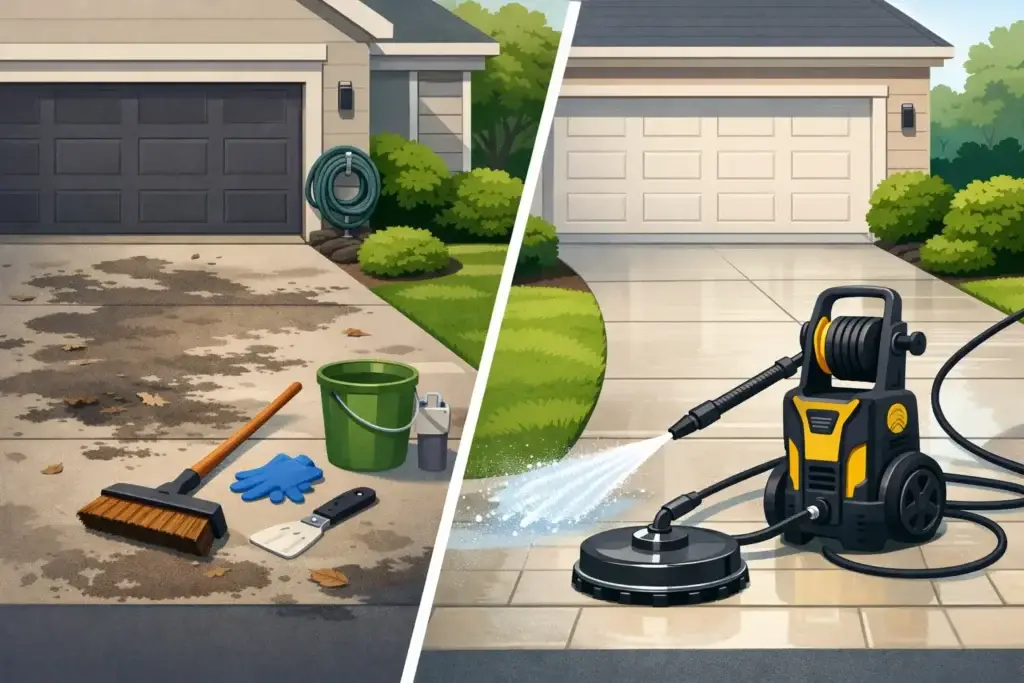
A driveway can look permanently stained after a Connecticut winter, especially where road salt, tire marks, algae, and oil have had months to settle in. The good news is that you can prepare driveway for power washing in less time than most homeowners expect. A few simple steps protect your property, make the cleaning process safer, and give the crew clear access to treat the whole surface properly.
Why Driveway Preparation Makes a Difference
Power washing removes surface buildup fast, but the work is most effective when the driveway is open, the surrounding area is protected, and any problem stains are identified ahead of time. Preparation also helps prevent avoidable issues, such as washing loose debris into a drain, soaking items left near the garage, or having to work around vehicles and outdoor furniture.
For many homes in Groton, Mystic, Waterford, and nearby shoreline communities, moisture is part of the problem. Shade, coastal humidity, falling leaves, and winter runoff can leave concrete and asphalt with dark organic growth that makes a driveway look older than it is. A professional cleaning can make a dramatic difference, but the right preparation helps the result look more even from edge to edge.
How to Prepare a Driveway for Power Washing
Start by moving everything off the driveway. Cars, trailers, boats, basketball hoops, trash bins, planters, and portable equipment should be relocated before the scheduled service. This gives the technician room to clean the full surface, including the areas where tires normally sit and where dirt builds up along the edges.
If you have a vehicle that cannot be moved, let the cleaning company know before the appointment. It may be possible to clean around it, but that creates visible untreated areas and limits the quality of the final result. Full access is always the better option.
Next, sweep away loose leaves, gravel, branches, and heavy dirt. You do not need to make the driveway spotless before power washing. That is what the service is for. Removing larger debris simply keeps it from being pushed into landscaping, garage corners, or storm drains during the cleaning process.
Clear the Garage Door and Entry Areas
Take a close look at the space where the driveway meets the garage. Move doormats, shoes, packages, holiday decorations, and anything stored just inside an open or poorly sealed garage. Water can reach the threshold during a thorough cleaning, particularly when technicians are removing buildup near the door.
Close garage doors, basement doors, windows, and any exterior access points that face the driveway. If a door seal is damaged or you know water enters during heavy rain, mention it when the crew arrives. A professional can adjust the work around a known concern, but they need that information before cleaning begins.
Protect Low Items Near the Driveway
Driveway cleaning involves water movement, cleaning solutions when needed, and the release of built-up grime. Bring in lightweight décor, outdoor rugs, small furniture, and children’s toys from the immediate area. Cover or move sensitive items that cannot get wet.
Landscaping along a driveway usually does not need to be moved, but it should be identified if it contains delicate annuals, newly planted shrubs, or vegetable gardens. Professional exterior cleaners take steps to protect plants, including rinsing them before and after treatment when appropriate. A quick conversation about your landscaping helps ensure the right precautions are used.
Keep pets indoors and give children a safe place away from the work area. Hoses, wet pavement, and active equipment create slip and trip hazards, even during a routine service visit.
Identify Stains Before the Cleaning Appointment
Not all driveway stains respond the same way. Point out oil spots, rust marks, paint drips, tire tracks, fertilizer stains, and areas with algae or mildew before work begins. This allows the technician to select the proper treatment instead of applying one approach to every stain.
Oil is a common example. Fresh oil is easier to treat than oil that has penetrated concrete for years, and older stains may lighten significantly without disappearing completely in one visit. Rust can also require a specialty cleaner. Setting realistic expectations upfront is part of professional service, not a reason to skip treatment.
Avoid applying random household chemicals right before power washing. Products such as bleach, degreasers, paint thinner, or acid-based cleaners can damage nearby surfaces, harm plants, create fumes, or react poorly with a contractor’s treatment process. If you have already used a product, tell the technician what it was and where it was applied.
Concrete and Asphalt Need Different Care
Concrete is durable, but it is not indestructible. High pressure used too closely can leave marks, expose aggregate, or create an uneven appearance. This is especially true on older concrete, cracked sections, and surfaces that have been sealed or patched.
Asphalt needs even more caution. It is softer than concrete and can be damaged by excessive pressure, harsh chemicals, or aggressive cleaning. A driveway with loose edges, crumbling areas, recent repairs, or fresh sealcoating should be evaluated before cleaning. In some cases, a lower-pressure method and targeted treatment are the safest choice.
Tell the crew if your driveway was sealed recently. Sealers need adequate cure time, and cleaning too soon can affect the finish. If you are unsure when the driveway was sealed, look for paperwork from the contractor or wait until the surface has fully cured according to the product or installer’s instructions.
Check Drainage and Water Flow
Before power washing, locate nearby storm drains, catch basins, and driveway channels. Clear leaves and debris around them so water can move as intended. If your driveway drains toward a garage, basement entry, neighbor’s property, or a low spot that frequently pools water, mention it before service begins.
Cleaning crews can manage water flow during the job, but drainage conditions influence how they plan the work. This matters even more on sloped driveways and properties with older drainage systems. The goal is to wash away grime without creating a mess where water naturally collects.
Do not try to block drains with towels, cardboard, or loose materials. Those items can shift, clog the opening, and cause water to back up. A professional will use the appropriate containment and rinsing practices for the surface and conditions.
Make Access Easy for the Crew
A smooth appointment starts with access to the driveway and a working outdoor water connection if your provider has requested one. Check that gates are unlocked, pets are secured, and the water spigot is reachable. If the spigot is inside a garage, make sure the crew can get to it without moving stored items.
Park vehicles away from the cleaning area and leave enough room for service equipment to be positioned safely. If you live on a narrow road, in a busy neighborhood, or on a shared drive, ask about the best parking plan before the appointment. A little coordination prevents delays and helps keep everyone safe.
It is also helpful to inspect the driveway for existing damage. Take a few photos of cracks, chips, crumbling edges, or old patches. Power washing does not cause sound concrete or asphalt to suddenly fail, but cleaning can reveal deterioration that was already hidden under dirt and organic buildup. Knowing the starting condition gives you a clear record and helps you plan future repairs if needed.
What You Do Not Need to Do
Homeowners sometimes delay scheduling because they think they need to pre-treat every stain, rent equipment, or spend a weekend scrubbing first. You do not. Clear the area, communicate any known concerns, and let trained technicians handle the cleaning method.
A professional service uses commercial-grade equipment, surface-appropriate pressure, and treatment methods designed for the stain and material. That approach is safer than using a rental pressure washer at maximum force, which can leave wand marks on concrete or cut into asphalt. It also saves you from managing hoses, runoff, chemical selection, and cleanup on your own.
CT Softwash LLC helps homeowners and property managers prepare for exterior cleaning with clear scheduling, straightforward communication, and a focus on protecting the surfaces around the job. If your driveway has years of oil, algae, or winter grime, asking questions before the appointment is always worthwhile.
After the driveway is clean, give it time to dry fully before parking vehicles or placing mats and bins back in place. Then take a moment to look at the surface in daylight. A clean driveway does more than improve curb appeal – it makes cracks, drainage issues, and maintenance needs easier to see before they become larger repairs.