
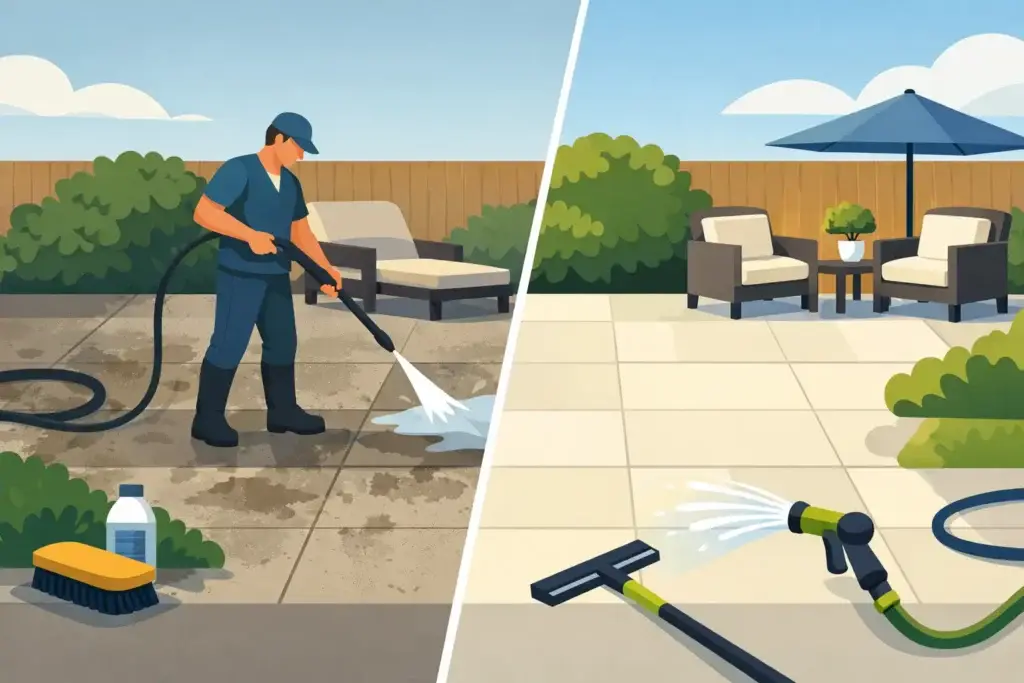
A concrete patio can go from a place for morning coffee to an eyesore surprisingly fast. In Connecticut, shade, humidity, leaf debris, pollen, and winter moisture create the right conditions for algae, mildew, and dark staining. Knowing how to clean concrete patios the right way helps restore curb appeal without scarring the surface, harming nearby landscaping, or turning a simple cleanup into a repair project.
The best method depends on what is actually on the concrete. General grime needs a different approach than black algae, rust, grease, or white mineral deposits. Start with the mildest effective option, then increase cleaning power only when the stain calls for it.
Start by Identifying the Patio Stain
Before pulling out a pressure washer, take a close look at the discoloration. Dirt and pollen usually appear as a dull, even film. Green or black patches are commonly algae, mildew, or moss, especially on shaded patios and areas near downspouts. Dark spots under a grill may be grease or cooking oil, while orange-brown marks often point to rust from patio furniture, planters, or metal accessories.
White, chalky buildup is usually efflorescence, which occurs when moisture carries minerals through concrete and leaves them on the surface. It is not the same as mildew, so a mildew cleaner will not solve it.
This quick diagnosis matters. Using excessive pressure on a stain that needs a targeted cleaner can leave visible lines, expose the aggregate, and make the patio collect dirt faster in the future.
What You Need to Clean a Concrete Patio
For most routine cleaning, you do not need an aggressive chemical or the highest setting on a pressure washer. A stiff-bristle push broom, garden hose, bucket, mild concrete-safe cleaner, and scrub brush handle a lot of jobs well. Wear gloves and eye protection whenever you use cleaning products.
If you plan to pressure wash, use a wide fan tip rather than a narrow, concentrated tip. A surface cleaner attachment is even better for larger patios because it provides a more even result and greatly reduces streaking. Never use a zero-degree tip on concrete.
Move furniture, rugs, planters, grills, and toys before you begin. Sweep away leaves, loose dirt, and cobwebs so the cleaner can reach the staining underneath. Cover delicate plants if you are using a stronger treatment, and wet nearby landscaping before and after cleaning to dilute any runoff.
How to Clean Concrete Patios Step by Step
Start by pre-wetting the patio with a garden hose. Damp concrete prevents cleaning solutions from absorbing too quickly and gives you more control while scrubbing. Apply a concrete-safe cleaner according to its label, working in manageable sections instead of coating the entire patio at once.
Give the cleaner time to work, but do not let it dry on the surface. On a warm or windy day, that may mean rinsing sooner or working in smaller areas. Scrub the stained sections with a stiff brush, paying extra attention to corners, furniture footprints, and areas that stay shaded.
Rinse thoroughly with a hose. If the patio still looks dirty, repeat the process before escalating to pressure washing. A second careful application often produces better results than blasting the concrete with too much pressure.
When pressure washing is necessary, begin at a low setting and test an inconspicuous area. Keep the wand moving in long, overlapping passes and maintain a consistent distance from the surface. Do not hover over one spot. The goal is an even clean, not the fastest possible clean.
For broad patios, a professional-grade surface cleaner can make a major difference. It cleans consistently across the slab and avoids the zebra-striping that is common when a homeowner uses a wand alone.
Removing Algae and Mildew From Concrete
Algae and mildew make patios look neglected, but they can also become slippery after rain. That is a safety issue around walkways, steps, pool areas, and entry doors.
A cleaner formulated for organic growth is usually the right choice. Apply it carefully, allow the recommended dwell time, scrub if needed, and rinse completely. Avoid mixing products or combining cleaners with bleach, acids, or ammonia. Chemical reactions can create harmful fumes and damage surrounding materials.
Household bleach is sometimes used for algae, but it is not automatically the best answer. It can discolor nearby surfaces, stress plants, and leave residue if used incorrectly. It may also fail to reach growth below the visible surface. For recurring organic staining, a professional soft wash or low-pressure treatment can provide a more complete clean while protecting the concrete and landscaping.
If algae returns quickly, look beyond the cleaning itself. Trim back overhanging branches where practical, clear leaves from the patio, and make sure gutters or downspouts are not constantly draining onto the same area. Moisture management is often the real long-term fix.
Treat Oil, Rust, and Other Stubborn Marks Separately
Grease and oil stains need an absorbent degreaser or poultice-style treatment designed for concrete. Fresh spills are much easier to remove, so blot them promptly rather than rubbing them deeper into the surface. Older oil stains may lighten significantly but not disappear completely, especially on porous or unsealed concrete.
For rust, use a concrete-safe rust remover. Do not reach for a harsh acid without understanding how it will react with your patio. Acidic products can etch concrete, alter its color, and leave uneven patches when applied incorrectly.
Paint drips, tire marks, and tannin stains from leaves can also require specialty products. Test any cleaner in a hidden area first. The right product used carefully is safer than a one-size-fits-all chemical approach.
Pressure Washing Mistakes That Damage Concrete
Pressure washing can make a patio look dramatically better, but more pressure is not better. Concrete is durable, yet its surface can be damaged by an inexperienced operator or the wrong equipment. Once etched lines and wand marks appear, they are difficult and expensive to correct.
Avoid these common mistakes:
- Using a narrow tip or excessive pressure close to the concrete
- Cleaning only the darkest spots, which creates obvious patchiness
- Letting chemical cleaners dry before rinsing
- Skipping plant protection and runoff control
- Pressure washing cracked, flaking, or already deteriorating concrete without assessing the condition first
Older concrete deserves extra caution. If the surface is spalling, crumbling, or showing exposed aggregate, aggressive washing may worsen the damage. Cleaning can improve appearance, but it cannot repair failing concrete.
Should You Seal the Patio After Cleaning?
Sealing is not required after every cleaning, but it can be a smart investment for patios that absorb stains quickly or see frequent use. A quality concrete sealer can help reduce water penetration, simplify future cleaning, and limit staining from food, leaves, and outdoor furniture.
The patio must be completely clean and dry before sealer is applied. Sealing over moisture, residue, algae, or existing stains can trap problems below the coating and create a blotchy finish. The right sealer depends on the concrete type and the look you want. Some deepen the color or add sheen, while penetrating sealers preserve a more natural appearance.
When to Call a Professional Patio Cleaning Company
A homeowner can handle light seasonal buildup, especially on a small patio in good condition. Professional service makes more sense when staining is widespread, the patio has stubborn algae or oil marks, the surface is near delicate landscaping, or you want an even finish without the risk of pressure damage.
CT Softwash LLC uses professional equipment and surface-appropriate cleaning methods to restore exterior concrete safely. For homeowners across southeastern Connecticut, professional cleaning also saves time during the busiest parts of the spring and summer maintenance season.
A clean patio is easier to enjoy, safer when wet, and a better reflection of the home around it. Address buildup before it becomes deeply embedded, and your concrete will stay brighter with far less effort year after year.