A driveway can look dirty long before it is actually worn out. In Connecticut, winter sand, road salt, wet leaves, algae, oil drips, and tire marks settle into concrete pores and make an otherwise well-kept property look neglected. The right concrete cleaning methods can restore a brighter, more uniform surface without leaving behind striping, etching, or chemical damage.
Concrete is tough, but it is not indestructible. It is porous, which means stains sink below the surface, and it can be damaged by excessive pressure, harsh acids, or the wrong cleaning product. The best approach depends on what is on the concrete, how old the stain is, and whether the surface is sealed, cracked, or deteriorating.
Start by Identifying the Type of Concrete Stain
Not every dark spot needs the same treatment. A black or green film is usually algae, mildew, moss, or organic buildup. Brown-orange marks may be rust from outdoor furniture, fertilizer, or metal fixtures. Dark blotches around parking areas are often oil and grease. White, powdery residue is typically efflorescence, which occurs when minerals move through the concrete and dry on the surface.
This matters because pressure alone does not solve every problem. High pressure may remove the top layer of visible grime while leaving oily residue, mineral deposits, or living organic growth behind. The result can look better for a short time, then quickly become stained again.
Before applying any cleaner, sweep away loose dirt, leaves, and gravel. Pre-wetting nearby landscaping is also smart when using cleaning products. Cover or move delicate items, and make sure runoff is controlled so cleaners do not wash into planting beds or storm drains.
The Most Effective Concrete Cleaning Methods
Pressure Washing for Ground-In Dirt and Surface Grime
Professional pressure washing is often the most efficient method for cleaning large driveways, sidewalks, patios, pool decks, and commercial concrete. It uses water pressure to lift embedded dirt, mud, salt residue, and weather-related buildup from the pores of the surface.
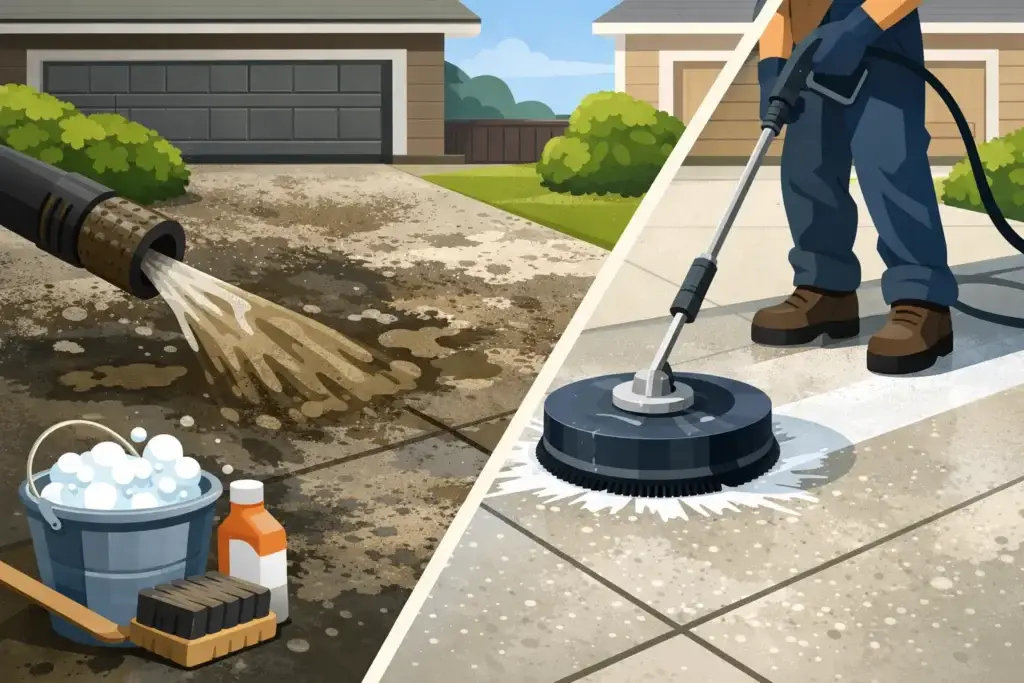
The key is controlled pressure. Too much pressure can scar the concrete, expose aggregate, or create visible wand marks. Those streaks are especially common when a homeowner uses a narrow spray tip too close to the surface. A professional surface cleaner provides more even coverage and reduces the risk of zebra-striping across a driveway or walkway.
Pressure washing works best on sound concrete that has a solid surface and no major spalling. If concrete is crumbling, flaking, heavily cracked, or recently poured, the cleaning process needs more caution. Fresh concrete should generally be allowed to cure fully before it is pressure washed.
Soft Washing for Algae, Mildew, and Organic Growth
When concrete has black, green, or slippery organic growth, a cleaning solution is usually needed before rinsing. Soft washing uses low pressure combined with an appropriate treatment to break down algae, mildew, moss, and bacteria at the source.
This method is especially useful in shady areas, along north-facing walkways, near trees, and on patios that stay damp after rain. Simply blasting away organic growth can leave roots and spores behind. Treatment helps prevent a quick return, which means the surface stays cleaner longer.
Soft washing does not mean weak cleaning. It means using the right chemistry and a safer level of pressure for the job. Nearby plants, painted surfaces, and exterior finishes should always be protected during the process.
Degreasers for Oil and Automotive Stains
Oil stains need more than water. A quality concrete degreaser helps loosen petroleum-based residue so it can be rinsed away or absorbed. For a fresh spot, act quickly: blot excess oil, apply an absorbent material, then use a concrete-safe degreaser according to its directions.
Older oil stains are more difficult because the oil has traveled deep into the concrete. Several treatments may be needed, and complete removal is not always realistic. The goal is often substantial improvement rather than a promise that a years-old stain will disappear completely.
Avoid using gasoline, brake cleaner, or other improvised solvents on a driveway. They can create a fire hazard, damage surrounding surfaces, and move contaminants deeper into the concrete or into runoff.
Rust Removers for Orange and Brown Marks
Rust stains are stubborn, but they are treatable with a cleaner designed specifically for rust on masonry or concrete. These products are different from general-purpose degreasers and should be tested in a small, less visible area first.
Acid-based rust removers can work quickly, but they must be used carefully. The wrong product or concentration can lighten the concrete unevenly or damage nearby metal, plants, and finishes. If the stain is widespread or close to a home, garage door, or landscaping, professional application is the safer choice.
Efflorescence Treatments for White Mineral Deposits
White residue on concrete is not always dirt. Efflorescence is a mineral deposit left behind as moisture moves through masonry. Light cases may improve with dry brushing and controlled rinsing. More established deposits may require a specialty cleaner.
The cleaning step is only part of the solution. If efflorescence keeps returning, moisture is likely entering the concrete or the material beneath it. Poor drainage, sprinkler overspray, or water collecting near a foundation may need to be addressed to reduce repeat buildup.
Why DIY Pressure Washing Can Leave Marks
Many homeowners rent or buy a pressure washer expecting fast results. The equipment can be useful, but concrete cleaning has a learning curve. Holding the wand too close, changing speed as you walk, or using the wrong nozzle can create permanent-looking lines. Cleaning only the visibly dirty areas can also leave clean patches that stand out against the surrounding concrete.
There is also the issue of runoff. Oil, cleaners, loose sediment, and algae need to be managed responsibly. Commercial properties may have additional runoff considerations, especially around parking lots, entrances, and loading areas.
For a small patio with light dirt, careful DIY cleaning may be reasonable. For a large driveway, recurring algae, oil stains, or concrete near landscaping and exterior finishes, professional service can save time and reduce the chance of costly mistakes.
A Better Process for Driveways, Patios, and Walkways
A professional concrete cleaning job should begin with an inspection, not a one-setting approach. The technician should look for cracked areas, loose concrete, old stains, drainage issues, sealed surfaces, and nearby materials that need protection.
The surface is then prepared by clearing debris and pre-treating stains where needed. Organic growth may receive a soft wash treatment, while grease or rust receives a product designed for that specific contaminant. Once the treatment has had time to work, the concrete is cleaned with controlled pressure and even passes using commercial equipment.
Edges, corners, and transition areas deserve attention too. These are the spots where dirty runoff collects and where a rushed cleaning job is easiest to notice. A final rinse clears residue and leaves the surface looking consistent rather than patchy.
Should You Seal Concrete After Cleaning?
Sealing is not required after every cleaning, but it can be a smart investment for concrete exposed to vehicle traffic, deicing products, moisture, and frequent staining. A suitable sealer can make future cleanup easier by reducing how deeply water, oil, and grime penetrate the surface.
The timing matters. Concrete must be thoroughly clean and dry before sealing, and damaged or moisture-troubled concrete may need repair or drainage correction first. A sealer will not hide major cracks, repair spalling, or solve water pooling problems.
For many homes, periodic professional cleaning paired with a well-maintained sealer offers the best balance of curb appeal and long-term protection.
How Often Should Concrete Be Cleaned?
Most residential driveways and walkways benefit from cleaning about once a year. Properties with heavy shade, nearby trees, coastal moisture, frequent vehicle traffic, or persistent algae may need attention more often. Commercial sidewalks and entrances may require a regular maintenance schedule to keep the property safe and presentable for customers.
Waiting until the concrete is black with buildup usually makes the job harder. Regular cleaning removes contaminants before they settle deeper into the pores, helps reduce slippery growth, and protects the clean appearance of the rest of your exterior.
CT Softwash LLC provides careful, professional concrete cleaning for homeowners and businesses that want visible results without unnecessary risk. Whether your driveway is stained from winter grime or your walkway has become slick with algae, choosing the right method now can help your property look cared for through every season.