
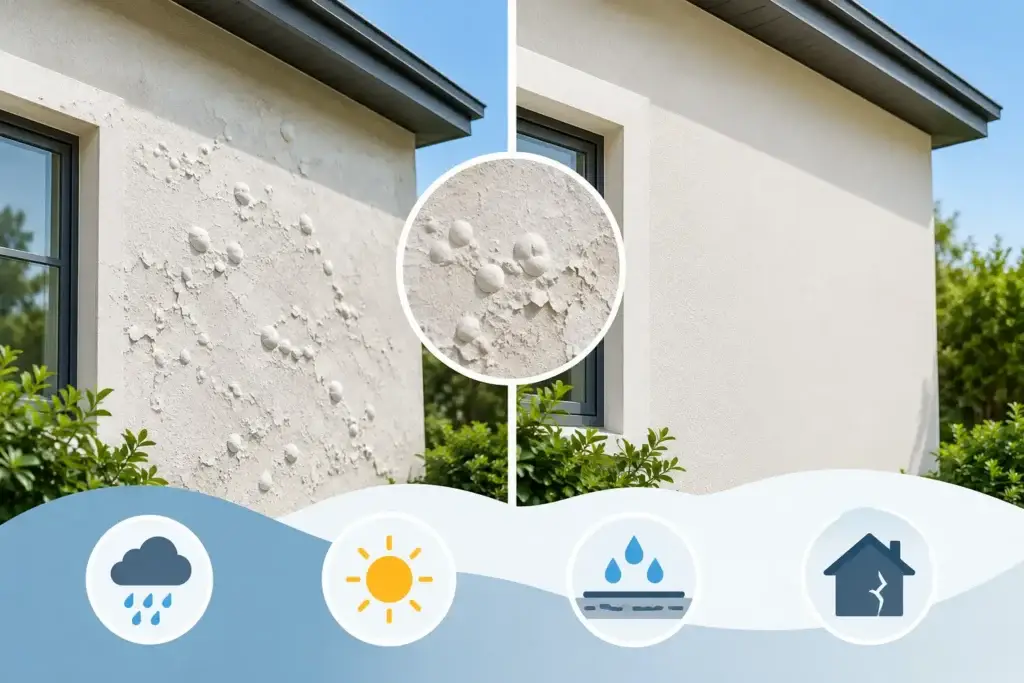
A fresh paint job should lie flat, protect the surface beneath it, and improve curb appeal. When it starts to bubble, blister, or peel, it is usually a warning that something underneath the paint needs attention. What causes paint bubbling is not always obvious from the surface, but the timing, location, and condition of the bubbles can point to the real problem.
For Connecticut homes, moisture is often the main culprit. Rain, coastal humidity, snow, ice, and clogged gutters can all let water reach siding, trim, masonry, or wood. Heat, poor surface preparation, and application mistakes can also cause paint to lose its bond. The right repair depends on the source, not just how the bubbling looks.
What Causes Paint Bubbling?
Paint bubbles form when the paint film separates from the surface or from the layer below it. That separation creates a pocket of air, moisture, or vapor. Some bubbles appear while the paint is still drying. Others show up months later after repeated exposure to weather.
Moisture behind or beneath the paint
Moisture-related bubbling is the most common exterior paint issue. Water can get behind painted surfaces through failed caulk, cracked siding, loose trim, damaged flashing, roof leaks, overflowing gutters, or gaps around windows and doors. On masonry, water can move through porous brick or concrete and push against the paint from behind.
Wood siding and trim are especially vulnerable. When wood absorbs water, it expands. When it dries, it contracts. That repeated movement stresses the paint until it lifts away. If you pop a bubble and find damp wood, staining, soft material, or dark discoloration beneath it, the repair should start with finding and stopping the water source.
A bubble near a gutter, window frame, roofline, or lower section of siding is rarely random. Those locations often reveal where water is collecting or entering the home exterior.
Heat and direct sun exposure
Hot sun can cause paint bubbling, particularly on dark-colored surfaces, metal, doors, and siding that receives strong afternoon light. Heat causes the surface and the air or moisture below the paint to expand. If the paint cannot release that pressure, it can blister.
Heat-related bubbling often develops soon after painting, especially if paint was applied in direct sunlight or onto a surface that was too hot. It can also happen when a dark color is used on a surface not designed to handle the added heat. The paint may look fine in the morning and show bubbles later in the day when the wall heats up.
Poor surface preparation
Paint needs a clean, dry, stable surface. It will not bond reliably to dirt, pollen, mildew, chalky old paint, grease, or loose flakes. Skipping proper cleaning and prep can lead to bubbling, peeling, and early failure even when high-quality paint is used.
This is why exterior washing needs to be done carefully. A proper soft wash removes organic growth and buildup without driving water behind siding or damaging aging paint. High pressure in the wrong hands can strip paint, scar wood, force water into openings, and create more repair work before painting begins.
After cleaning, surfaces need enough time to dry completely. Painting over damp siding, trim, or masonry traps moisture beneath the coating. The paint may initially look smooth, then bubble as temperatures change or moisture works its way outward.
Painting in the wrong weather conditions
Exterior paint has temperature and humidity limits for a reason. Applying paint during high humidity, just before rain, when temperatures are too low, or when nighttime condensation is likely can interfere with curing. The outside of the paint may dry first while moisture or solvents remain trapped below.
Painting late in the day is another common issue. A surface can feel dry and warm in the afternoon, then collect dew before the paint has cured. Connecticut’s spring and fall weather can shift quickly, so a favorable forecast alone is not enough. Painters need to account for surface temperature, humidity, rain timing, and overnight conditions.
Too many coats, the wrong paint, or poor application
Thick coats can skin over before the lower portion dries, trapping solvents that later form blisters. Applying a second coat before the first coat has cured can produce a similar result. Paint also may fail when a new coating is incompatible with the old one, such as certain latex paints applied over oil-based paint without the proper primer.
Using the wrong primer can be just as damaging. Bare wood, stained trim, metal, masonry, and previously glossy surfaces each need the right preparation and coating system. Paint is not a one-size-fits-all product, especially on a weather-exposed exterior.
How to Tell What Is Causing the Problem
The location and timing of bubbles provide useful clues. Bubbles that appear soon after painting are more likely tied to heat, moisture during application, thick coats, or poor adhesion. Bubbles that show up later often point to water intrusion, failing caulk, aging paint layers, or ongoing moisture behind the surface.
Check whether the problem is isolated or widespread. A few bubbles below a leaking gutter may be a local water-management repair. Bubbling across an entire sunny wall may indicate application conditions, surface preparation, or a coating issue. Paint that bubbles near window trim can signal failed caulk, while bubbles on basement masonry may be related to moisture moving through the wall.
Do not simply press a bubble flat and coat over it. That may improve the appearance for a short time, but it does not restore adhesion. The new paint will only be as sound as the layer underneath.
How to Repair Bubbling Exterior Paint
The repair process begins after the underlying cause is corrected. If there is a gutter leak, failed caulk, roof issue, damaged siding, or trapped moisture, address that first. Painting over an active leak guarantees another failure.
Once the area is dry and stable, loose or bubbled paint should be scraped away to a firmly bonded edge. Sand the transition smooth, remove dust, and inspect the exposed material for rot, mildew, or damage. Any rotten wood should be repaired or replaced rather than hidden under primer.
Prime bare areas with a product suited to the material and condition. Then apply exterior paint in thin, even coats, following the manufacturer’s drying times. Avoid painting in direct, intense sun or when rain, high humidity, or overnight dew could interfere with curing.
If the home was built before 1978, use extra caution before sanding or scraping. Older paint may contain lead. Large areas of deteriorating paint should be assessed and handled using proper lead-safe practices.
Prevent Paint Bubbling Before It Starts
Preventive exterior maintenance is usually less expensive than widespread paint repair. Keep gutters clear so water does not overflow onto fascia, trim, and siding. Inspect caulk around windows, doors, vents, and joints each year, and replace cracked or missing sections before water gets behind the paint.
Regular house washing also matters. Mold, mildew, algae, pollen, and chalky residue interfere with paint adhesion and hold moisture against exterior surfaces. Safe soft washing helps prepare the home for painting and keeps existing paint looking cleaner without unnecessary damage.
Before scheduling a paint project, ask how the surface will be cleaned, how moisture will be checked, what primer will be used, and how weather conditions will be managed. A low price is not a savings if the paint starts bubbling after one season.
When to Call a Professional
A small, isolated bubble on otherwise sound trim may be manageable for a confident homeowner. Widespread bubbling, recurring paint failure, soft wood, staining, mold, masonry moisture, or bubbles near a roofline or window should be investigated professionally. Those signs can point to a maintenance issue that needs more than repainting.
CT Softwash LLC helps local property owners protect curb appeal with careful exterior cleaning and maintenance services. Proper cleaning, controlled soft washing, and attention to the condition of the surface help prevent paint problems from being made worse before repairs or repainting begin.
Paint bubbling is frustrating, but it is also useful information. Treat it as an early signal to check for moisture, failed prep, or weather-related stress, and you can protect the surface beneath the paint before a small repair becomes a larger exterior project.