
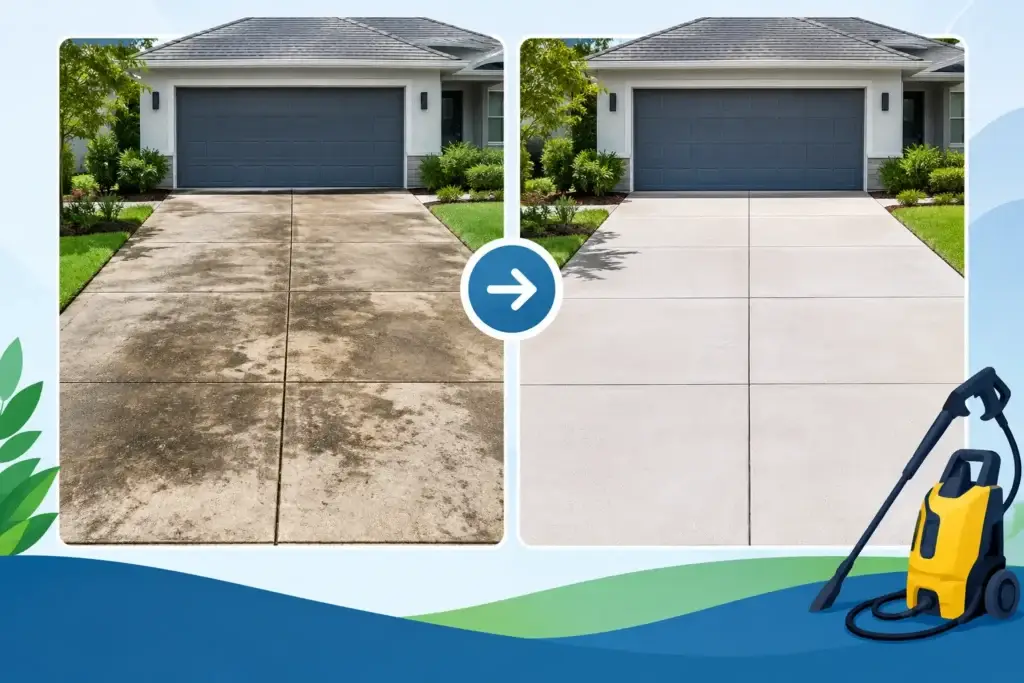
A driveway can look permanently worn out when dark algae, tire marks, oil spots, and winter grime have had months to settle in. This driveway cleaning example shows what a professional process should look like, from the first surface inspection through final rinsing, and why the right approach protects concrete while delivering a noticeable improvement.
For Connecticut homeowners, driveway buildup is more than a curb appeal issue. Moisture, tree cover, road salt, pollen, and changing temperatures can leave concrete slick, stained, and uneven in color. Cleaning it correctly takes more than pointing a pressure washer at the surface.
A Realistic Driveway Cleaning Example
Picture a two-car concrete driveway in southeastern Connecticut. The driveway is several years old, with black and green organic growth along the shaded edges, tire tracks in the center, a few light automotive fluid stains near the garage, and a dull gray film across most of the surface. It is structurally sound, but it looks neglected from the street.
The homeowner’s goal is straightforward: improve the appearance before guests arrive and remove slippery growth near the walkway. They do not need a new driveway. They need a cleaning method that removes buildup without leaving pressure marks, damaged joints, or streaky patches.
A professional cleaning appointment begins by identifying what is actually on the concrete. Algae and mildew respond differently than oil. Rust, fertilizer stains, leaf tannins, paint, and efflorescence each need their own treatment. Skipping this step is one reason a driveway may look better for a day but still show stubborn stains once it dries.
Step 1: Inspect the Surface and Surrounding Areas
Before cleaning begins, the technician checks the age and condition of the concrete. Older concrete, exposed aggregate, loose sections, cracks, and deteriorating joints may require lower pressure or more careful technique. Pressure alone is not a cleaning plan.
The inspection also includes the garage door, foundation, nearby siding, landscaping, drains, and street runoff path. A careful crew protects plants, avoids forcing water under garage seals, and manages cleaning solutions responsibly. If the driveway slopes toward a storm drain, runoff management matters even more.
In this example, the concrete has a few hairline cracks but no loose material. The technician notes that the darkest discoloration is organic growth, while the garage-area spots are petroleum-based. That means one general rinse will not produce the best result.
Step 2: Pre-Treat Algae, Mildew, and Heavy Grime
The shaded driveway edges receive a measured cleaning solution designed to break down organic growth. This treatment does the work that high pressure alone cannot do well. It helps lift black and green staining from the pores of the concrete so the surface can be cleaned more evenly.
The solution needs enough contact time to work, but it should not be allowed to dry on the surface. During warm, sunny weather, technicians may work in smaller sections and keep the area damp. Nearby plants are pre-rinsed and protected as needed.
This is where homeowners often see the difference between a professional result and a rushed DIY attempt. Blasting algae with a narrow pressure washer tip can remove the top layer while leaving embedded growth behind. It can also create visible wand lines that make the driveway look striped.
Step 3: Treat Oil and Tire Marks Separately
Oil stains require realistic expectations. Fresh stains are much easier to remove than old, deeply absorbed spots. A professional degreaser can loosen petroleum residue before washing, but a stain that has been sitting for years may leave some shadowing even after treatment.
In this driveway cleaning example, the technician applies a targeted degreaser near the garage, agitates the affected areas, and allows it to dwell. Tire marks are treated as part of the cleaning process, though some rubber transfer may need additional attention depending on the concrete finish and how long it has been present.
Being direct about these limits builds trust. A reputable contractor should not promise that every deep oil stain will disappear completely. The goal is significant improvement without damaging the concrete in pursuit of a perfect but unrealistic result.
How the Driveway Is Washed Without Leaving Stripes
After pretreatment, the main cleaning begins with commercial-grade equipment and a surface cleaner. A surface cleaner uses rotating spray bars inside a housing, allowing the operator to clean broad areas at a controlled, even distance from the concrete.
For a standard concrete driveway, this method is usually faster and more consistent than cleaning every inch with a handheld wand. It reduces the zebra-striping that can happen when pressure overlaps unevenly. Edges, corners, expansion joints, and areas near the garage door are detailed carefully afterward with a wand at an appropriate setting.
Water pressure is adjusted based on the surface. More pressure is not always better. Concrete can be etched, especially if it is older, weak, previously damaged, or cleaned too aggressively. The right combination of treatment, water flow, pressure, and technique provides the best result.
The technician works from the top of the driveway toward the street so dirty water does not run back over cleaned sections. A final rinse removes lifted grime and cleaning residue. Once the surface starts to dry, the true result becomes easier to see.
What the Finished Driveway Looks Like
After cleaning, the concrete in this example is noticeably brighter and more uniform. The black algae along the edges is gone, the center lane no longer looks gray and grimy, and the tire marks are greatly reduced. The lighter oil stains near the garage have improved substantially, although a faint shadow remains in the deepest area.
That is a successful result because it is honest and durable. The driveway looks cared for again, the slick organic growth is removed, and the homeowner gets a major curb appeal improvement without unnecessary surface damage.
It is also normal for concrete to look darker immediately after washing. Concrete retains moisture, and the final color may not be fully visible until it dries. On a mild day, most driveways begin showing their finished appearance within a few hours, though shaded areas can take longer.
When Driveway Cleaning Needs a Different Plan
Not every driveway should be cleaned the same way. Pavers require attention to joint sand and may benefit from a different restoration process. Asphalt can be damaged by pressure washing and should not be treated like concrete. Decorative stamped concrete, sealed surfaces, and exposed aggregate all call for a more cautious approach.
A driveway with widespread rust staining, paint overspray, heavy efflorescence, or extensive motor oil buildup may need specialty products or multiple treatments. In some cases, cleaning reveals existing flaws that dirt had hidden, such as old repairs, spalling, or discoloration from prior sealers.
That does not mean cleaning was a mistake. It means the surface condition should guide the method and expectations. An experienced exterior cleaning company explains those trade-offs before work begins, rather than after the driveway has been treated.
How Often Should You Clean a Driveway?
Most Connecticut driveways benefit from professional cleaning every one to two years. Homes with heavy shade, mature trees, frequent vehicle traffic, or persistent moisture may need service more often. A quick seasonal inspection can help you catch algae before it becomes slippery and prevent stains from setting deeper into the concrete.
Between cleanings, sweep away leaves and debris, address fresh oil drips quickly, and keep gutters from dumping water onto the driveway. These small habits reduce staining and help the surface stay cleaner longer.
CT Softwash LLC provides professional driveway cleaning with the same careful approach used across exterior surfaces: inspect first, use the right treatment, clean safely, and never sacrifice your property for a quick result. A clear, detailed quote should tell you what is included and what kind of improvement to expect.
If your driveway has become dark, slippery, or stained, do not assume replacement is your only option. A professional assessment can show whether a targeted cleaning will bring back the clean, welcoming entrance your property deserves.