
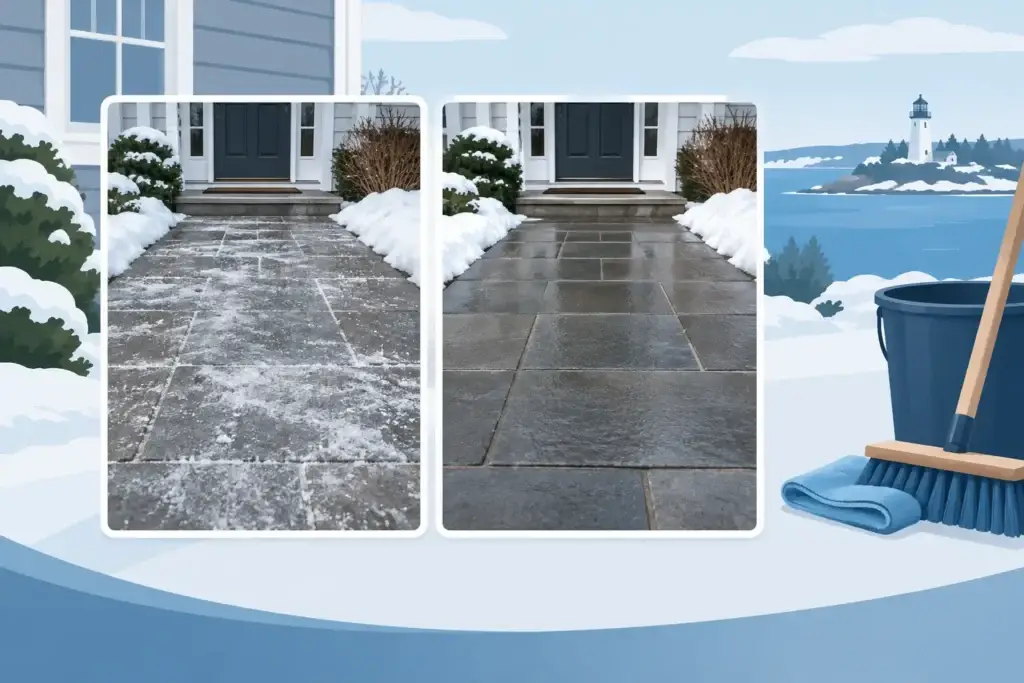
A white, chalky film on the garage floor, front steps, siding, or lower brickwork is one of winter’s least welcome leftovers. Winter salt residue removal is not just about restoring curb appeal. Road salt and de-icing products can hold moisture against exterior materials, leave slippery patches at entryways, and contribute to premature wear when they are left through the spring.
For Connecticut property owners, the problem often builds quietly. Salt gets tracked from driveways into garages, splashes onto siding during slushy commutes, and settles along walkways after repeated storms. A little residue after one snowfall is normal. Months of buildup deserve a proper cleanup plan.
Why Salt Residue Should Not Be Ignored
Most de-icing products contain sodium chloride, calcium chloride, magnesium chloride, or blends of these materials. They lower the freezing point of water, which helps keep roads and walkways safer. But once snow melts and dries, the minerals remain behind as a visible crust or haze.
On concrete, salt can work its way into pores and worsen surface scaling, flaking, and cracking over time. This is especially common on older driveways, steps, and sidewalks that have already seen years of freeze-thaw cycles. Salt does not cause every concrete crack, but it can make an existing vulnerability more noticeable.
On painted surfaces, vinyl siding, brick, and stone, the issue is usually more cosmetic at first. You may see streaks, white spots, or a dull film along the lower portions of the home. If residue mixes with dirt, sand, and moisture, it can become much harder to rinse away cleanly.
Salt is also a concern around landscaping. Runoff can stress grass, shrubs, and soil near driveways and walkways. That does not mean homeowners should skip de-icing during icy weather. It means spring cleanup should include the areas where salty meltwater collects.
Where Winter Salt Residue Builds Up
Salt rarely stays where it was spread. Tires, boots, snowblowers, plows, and melting runoff move it across the property. Checking the right areas makes cleanup more effective.
Start with the driveway edges, front walk, stoop, stairs, and garage threshold. These are the most common high-traffic locations, and they often show the heaviest white residue. Look at the bottom two to three feet of siding near the driveway, too, particularly where vehicles pass close to the house.
Garage floors deserve special attention. Salt-laden slush melts off vehicles and dries into a gritty white film that can be difficult to remove if it has been sitting for weeks. Interior entryways and mudrooms may also have salt marks on tile, vinyl, or sealed concrete from tracked-in snow.
Commercial properties should inspect loading areas, storefront entrances, curbs, walkways, dumpster pads, and parking lot edges. These surfaces face more foot traffic and more frequent de-icer applications, so residue can return quickly during an active winter.
A Safe Approach to Winter Salt Residue Removal
The best cleaning method depends on the surface, its condition, and how long residue has been present. The goal is to dissolve and flush away salt without damaging the surface underneath.
Start With a Thorough Rinse
For most exterior hard surfaces, a generous rinse with clean water is the first step. Water helps dissolve salt deposits so they can be carried away rather than pushed deeper into porous concrete or joints. Choose a day when temperatures are safely above freezing and the surface has time to dry.
A standard garden hose may be enough for light residue on newer, well-maintained concrete. Direct water toward a drainage area rather than washing salty runoff into a garden bed. If a surface is heavily soiled, a rinse alone may reveal dirt stains that were hidden beneath the salt.
Do not rely on a quick splash of water. A light rinse can leave dissolved salt behind as the surface dries. Give the area enough water to fully flush the residue away.
Use the Right Cleaner for the Surface
A mild, surface-appropriate cleaner can help lift the oily dirt, sand, and traffic film that salt often leaves behind. The cleaner is not always what removes the salt itself. Water does that work. But cleaning agents can make the final result more even and improve the appearance of the surrounding surface.
Avoid experimenting with harsh acids, bleach mixtures, or abrasive powders on concrete, masonry, painted trim, or siding. A product that looks effective in a small spot can discolor the material, etch the surface, harm nearby plants, or create an uneven finish across the driveway.
For garage floors, follow the coating or sealer manufacturer’s cleaning guidance if the floor has been finished. Some degreasers and strong cleaners can reduce the life of an epoxy or decorative coating. Uncoated concrete is more forgiving, but it still benefits from controlled cleaning and complete rinsing.
Match Water Pressure to the Material
Pressure washing can be highly effective for salt-stained driveways, walkways, and sturdy concrete surfaces, particularly when spring grime is part of the problem. However, more pressure is not automatically better. Excessive pressure can scar concrete, open up weak areas, remove joint material, and force water where it does not belong.
Siding, painted surfaces, window trim, and delicate masonry require a lower-pressure approach. Soft washing uses specialized solutions and controlled rinsing to clean exterior surfaces without blasting them. That matters when salt residue is mixed with algae, mildew, road grime, or winter staining along the lower exterior of the home.
If the concrete is already flaking, pitted, or showing exposed aggregate, professional evaluation is a smart move before washing. Cleaning can improve its appearance, but it cannot reverse material loss. The wrong technique may make an existing problem more visible.
What Not to Do
It is tempting to attack white residue with a stiff wire brush or the highest setting on a pressure washer. Both can create more work. Wire brushes can scratch finishes and leave metal fragments that rust. Aggressive pressure can leave zebra-striping on concrete or damage siding and trim.
Do not clean exterior surfaces when temperatures may drop below freezing soon afterward. Water left in cracks, joints, or on shaded steps can freeze and create a slip hazard. It is also wise to avoid washing during heavy rain, when runoff control becomes difficult and cleaning solutions may not work as intended.
Finally, do not assume every white mark is salt. Efflorescence, a mineral deposit that can appear on brick, block, stone, and concrete, looks similar but has a different cause. It comes from minerals moving through masonry with moisture. A professional can help identify whether you are dealing with winter road salt, efflorescence, or both.
When Professional Cleaning Is Worth It
A homeowner can usually manage light salt residue on a small patio or front walk with careful rinsing. Professional service becomes more valuable when residue covers a large driveway, garage floor, multi-unit property, or commercial entrance. It is also the safer choice when the affected area includes second-story siding, steep access, fragile surfaces, or extensive staining.
A trained exterior cleaning team can adjust the method for each material instead of treating the entire property with one pressure setting. That distinction matters on homes with concrete driveways, vinyl siding, painted trim, stone accents, and landscaping all within a few feet of each other.
For properties across southeastern Connecticut, CT Softwash LLC provides safe exterior cleaning methods designed to remove winter buildup while protecting the surfaces that make up your home or business. Licensed and insured service, professional-grade equipment, and a clear plan for the job help take the uncertainty out of seasonal cleanup.
Reduce Next Winter’s Buildup
You cannot prevent every bit of salt residue during a Connecticut winter, but a few habits can limit the amount that lingers. Use de-icer according to the product directions rather than applying an extra-heavy layer. Sweep up excess granules once conditions improve, and rinse vehicles, garage floors, and high-traffic entry areas periodically during the season.
If your driveway is due for resealing, ask a qualified contractor whether the surface is ready. A properly maintained sealer can make seasonal cleanup easier, though it will not make concrete immune to salt or freeze-thaw damage. Good drainage also matters. When meltwater repeatedly pools along one edge of a walkway or foundation, residue and moisture will keep returning.
Spring cleaning is the right time to look closely at what winter left behind. Removing salt early gives your exterior a cleaner start, reduces avoidable wear, and lets small surface problems stand out before they become expensive repairs. A careful wash now can make the next warm day outside feel like it belongs to your property again.