
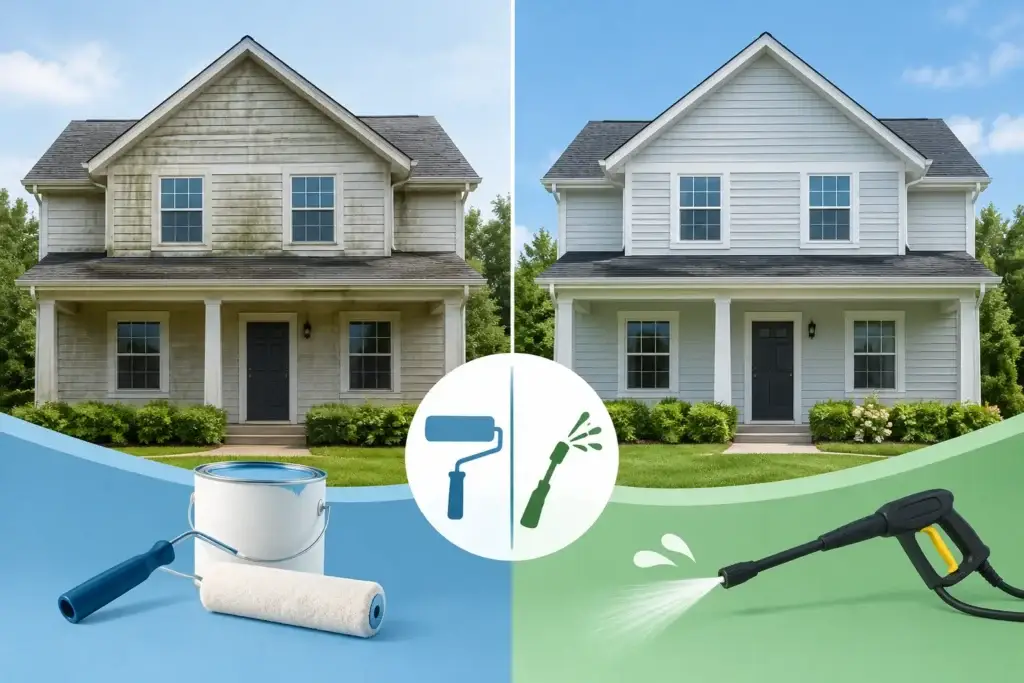
A faded or green-streaked exterior can make homeowners think one thing: it is time to paint. But paint is not always the first answer. In many cases, painting versus siding washing comes down to one practical question: is the siding actually failing, or is it simply covered in dirt, algae, mildew, pollen, and weather buildup?
For Connecticut homes, that distinction can save money and protect the exterior. Our wet seasons, shade from mature trees, coastal moisture, and winter grime can leave siding looking worn long before the material or paint has reached the end of its useful life. A professional soft wash may restore the color you thought was gone. If the surface is truly deteriorating, cleaning is still often the right first step before painting begins.
Painting Versus Siding Washing: Know the Difference
Siding washing removes surface contamination. Professional house washing uses a low-pressure soft washing process and appropriate cleaning solutions to treat organic growth, lift grime, and rinse away buildup without blasting the siding. The goal is to restore a clean surface while protecting vinyl, painted wood, fiber cement, trim, and landscaping.
Painting changes the protective finish itself. It covers faded color, seals properly prepared surfaces, and can help protect siding and trim from moisture and UV exposure. It is the better solution when existing paint has failed or when you want a different exterior color.
The two services are not substitutes in every situation. Washing cannot repair peeling paint, rotted wood, cracked caulk, or warped siding. Painting cannot solve the problem if mold, mildew, chalky residue, or dirt remains underneath it. Applying fresh paint over a dirty surface can lead to poor adhesion, uneven color, and early peeling.
When Siding Washing Is the Smarter First Move
If your siding looks dull, green, gray, or blotchy but still feels solid and intact, washing should be your first consideration. Vinyl siding often holds pollen, road dust, spider webs, algae, and mildew in seams and shaded areas. What appears to be faded color is frequently a film of buildup.
Look closely at the surface after a rain or in direct sunlight. Green or black spotting, streaks below gutters, and discoloration on the north side of the home usually point to organic growth rather than a paint problem. A professional soft wash treats that growth at its source instead of merely rinsing the visible layer away.
Washing is also the practical choice when you are preparing to sell, hosting a major event, or want to improve curb appeal without taking on a full painting project. Clean siding, bright trim, and clear windows can make a property look noticeably newer in a single service visit.
For vinyl siding, washing is usually the main maintenance need. Vinyl is not painted in the traditional sense, and its color may remain in good condition for years. Repainting vinyl is possible in some situations, but it is a bigger decision than cleaning and requires paint designed for the material and color limitations that prevent heat-related warping.
Signs Your Exterior Needs Cleaning, Not Paint
A wash may be enough when the color underneath looks consistent once a small hidden section is cleaned, the siding is not cracked or warped, and the existing paint is still firmly attached. Dirt, mildew, pollen, and insect residue should come off without exposing bare wood or loose paint.
Professional cleaning is particularly valuable around gutters, downspouts, soffits, porch ceilings, and areas behind landscaping. These spots collect moisture and debris, creating stains that homeowners often mistake for permanent discoloration.
When Painting Is Worth the Investment
Painting is the right move when the coating no longer protects the surface. Peeling, cracking, bubbling, blistering, and widespread chalking are all signs that paint has broken down. Bare wood, exposed nail heads, soft areas around trim, and failed caulk joints deserve attention before moisture causes more expensive damage.
Fading can also justify painting, especially when the color has become uneven across large areas. A wash can remove dirt that makes fading look worse, but it cannot restore pigments that have been worn away by years of sun exposure. On painted wood or fiber-cement siding, a new coating can refresh appearance and add another layer of protection when the prep work is done correctly.
The key word is prep. Quality exterior painting involves more than applying a new color. The surface needs to be cleaned, loose paint needs to be addressed, repairs completed, and areas properly primed as needed. Skipping those steps may produce a fast visual improvement, but it rarely delivers the durable result property owners expect.
If you notice rot, gaps, loose boards, or moisture intrusion, do not paint over the issue. Repairing the underlying problem first protects both the structure and the investment in painting.
Why Washing Before Painting Matters
Even when repainting is clearly needed, siding washing is usually part of the process. Exterior surfaces collect contaminants that interfere with adhesion. Mildew can continue growing beneath fresh paint, while chalky old paint can prevent the new coating from bonding properly.
A careful cleaning removes that barrier. For many homes, soft washing is safer than high-pressure washing because excessive pressure can force water behind siding, damage window seals, strip paint unexpectedly, or scar softer materials. The correct method depends on the surface condition, age of the exterior, and whether there is existing paint failure.
After washing, the siding must dry fully before prep and painting begin. This is especially important in Connecticut, where humid weather and shaded sides of the home can hold moisture longer than expected. Painting a damp surface can trap moisture and shorten the life of the finish.
The Cost Question: Clean Now or Paint Now?
Siding washing is generally the more affordable option because it restores what is already there. When the siding and paint are structurally sound, routine cleaning can delay repainting and help the exterior look cared for between larger maintenance projects.
Painting costs more because it requires materials, detailed preparation, labor, and often repairs. Still, it is money well spent when the existing coating is failing. Waiting too long can allow moisture to reach wood trim, window surrounds, fascia boards, and other vulnerable areas.
The best decision is not always the lowest immediate price. A wash is poor value if widespread paint failure is already exposing the surface. On the other hand, paying to repaint siding that only needs professional cleaning is an unnecessary expense. An honest visual assessment should identify which situation you have before work begins.
A Practical Exterior Maintenance Plan
Most homes benefit from periodic house washing, particularly properties near the coast, in wooded areas, or with shaded facades. Cleaning frequency depends on exposure, but many Connecticut homeowners schedule service every one to two years to stay ahead of algae, mildew, and grime.
Painting intervals vary much more. Climate, surface type, sun exposure, prior prep quality, and paint quality all affect how long a finish lasts. Rather than painting on a fixed schedule, inspect the exterior each spring and fall. Watch for failed caulk, peeling edges, stains that return quickly, and soft or damaged wood.
Keeping gutters clear matters, too. Overflowing gutters can leave dark water streaks on siding and keep trim wet, which makes cleaning harder and can contribute to premature paint failure. Addressing roof runoff, landscaping that holds moisture against the house, and clogged gutters helps both washing and painting last longer.
Choose the Service That Protects Your Home
A clean house should not automatically become a painted house, and a house that needs paint should never skip proper cleaning and preparation. The right choice depends on what is on the surface and what is happening beneath it.
CT Softwash LLC helps homeowners make that call with safe exterior cleaning and practical property maintenance recommendations. If your siding looks tired but you are not sure whether it needs a wash, repairs, or a new coat of paint, start with a professional assessment. You may find that the curb appeal you want is already hiding under a season of Connecticut buildup.