
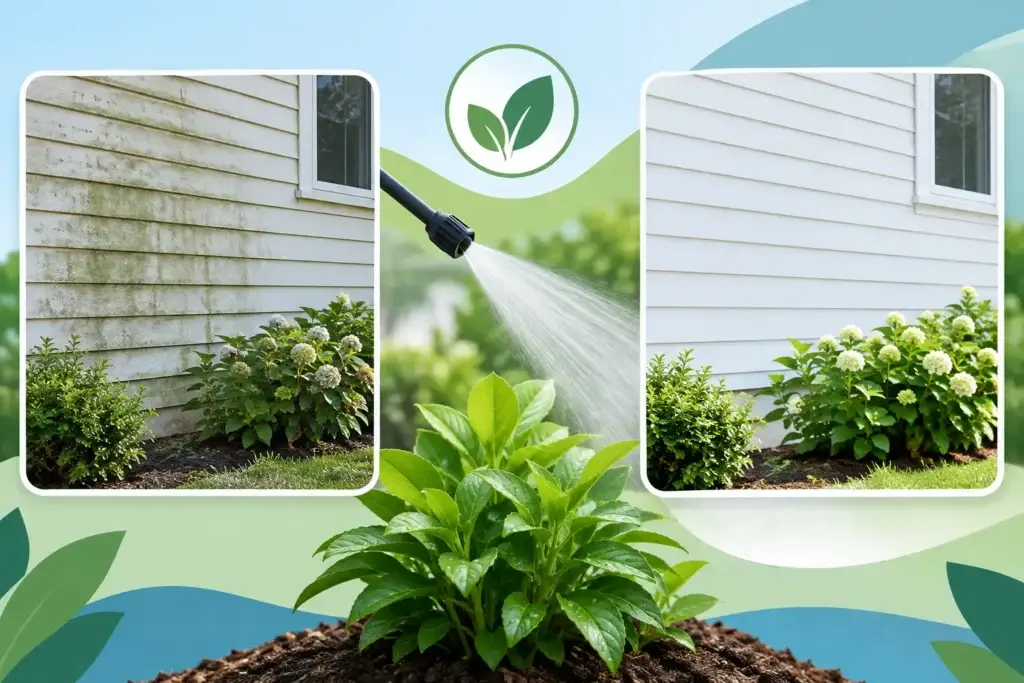
A clean roof or bright siding should not come at the expense of the landscaping you have worked hard to grow. So, does soft washing harm plants? It can if it is done carelessly, with the wrong mix, poor runoff control, or no preparation. When performed by trained professionals using the right process, soft washing can clean exterior surfaces effectively while protecting shrubs, grass, flowers, and trees.
The difference is not simply the cleaning solution. It is the planning around the job. A responsible soft washing crew treats landscaping as part of the property, not as an obstacle around the house.
Does Soft Washing Harm Plants When Done Correctly?
Soft washing uses low-pressure water and a cleaning solution to remove organic growth such as algae, mildew, mold, moss, and lichen. It is commonly used for siding, roofs, fences, and other delicate exterior surfaces that could be damaged by high-pressure washing.
Many soft wash solutions include a bleach-based ingredient because it kills the biological growth at the source. That is why soft washing delivers longer-lasting results than simply rinsing a stained surface. However, concentrated cleaning solutions can stress or damage plants if they land directly on leaves or soak into dry soil without being diluted.
Proper application changes that risk substantially. Before cleaning begins, plants should be thoroughly watered, sensitive landscaping should be identified, and downspouts or runoff paths should be managed. During the job, technicians should keep vegetation wet, control overspray, and rinse surrounding areas as they work. Afterward, they should perform a final rinse of plants, soil, hardscapes, and drainage areas.
In other words, soft washing is not automatically harmful to plants. Poor technique is the problem. The same is true of many exterior maintenance projects: the result depends on the person doing the work and the precautions they take.
Why Pre-Wetting Plants Matters
Water is one of the most effective safeguards for landscaping during a soft washing service. Healthy, well-hydrated plants are less likely to absorb cleaning solution through their roots or foliage. Wet leaves also make it harder for residue to cling to the plant surface.
Before cleaning siding or roofing, professional crews saturate the landscaping around the work area. This includes flower beds, foundation shrubs, ornamental grasses, lawn edges, and potted plants. The goal is not a quick spray with a hose. The soil and foliage need enough water to create a protective buffer.
This step matters even more during Connecticut’s dry summer stretches. A thirsty hydrangea, boxwood, or newly planted perennial is more vulnerable than a well-watered, established shrub. Extra rinsing and closer monitoring may be needed when plants are stressed by heat, drought, recent transplanting, or disease.
Runoff Control Is Just as Important as Overspray
Homeowners often focus on spray drifting onto flowers, but runoff deserves equal attention. Roof cleaning solution can travel to gutters, downspouts, splash areas, and landscaping beds below. A good crew plans for where that water will go before applying anything to the roof.
Downspouts may be monitored, redirected, or managed to reduce the amount of solution entering a specific garden bed. Technicians should also account for the slope of the property. Water naturally moves downhill, and a low area packed with hostas or groundcover may need extra protection and rinsing.
This is especially relevant for homes with tightly planted foundation beds, vegetable gardens near the house, or landscaping that drains toward a pond, stream, or other sensitive area. These conditions do not necessarily prevent soft washing, but they require a more deliberate plan. A professional should inspect the site, explain the approach, and adjust the service if needed.
Plants That Need Extra Attention
Most established landscaping can be protected with correct pre-wetting, rinse procedures, and runoff management. Still, certain plants deserve additional care because they are more easily stressed or are located in challenging spots.
New plantings have smaller root systems and are less resilient than mature shrubs. Delicate annuals, herbs, vegetables, and blooming flowers can also be more sensitive to direct contact. Plants growing under roof edges, directly beneath gutter outlets, or against siding need close monitoring because they are in the path of potential runoff.
Potted plants are another consideration. Their limited soil volume means they cannot dilute runoff as effectively as plants in a larger garden bed. In some cases, it makes sense to move lightweight containers away from the work zone before cleaning starts. For large planters that cannot be moved, careful watering and rinsing are essential.
A qualified exterior cleaning company will ask about these details rather than treating every property the same. That is a good sign that the service is being planned for your home, not rushed through with a one-size-fits-all process.
What a Safe Soft Washing Process Looks Like
Safe plant protection happens before, during, and after the wash. It is a continuous process, not one quick precaution at the beginning of the job.
Before work starts, technicians inspect the property, identify landscaping and drainage concerns, and remove or protect items that could be affected. They pre-water vegetation thoroughly and confirm that windows, doors, and exterior fixtures are properly handled.
During cleaning, the crew uses low pressure and controlled application. Soft washing should not involve blasting siding, shingles, or plants with high-pressure water. Technicians work in manageable sections, watch for runoff, and repeatedly rinse nearby vegetation. They should also avoid spraying in conditions that create unnecessary drift, such as high winds.
After cleaning, a final rinse helps remove any residue from leaves, beds, walkways, and surrounding surfaces. The crew should walk the property again, checking the areas beneath downspouts, roof valleys, and heavily treated sections. This final step is where attention to detail shows.
At CT Softwash LLC, protecting the home means protecting the landscaping around it, too. Exterior cleaning should improve curb appeal without creating another problem for the property owner to solve.
What Homeowners Can Do Before a Soft Wash
You do not need to prepare the property alone, but a few simple steps can help the service go smoothly. Let the cleaning crew know about newly planted beds, prized shrubs, vegetable gardens, koi ponds, or areas with drainage concerns. If there is a specific plant you are worried about, point it out during the walkthrough.
Move small planters, garden décor, and lightweight furniture away from the cleaning area when possible. Keep pets indoors, close windows, and make sure outdoor water access is available if your service provider requests it. If you use rain barrels connected to downspouts, mention them before roof cleaning so runoff can be addressed appropriately.
It also helps to avoid fertilizing or applying other lawn and garden chemicals immediately before service. Combining products is unnecessary and can make it harder to determine the cause if a plant is already stressed afterward.
When Soft Washing May Need a Different Approach
There are situations where extra caution or an alternative plan is the right call. A property with a fragile garden directly below a heavily stained roof may require more intensive runoff management. Homes near waterways, with drainage systems connected to sensitive areas, or with significant moss growth may need a carefully staged treatment rather than an aggressive application.
Weather can also affect the plan. Rain shortly after a service may provide extra dilution, but it can also make the work less predictable if runoff cannot be controlled. High winds increase overspray risk. Extreme heat can make already stressed plants more vulnerable. Experienced technicians factor these conditions into scheduling instead of forcing a job through when conditions are not right.
The honest answer is that no cleaning method is entirely risk-free when chemicals, water, and landscaping are involved. The goal is to reduce risk through proper dilution, controlled application, plant hydration, runoff management, and final rinsing. That is why hiring licensed and insured professionals is a safer choice than experimenting with roof or house wash chemicals on your own.
Frequently Asked Questions
Will soft washing kill grass?
It should not when grass is pre-watered, protected from concentrated runoff, and rinsed after cleaning. Grass may show temporary stress if it receives direct, concentrated exposure, which is why careful application and dilution are critical.
How long should I wait to water plants after soft washing?
You generally do not need to wait. Continued watering can be beneficial, particularly for plants near the work area. A professional crew should already rinse them thoroughly before leaving.
Is roof cleaning harder on plants than house washing?
It can be, because roof runoff flows through gutters and downspouts into defined areas. House washing involves a lower application area, but both services require plant protection. The property layout and drainage paths matter more than the service name alone.
Can I soft wash a home with a vegetable garden nearby?
Yes, but identify the garden in advance. Vegetable beds should receive extra protection, and the crew should prevent direct overspray and runoff from entering the growing area.
If your siding, roof, or exterior surfaces are overdue for cleaning, do not let plant concerns force you to live with stains, algae, and buildup. Ask how your landscaping will be protected before the work begins, and choose a crew that can give you a clear, confident answer.