
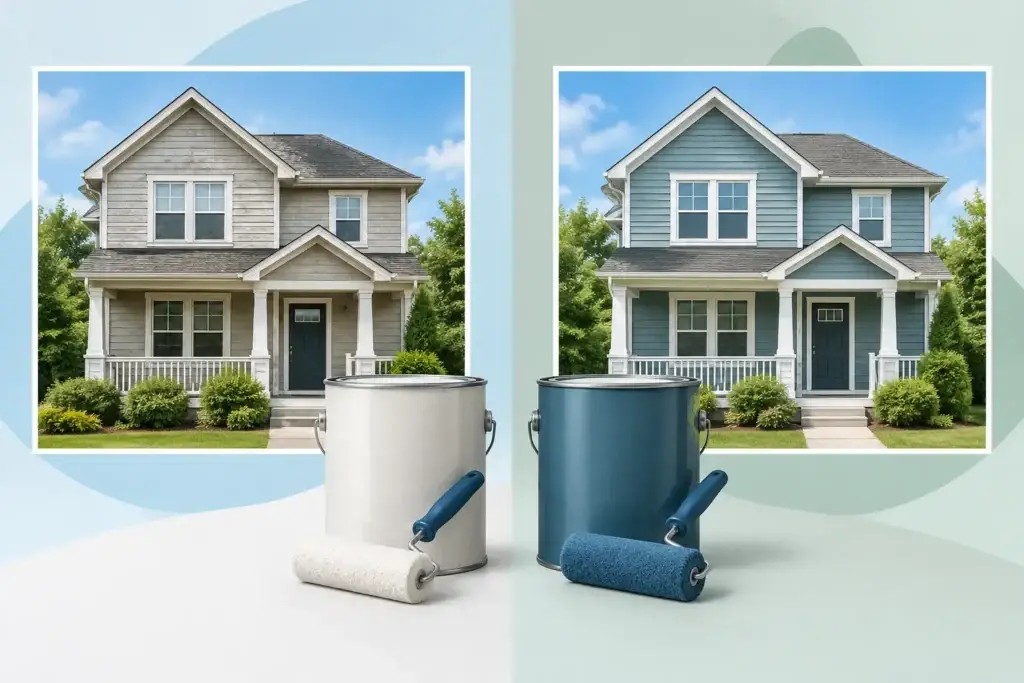
A fresh coat of paint can make siding look new again, but the wrong coating can start peeling long before it should. When homeowners compare acrylic versus latex exterior paint, the labels can be confusing because the terms are often used together. The real decision is less about a simple either-or choice and more about the quality and type of resin that protects your home from moisture, sun, and Connecticut’s changing seasons.
For most exterior projects, a quality 100% acrylic paint is the stronger long-term choice. But that does not mean every paint labeled latex is a poor option. Understanding what is actually in the can helps you choose a finish that fits your siding, budget, and maintenance goals.
Acrylic Versus Latex Exterior Paint: The Real Difference
The word “latex” is widely used to describe water-based paint. Modern latex paint does not usually contain natural rubber latex. Instead, it uses water as its primary carrier along with synthetic binders that hold the pigment to the surface after the paint dries.
Acrylic is one of those binders. A paint labeled acrylic latex is water-based paint made with acrylic resin. It may contain a blend of acrylic and other resins, or it may be 100% acrylic. That distinction matters. A less expensive latex paint often uses vinyl acrylic or a vinyl-heavy blend, while premium exterior paints generally use 100% acrylic resin.
In plain terms, acrylic is usually the higher-performing material within the broader family of water-based latex paints. Look beyond the front label and check the product description for “100% acrylic” when durability is the priority.
Why 100% Acrylic Usually Performs Better Outdoors
Exterior surfaces move more than most people realize. Wood expands and contracts. Trim shifts with temperature changes. Sun breaks down coatings, while rain, humidity, and wind-driven moisture test every weak spot around joints and edges.
Acrylic resin remains flexible after it cures. That flexibility helps the paint move with the surface instead of cracking as quickly. It also creates stronger adhesion on properly prepared wood, fiber cement, vinyl, aluminum, and previously painted surfaces.
High-quality acrylic paint typically offers better resistance to fading, chalking, peeling, and mildew than lower-grade latex formulas. This is especially valuable on coastal and shoreline properties, where salt air, humidity, and frequent weather changes can be hard on painted siding and trim.
Acrylic also tends to hold color better under UV exposure. Dark colors and bold accent colors can still fade over time, particularly on sunny walls, but a better resin gives those colors a stronger chance of staying consistent.
When Standard Latex Paint Can Make Sense
Not every project calls for the highest-priced paint available. Standard exterior latex can be a reasonable choice for a short-term refresh, a low-exposure area, or a property being prepared for sale. It is also easier to work with than old-style oil-based coatings because it has lower odor, cleans up with soap and water, and generally dries faster.
The trade-off is lifespan. Lower-cost latex formulations may be less flexible and less resistant to moisture and sun. On a protected porch ceiling or an area that needs a quick cosmetic update, that may be acceptable. On exposed clapboard, trim, fascia, or a south-facing wall, saving a small amount on paint can lead to repainting sooner.
The best choice depends on the surface condition, how much weather exposure it receives, and how long you expect the paint job to last. It also depends on prep. Even premium acrylic paint will fail if it is applied over dirt, mildew, loose paint, or damp wood.
Paint Preparation Matters More Than the Label Alone
Paint is only as reliable as the surface beneath it. A home may look ready for paint from the street while still having chalky residue, organic growth, or loose edges that prevent proper adhesion.
Before exterior painting, the surface should be cleaned safely, allowed to dry fully, and inspected for damaged caulk, rot, cracking, and peeling paint. Loose paint needs to be scraped and sanded where necessary. Bare wood and repair areas often need a compatible exterior primer before the finish coats go on.
This is where homeowners need to be careful with aggressive pressure washing. High pressure can force water behind siding, damage wood grain, or leave marks that show through a new finish. Soft washing or controlled surface cleaning is often the safer approach for removing mold, mildew, algae, and grime without damaging the material that needs painting.
A clean, dry surface gives acrylic paint the best chance to bond correctly and protect the home for years. If the siding has heavy buildup or visible mildew, address that problem before choosing a paint color.
How Each Option Handles Common Exterior Problems
Moisture and mildew
Acrylic paint generally has the advantage in damp climates because it resists water intrusion while allowing the surface to breathe better than many cheaper formulas. It is not a cure for a moisture problem behind the siding, though. If gutters overflow, flashing leaks, or vegetation keeps a wall damp, paint alone will not stop recurring peeling or mildew.
Choose a quality exterior coating with mildewcide, then correct the source of ongoing moisture. Keeping gutters clear and washing shaded siding regularly can reduce the conditions that feed mildew growth.
Cracking and peeling
Cracking can result from age, excessive paint buildup, poor adhesion, moisture, or movement in the substrate. Because acrylic stays more flexible, it is usually more forgiving on wood trim and siding that expands through hot summers and cold winters.
Peeling is frequently a prep failure rather than a paint failure. Applying paint to chalky siding, painting before the surface is dry, or skipping primer on bare wood can cause even excellent paint to lose its grip.
Fading and chalking
Sun exposure gradually breaks down exterior coatings. Acrylic paints generally resist UV damage and chalking better than economy latex formulas. For the longest-lasting appearance, choose a premium acrylic and consider lighter colors on surfaces that receive intense afternoon sun.
Vinyl siding concerns
Vinyl siding needs paint that can flex with the material and that is approved for vinyl. Acrylic exterior paint is commonly the right fit, but color selection matters. A color that is too dark can absorb heat, cause vinyl panels to warp, and void certain manufacturer warranties. Use colors rated for vinyl or stay within the original color range unless the paint manufacturer specifically approves a darker shade.
What to Look for on the Paint Can
Do not choose exterior paint based only on color, price, or a sale tag. Product labels and technical information should confirm that the paint is made for exterior use and suitable for your surface.
For a durable house-painting project, look for 100% acrylic resin, mildew resistance, UV protection, and clear compatibility with wood, fiber cement, vinyl, aluminum, masonry, or the material you are coating. Also check the recommended temperature range and drying time. Exterior paint applied during cold, wet, or unstable weather may not cure as intended.
A paint’s sheen matters, too. Flat finishes can hide imperfections but may be harder to clean. Satin is a popular balance for siding because it offers a soft sheen and better washability. Semi-gloss is commonly used on trim, doors, and shutters because it is easier to clean and highlights architectural details. Higher sheen also reveals surface flaws, so preparation becomes even more important.
A Practical Choice for Connecticut Homes
For most siding, trim, doors, and shutters in Connecticut, premium 100% acrylic exterior paint is worth the added cost. It is built for seasonal movement, heavy rain, humidity, coastal exposure, and UV damage. The longer service life can make it the more affordable option over the full life of the paint job, even if the initial purchase price is higher.
A lower-cost latex paint can still have a place on protected surfaces or for a temporary update. Just be realistic about the expected results. The lowest-priced gallon is rarely the best value when labor, prep, and the disruption of repainting are part of the equation.
Before paint goes on, make sure the exterior is clean, dry, and repaired. CT Softwash LLC helps local property owners prepare and maintain exterior surfaces with safe cleaning methods designed to protect siding, trim, and curb appeal. A properly cleaned surface and the right acrylic coating give your home a better chance of looking cared for through every season.