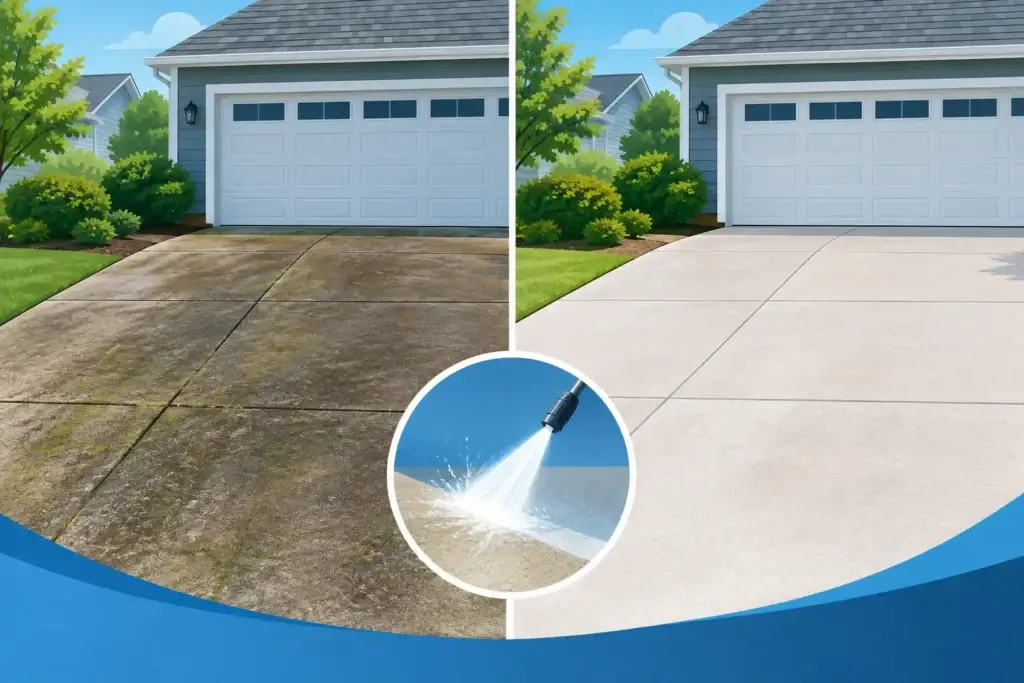
A driveway can make an otherwise well-kept property look neglected fast. Tire marks, dark algae, winter grime, rust stains, and oil spots settle into concrete and asphalt over time, especially with Connecticut’s wet springs, humid summers, and leaf-heavy falls. Professional driveway washing removes that buildup safely and delivers the clean, finished look homeowners expect when they pull into the driveway.
The difference is not just cosmetic. A cleaner driveway is easier to inspect, safer to walk across, and less likely to develop the slippery surface growth that becomes a problem after rain. The right cleaning process also protects the material underneath instead of blasting it with more pressure than it can handle.
What Driveway Washing Removes
Most dirty driveways are dealing with more than plain dust. Concrete is porous, which means it absorbs contaminants below the surface. Asphalt has a different composition but can still hold grime and develop stains that make the entire entrance look dull.
Driveway washing can address common issues such as embedded dirt, mud, pollen, algae, mildew, black surface staining, tire marks, light rust discoloration, and many vehicle-related stains. Results depend on the age of the stain, the driveway material, and whether a spill has soaked deeply into the surface. Fresh oil stains are usually easier to improve than years-old, untreated oil spots, for example.
A professional technician starts by identifying what is on the driveway rather than treating every stain the same way. Organic growth responds differently than rust. Grease requires a different approach than leaf tannins. That assessment helps produce a more even result while avoiding unnecessary damage to the surface or nearby landscaping.
Why a Dirty Driveway Can Become a Safety Issue
Green or black growth on a driveway is not always obvious when the surface is dry. Once it gets wet, however, algae and mildew can turn walking areas slick. This is particularly common in shaded sections near trees, along the north side of a home, or where water drains slowly.
Cleaning these areas makes the driveway look better, but it also reduces a preventable slip hazard for family members, guests, delivery drivers, and customers. For commercial properties, a clean entrance and parking area send a clear message that the property is maintained and accessible.
Standing water deserves attention, too. Washing will remove surface buildup, but it cannot correct a grading or drainage problem. If puddles return in the same area after every storm, the best long-term solution may include improving drainage while keeping the surface professionally cleaned as part of regular maintenance.
The Right Method Depends on the Surface
Not every driveway should be cleaned with the same pressure setting or technique. This is where professional experience matters. High pressure can be effective on durable concrete when used correctly, but it can also leave visible wand marks, damage weakened areas, or expose aggregate when handled carelessly.
Concrete Driveways
Concrete is durable, but it is not indestructible. Older concrete, cracked sections, flaking surfaces, and decorative finishes require extra care. A professional cleaning process typically combines the appropriate cleaning solution with controlled pressure and an even surface-cleaning pattern. This prevents the striped appearance that can happen when someone cleans only with a pressure washer wand.
For concrete with oil or rust stains, pre-treatment may be needed before the main wash. Even then, stain removal is not always perfect. A good contractor should set realistic expectations rather than promise that every deep stain will disappear completely.
Asphalt Driveways
Asphalt needs a gentler approach. Excessive pressure can loosen aggregate, damage worn sections, or shorten the life of an already aging driveway. The goal is to remove surface dirt, organic growth, and discoloration without aggressively stripping the material.
If asphalt is cracked, crumbling, or due for sealcoating, cleaning can still improve its appearance. It should be viewed as part of a maintenance plan, not a substitute for repair or resurfacing.
Pavers and Decorative Surfaces
Paver driveways, stamped concrete, and decorative finishes need special consideration around joints, coatings, and edges. Improper cleaning can dislodge joint sand or affect sealers. These surfaces often benefit from a measured process that cleans thoroughly without treating the driveway like plain, unfinished concrete.
Why DIY Driveway Cleaning Often Falls Short
A rental pressure washer can remove loose dirt, but it often creates uneven results. Homeowners may spend hours moving a wand back and forth, only to find stripes appearing as the driveway dries. Using too much pressure can also scar concrete, force water into cracks, or make an older surface look rougher than it did before.
There is also the question of cleaning products. The wrong degreaser, acid, or bleach mixture can discolor concrete, damage plants, or leave runoff concerns. More chemical is not automatically better. Proper dilution, controlled application, and thorough rinsing matter just as much as the equipment.
Professional driveway washing brings industrial-grade equipment, proven cleaning methods, and the experience to adjust the process for the condition of the surface. It is usually faster, more consistent, and far less risky than experimenting on one of the most visible parts of the property.
What to Expect From Professional Driveway Washing
The process should feel straightforward from the first quote through the final walkthrough. A reputable exterior cleaning company will ask about the driveway material, size, visible stains, and any concerns such as fragile landscaping, drainage areas, or deteriorating concrete.
On service day, the technician should prepare the area by moving or protecting items as needed and applying targeted treatments to stubborn staining. The driveway is then cleaned in controlled sections using the right combination of solutions and pressure. Edges, entryways, and adjoining walkways may need detail work to create a clean, consistent appearance.
The best results are usually visible immediately, although some areas may continue to brighten as the surface fully dries. If certain stains are permanent or deeply embedded, a professional should explain that clearly. Honest expectations are part of good service.
CT Softwash LLC uses professional equipment and surface-appropriate methods to help homeowners and property managers restore curb appeal without taking unnecessary risks with their concrete, asphalt, or surrounding property.
How Often Should You Schedule Driveway Washing?
For many homes, annual driveway washing is a practical schedule. Properties with heavy shade, frequent moisture, nearby trees, or high vehicle traffic may benefit from cleaning every six to nine months. A driveway near the coast can also collect additional grime from weather exposure and windblown debris.
Rather than waiting until the driveway is nearly black with buildup, schedule service when you first notice organic growth, dark traffic paths, or a general gray, weathered look. Early cleaning is often easier on the surface and helps maintain a more consistent appearance throughout the year.
Pairing driveway cleaning with house washing, walkway cleaning, or gutter maintenance can be especially convenient before listing a home, hosting an event, or preparing for the spring and fall seasons. It also helps the whole exterior look cared for instead of making one freshly cleaned area stand out against everything else.
Protecting the Results After Cleaning
A clean driveway will stay cleaner longer when leaves, soil, and standing water are kept under control. Sweep heavy debris regularly, address oil drips as soon as possible, and avoid letting mulch or soil wash onto the surface after storms. If your driveway is concrete, sealing may be worth discussing after the surface is fully clean and dry, particularly if it is exposed to frequent staining or freeze-thaw conditions.
Sealing is not right for every driveway, and it will not fix existing structural issues. It can, however, make future cleanup easier by reducing how quickly some contaminants penetrate the surface. The condition of the concrete, the type of sealer, and your maintenance goals all affect whether it makes sense.
A driveway should welcome people to your property, not make them wonder how long maintenance has been put off. When buildup, stains, or slippery growth start taking over, professional cleaning is a simple way to bring back a clean first impression and protect the surface you use every day.