
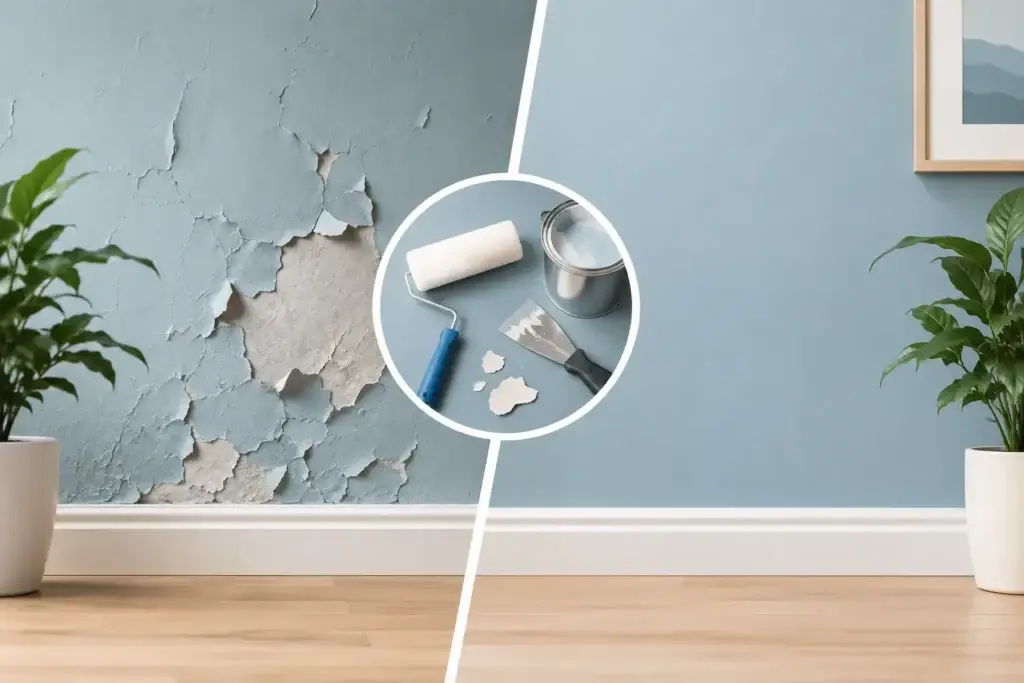
A few loose paint chips can turn into bare wood, stained siding, and expensive repairs faster than most property owners expect. The most common paint peeling causes are moisture, poor surface preparation, incompatible coatings, and harsh weather. The paint is rarely the real problem by itself. It is usually a warning that something underneath needs attention.
For Connecticut homes, changing temperatures, humid summers, driving rain, coastal air, and winter freeze-thaw cycles put exterior paint under real stress. Knowing why paint is failing helps you avoid the costly mistake of simply painting over it.
The Most Common Paint Peeling Causes
Moisture behind the paint
Moisture is the leading cause of peeling exterior paint. When water gets behind a painted surface, it weakens the bond between the paint and the wood, trim, siding, or masonry beneath it. The paint may bubble first, then crack, flake, or peel away in larger sheets.
Water can enter through failed caulk, open seams, damaged gutters, roof leaks, overflowing downspouts, window trim, or siding gaps. On wood surfaces, moisture can also cause swelling and movement that pushes paint away from the surface.
Pay attention to where the peeling occurs. Paint that fails near rooflines, windows, doors, gutters, or the bottom edges of siding often points to a water-management issue. Repainting before that issue is fixed may improve the appearance briefly, but the new coating will likely fail again.
Poor preparation before painting
Paint needs a clean, dry, stable surface to adhere properly. If a previous painter applied a fresh coat over dirt, chalky residue, mildew, loose paint, or damp wood, adhesion was compromised from the start.
Exterior surfaces collect more contamination than many homeowners realize. Pollen, airborne dirt, algae, mildew, salt residue near the shoreline, and oxidation on older siding can all interfere with paint. A surface may look clean from the ground and still have enough buildup to cause premature failure.
Proper prep usually means removing loose material, cleaning the surface safely, allowing it to dry completely, sanding rough edges where needed, and priming exposed areas. Skipping any of those steps can shorten the life of an otherwise high-quality paint job.
Painting over mildew, algae, or chalking
Dark streaks, green growth, or a dusty film on siding are more than cosmetic concerns. Mildew and algae hold moisture against the surface, while chalking creates a weak, powdery layer that prevents new paint from bonding correctly.
This is one reason exterior cleaning matters before painting. The right cleaning method removes organic growth and surface contamination without damaging the siding or forcing water where it does not belong. High pressure is not the answer for every material. Delicate siding, trim, and older painted surfaces often require a lower-pressure, soft washing approach.
If paint is peeling in shaded areas or on the north side of the home, biological growth and prolonged dampness may be part of the problem. Those areas need to be cleaned and fully dried before any repair work begins.
Wrong paint, primer, or coating combination
Not every paint works on every surface. Applying latex paint over certain older oil-based coatings without proper preparation can lead to peeling. Using exterior paint indoors, interior paint outside, or a low-quality coating on a heavily exposed surface can also create trouble.
Primer matters just as much. Bare wood, patched areas, stained surfaces, metal, and masonry may each require a specific primer to seal the material and create a dependable bonding layer. Without it, the finish coat has less to grip.
There is also a trade-off with paint selection. Some coatings are more flexible and better suited to wood movement, while others offer stronger resistance to UV exposure or moisture. A professional evaluation can help match the product to the surface instead of relying on a one-size-fits-all approach.
Painting in the wrong weather conditions
Fresh paint needs the right temperature and humidity range to cure properly. Painting when it is too cold, too hot, too humid, or when rain is expected can prevent the coating from forming a strong bond.
Connecticut weather makes timing especially important. A mild morning can quickly become a humid afternoon, and evening moisture can settle on a surface before paint has cured. Painting on damp siding after rain or morning dew is another common reason new paint begins peeling sooner than expected.
Direct sun can create problems too. When paint dries too quickly on a hot surface, it may not level or adhere as intended. The goal is not simply to find a sunny day. It is to work within the paint manufacturer’s recommended conditions and allow enough dry time between each step.
Aging paint and normal exterior wear
Even a well-applied exterior coating does not last forever. Sunlight breaks down paint binders over time, rain wears at vulnerable edges, and repeated expansion and contraction gradually weakens the finish. Wood trim and south-facing walls often show age first because they receive more direct exposure.
Normal aging typically starts with fading, minor cracking, or chalking. Once peeling begins, maintenance should not wait. Exposed wood can absorb moisture, which raises the risk of rot. Exposed metal can rust, and compromised masonry coatings can allow moisture to travel deeper into the material.
How to Tell if Peeling Paint Is a Small Repair or a Bigger Issue
A few isolated chips on otherwise sound paint may be a manageable repair. Scrape the loose material, feather the edges with sanding, clean the area, prime exposed substrate, and repaint with a compatible exterior coating.
Widespread peeling is different. If large sections are lifting, bubbling, or separating down to bare wood, the issue may involve trapped moisture, failing caulk, an old incompatible paint system, or poor preparation during a previous project. Repainting one spot will not solve a failure affecting the entire wall.
Look closely at the condition below the paint. Soft wood, dark staining, visible mold, rusted fasteners, warped trim, or recurring dampness means the substrate needs repair before painting. Paint protects a sound surface. It cannot restore one that has already been damaged.
Homes built before 1978 require additional caution. Older peeling paint may contain lead. Do not dry scrape, sand aggressively, or use high-pressure washing on suspected lead-based paint without appropriate containment and safe work practices. Testing and qualified help are the smart next steps.
Prevent Peeling Before Your Next Paint Job
The best way to prevent peeling is to treat exterior painting as a system, not a single coat of color. Water should be directed away from the home, surfaces should be clean and dry, damaged materials should be repaired, and paint products should match the substrate.
Start with gutters and downspouts. Keep them clear so water does not overflow onto fascia, trim, siding, or foundation areas. Check caulk around windows, doors, penetrations, and trim joints, especially after winter. Small gaps are easy to miss but can let in enough water to cause paint failure over time.
Regular exterior cleaning also makes it easier to spot early warning signs. Removing mildew, algae, and surface grime protects curb appeal while revealing cracked caulk, soft trim, and sections where paint is beginning to lose adhesion. For homes with delicate siding or painted finishes, safe soft washing is often the better choice over aggressive pressure.
Before repainting, give repaired or cleaned surfaces adequate time to dry. This matters after rain, washing, wood repair, and humid weather. Rushing the schedule is one of the easiest ways to turn a paint project into a repeat expense.
When Professional Help Makes Sense
Exterior paint failure is not always easy to diagnose from the ground. A peeling area may be caused by a simple cleaning and prep issue, or it may be the first visible sign of a gutter problem, hidden leak, deteriorating trim, or moisture trapped behind siding.
Professional cleaning and painting services are especially useful when the affected areas are high, widespread, near a roofline, or located around windows and gutters. The right team can clean the surface safely, identify maintenance concerns, and prepare the area without causing further damage. CT Softwash LLC helps Connecticut property owners protect exterior surfaces with professional cleaning and maintenance designed around the material and condition of the home.
Do not let peeling paint become a bigger repair by waiting for it to spread. Address the moisture, buildup, or preparation problem first, then repaint on a clean, dry, stable surface for results that look better and last longer.