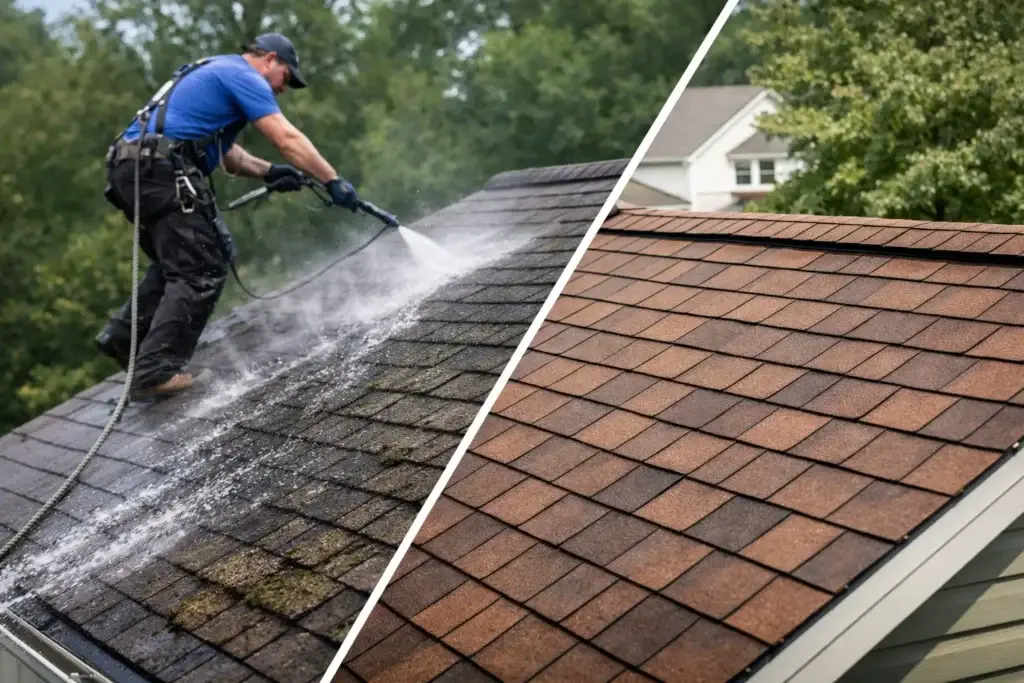
Dark roof streaks can make an otherwise well-kept Connecticut home look older than it is. They are not simply dirt, and blasting them with a pressure washer is one of the fastest ways to turn a cleaning project into a roofing repair. This guide to safe roof washing explains what those stains are, why the cleaning method matters, and when it makes more sense to call a trained professional.
What Is Growing on Your Roof?
The black streaks commonly seen on asphalt shingles are often caused by Gloeocapsa magma, a moisture-loving algae. Lichen, moss, mildew, tree pollen, and windblown debris can add to the problem, especially on shaded roof sections and homes near trees or the coast.
This buildup holds moisture against the roofing surface. Over time, moss and lichen can lift shingle edges, interfere with drainage, and make a roof appear worn before its time. Not every stain means your roof is failing, but ignoring organic growth for years is rarely a good maintenance plan.
Connecticut’s wet springs, humid summers, leaf-heavy falls, and freeze-thaw winters give roof growth plenty of opportunities to return. A proper wash removes active growth while treating the surface carefully enough to preserve the roof beneath it.
Why Pressure Washing a Roof Is Risky
A roof is not a driveway. Concrete can tolerate higher pressure. Asphalt shingles, cedar shakes, slate, and many metal roof systems require a far more controlled approach.
High-pressure washing can strip the protective granules from asphalt shingles. Those granules help shield the roof from sunlight and weather. Once they are knocked loose, the shingles may age faster and lose part of their protective layer. Strong pressure can also break brittle shingles, force water under flashing, loosen seal strips, or send contaminated runoff into gutters and landscaping.
There is also the personal safety risk. Wet roofs are slippery, and roof pitch, loose granules, algae, and moss make footing unpredictable. A homeowner can have the right cleaner and still face a serious fall risk trying to reach a difficult section of roof.
The safe answer is usually soft washing. Soft washing uses a low-pressure application method and a roof-appropriate cleaning solution to break down algae, moss, and lichen. The solution does the cleaning work instead of water pressure.
A Guide to Safe Roof Washing: The Right Process
Safe roof cleaning is a process, not a quick spray-and-rinse job. The details matter because every roof has different materials, age, slope, drainage, and surrounding plants.
Start with a roof and property inspection
Before any cleaning begins, inspect the roof from the ground and, when safe, from accessible areas. Look for cracked or missing shingles, exposed nails, damaged flashing, soft spots, open seams, sagging gutters, and signs of a leak. Cleaning cannot repair a failing roof, and applying solution to damaged areas without a plan can create unnecessary problems.
The inspection should also identify nearby gardens, shrubs, ponds, outdoor furniture, painted surfaces, and electrical fixtures. A professional team plans protection around these areas before applying any roof treatment.
Use low pressure and the correct solution
For most asphalt shingle roofs, the cleaning solution should be applied at low pressure. The goal is to coat the affected area evenly without disturbing the shingle surface. The exact solution strength depends on the type and level of organic growth, roof material, weather conditions, and manufacturer guidance.
A qualified roof cleaning technician does not treat every roof the same way. Heavy moss may need more than one careful treatment rather than aggressive scrubbing or pressure. Lichen can take time to release after treatment, which is normal. Trying to force it off immediately may damage the roof.
Protect landscaping before, during, and after cleaning
Plant protection is a major part of safe roof washing. Landscaping should be pre-watered so plants are less likely to absorb cleaning residue. Sensitive plants may require temporary coverings, and the crew should control runoff and continue rinsing plants throughout the service.
Downspouts deserve attention, too. Cleaning solution follows the same drainage path as rainwater. Managing that flow helps protect flower beds and lawn areas near the home. Afterward, surrounding plants and hard surfaces should be thoroughly rinsed.
Let the treatment work
Roof stains do not always disappear the moment the solution is applied. Black algae streaks often lighten quickly, while moss and lichen may turn pale and gradually release over the following weeks. That delayed result is often safer than scraping growth from shingles on the spot.
A reputable contractor should explain what to expect before starting. Clear expectations prevent homeowners from assuming that a gentle process is ineffective simply because every mark does not vanish in minutes.
When You Should Not Wash a Roof
There are times when roof washing should wait. Cleaning during high winds, lightning, freezing temperatures, or extreme heat is not a good idea. Wind can carry solution where it does not belong. Freezing conditions create slip hazards, while intense heat can cause cleaning products to dry too quickly.
A roof with major damage, active leaks, loose shingles, or structural concerns should be evaluated by a roofing professional first. Roof washing is maintenance, not a substitute for repair. The same applies to very old roofs that are already brittle or nearing replacement. In that situation, a contractor should assess whether cleaning will provide enough benefit to justify the work.
If you are unsure what type of roofing material you have, do not guess. Manufacturer recommendations vary, particularly for specialty shingles, cedar, tile, and coated metal roofs.
Can You Safely Clean Your Own Roof?
Some homeowners can handle light debris removal from the ground, such as keeping gutters clear and trimming back branches that hang over the roof. But applying roof chemicals, walking steep slopes, and working near wet organic growth are different jobs.
DIY roof washing comes with a few common mistakes: using a pressure washer, choosing the wrong chemical mixture, failing to protect plants, mixing cleaners unsafely, and rinsing too aggressively. A ladder fall or damaged shingle can cost far more than professional cleaning.
If you decide to do any exterior maintenance yourself, stay on the ground whenever possible. Never work alone, never stand on a wet roof, and do not combine cleaning products. Bleach-based cleaners and acids or ammonia-containing products can create dangerous fumes when mixed.
For most homeowners, professional soft washing is the safer and more practical choice. Licensed and insured technicians have the equipment, roof-safe application methods, and property protection procedures needed to get visible results without treating your roof like a sidewalk.
How Often Should a Roof Be Cleaned?
There is no single schedule for every property. A sunny roof with little tree cover may stay clean for several years. A shaded home in Groton, Mystic, or another coastal Connecticut community may develop algae more quickly because of humidity and moisture.
A yearly visual check is a smart starting point. Watch for new black streaks, green patches, moss near roof valleys, debris buildup behind chimneys, and clogged gutters. Addressing growth early usually makes the cleaning process easier and reduces the likelihood of aggressive methods.
Preventive steps also help. Keep gutters flowing, remove leaf buildup, and trim branches to improve sunlight and airflow over the roof. These habits will not eliminate algae entirely, but they can slow its return.
Choose a Roof Cleaner Who Puts Protection First
When requesting an estimate, ask how the company cleans roofs, not just what it costs. The right provider should explain whether they use soft washing, how they protect plants, whether they are insured, and what results are realistic for your roof’s condition. Be cautious of anyone who plans to pressure wash shingles or promises instant removal of every piece of established lichen.
CT Softwash LLC uses professional soft washing methods designed to restore exterior surfaces while protecting the materials that make up your home. A clean roof can improve curb appeal, but the best result is one that does not trade appearance for avoidable damage.
If roof streaks are making your home look neglected, treat them early and choose a cleaning method that respects the roof overhead. A careful inspection and a safe soft wash can leave your property looking cared for while helping your roofing system do its job for years to come.